The Premier League's January Transfer Hall of Shame: When Big Money Met Big Mistakes
Every January, Premier League clubs tell themselves this will be different. This time, the signing will work out. This time, they won't throw millions at a problem and watch it evaporate by March.
History suggests otherwise. Some clubs have mastered the art of January futility so thoroughly that they've earned themselves a place in the transfer record books—though not the kind anyone celebrates.
10. Chris Samba (QPR, £12.5m, 2013)
The irony is almost too perfect: Samba arrived at Loftus Road in January 2013 with a reputation to uphold, yet managed to depart six months later with his fee almost entirely recouped by Anzhi Makhachkala. Both clubs somehow managed to lose money on the same player in the space of a year.
Harry Redknapp, the architect of this particular masterpiece, had recently lectured about the perils of inflated wages at a club with an 18,000-capacity stadium. Then he sanctioned £100,000 weekly for Samba, hailing him as "a monster" and the defensive saviour Rangers desperately needed. Instead, in ten matches, the club conceded 19 goals. After his debut, Samba never kept a clean sheet, and following a 3-2 loss to Fulham in which he conceded a penalty and was culpable for another, he had the audacity to tell supporters to "get over" his salary. Relegation followed swiftly.
9. Kostas Mitroglou (Fulham, £13m, 2014)
Before arriving at Craven Cottage, Mitroglou had earned the nickname "Mitrogoals" for his prolific record in Greece. By the end of his Fulham adventure, teammates had rechristened him with a far less complimentary epithet.
The Greek striker had plundered 41 goals in 92 league games for Olympiacos, so Fulham gambled their club-record fee on salvation. What they received instead was 151 minutes spread across a single league start. By August, Mitroglou was back in Greece on loan, where he promptly scored against Atletico Madrid in the Champions League. Meanwhile, Fulham's new Championship home saw them thrashed 5-3 at Nottingham Forest, with Britt Assombalonga completing a hat-trick.
8. Jean Makoun (Aston Villa, £6m, 2011)
Makoun arrived from Lyon with impeccable credentials: a 27-year-old midfielder who'd appeared 36 times in European competition, including starts against Real Madrid, Liverpool, Manchester United and Milan. Gerard Houllier spoke of his experience and quality as a midfield link.
The reality proved rather different. A red card for a shocking challenge came just a fortnight after his debut, and he managed only five league appearances before disappearing from the picture entirely. He didn't play another match for Villa, yet somehow remained on the books until July 2013.
7. Afonso Alves (Middlesbrough, £12.7m, 2008)
The Brazilian striker's name has become shorthand for the perils of raiding the Dutch leagues for attacking talent—a curse Middlesbrough still carry nearly two decades later.
Alves did manage 13 goals in 49 games, including a hat-trick in an 8-1 demolition of Manchester City and an FA Cup brace against Barrow. But with Boro heading for relegation and Alves departing, he's forever remembered as the club's white whale. Al-Sadd did recover £7m of the fee, but that barely softens the blow.
6. Fernando Torres (Chelsea, £50m, 2011) and Andy Carroll (Liverpool, £35m, 2011)
These two January signings are forever intertwined—not because they're equally bad, but because they represent a pair of clubs competing to throw money at their problems.
Chelsea identified Torres as "one of the best players in the world with his peak years ahead" despite a career already marked by accumulating physical issues. For £50m, the fourth-biggest transfer in world football at the time, they hoped for 20 goals to save their season. They got as many across his entire 172-game Chelsea career.
Liverpool, watching from afar, decided to match the madness. They redirected most of Torres's sale fee to Newcastle for Carroll, a striker with just 14 top-flight goals in 37 appearances. Carroll scored 11 in 58 games for the Reds before Liverpool took a £20m loss offloading him. Torres, meanwhile, eventually departed as a 30-year-old free agent—still technically the most expensive player ever transferred between two Premier League clubs.
5. Benni McCarthy (West Ham, £2.5m, 2010)
McCarthy arrived at Upton Park fresh from falling out of favour at Blackburn, despite being the Premier League's Golden Boot runner-up to Didier Drogba just years earlier. The South African had also reached double figures in 2008-09.
Instead, he managed 14 appearances without scoring before West Ham terminated his contract by mutual consent in April 2011. The club's descent into the Championship followed a month later.
4. Guido Carrillo (Southampton, £19.2m, 2018)
Southampton's logic for splurging their club record on Monaco's fourth-choice forward was questionable at best: perhaps some Kylian Mbappe magic had rubbed off on Carrillo.
It hadn't. Manager Mauricio Pellegrino backed the signing, but after his sacking in mid-March, replacement Mark Hughes showed considerably less faith. Carrillo played eight times under Pellegrino, twice under Hughes in the first half-season. By summer, he was loaned to Leganes—the club Pellegrino had joined after leaving the south coast. That loan was renewed; Leganes were relegated from La Liga in 2020. Carrillo's Southampton career lasted from January 27 to March 31, 2018, without a goal. He finally left on a free transfer two-and-a-half years later.
3. Jean-Alain Boumsong (Newcastle, £8m, 2005)
Newcastle's long-term planning was on full display in summer 2004 when they passed on signing Boumsong on a free transfer from Rangers. Four months later, they paid £8m for him.
Even if Boumsong had been competent, it would've been farcical. He wasn't. The transfer was later flagged by the Stevens Inquiry as potentially suspect, with discrepancies between the testimonies of manager Graeme Souness and chairman Freddy Shepherd. The inquiry found no case to answer, concluding that everyone involved was simply that incompetent—always a convenient escape route.
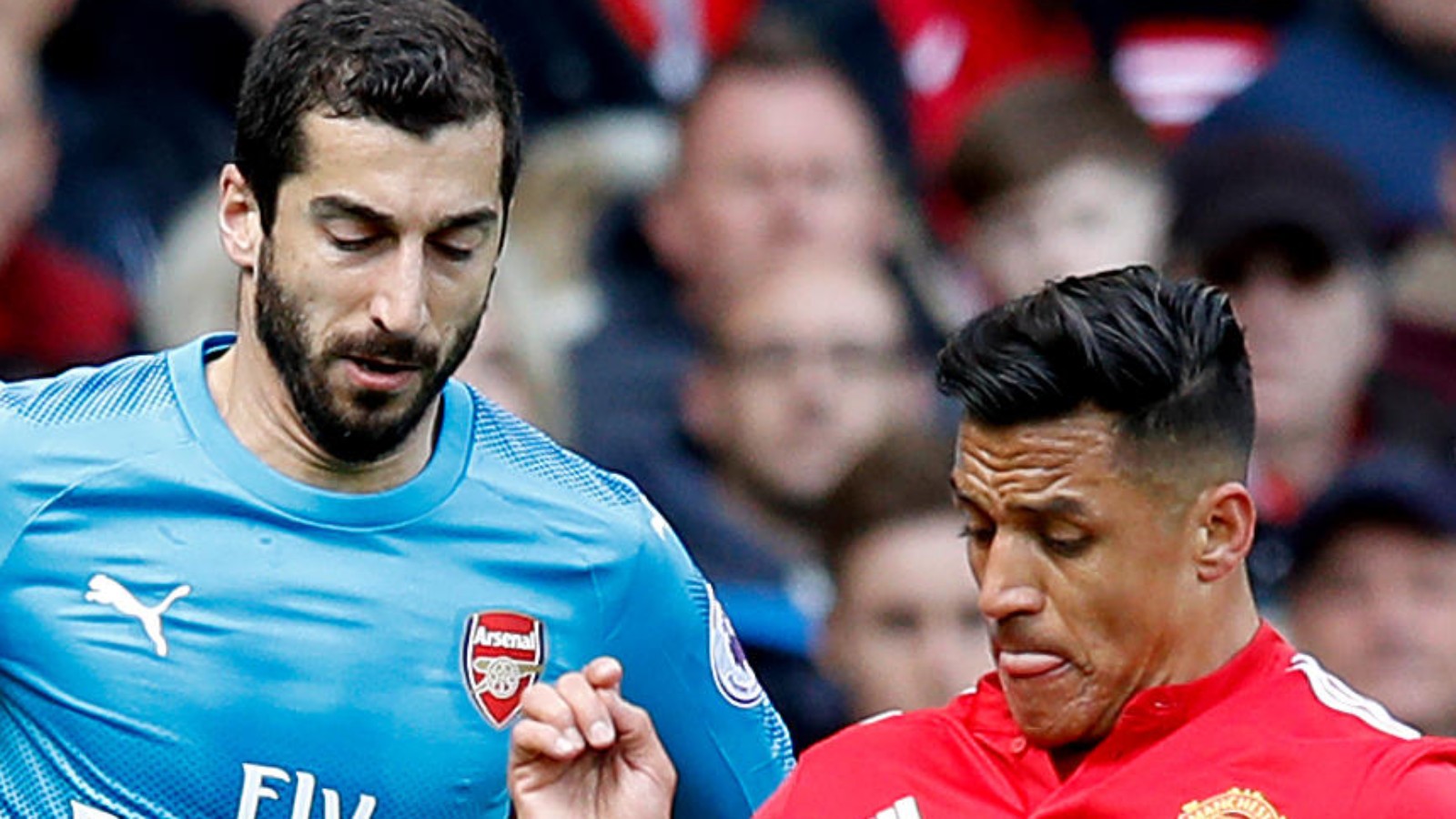
2. Alexis Sanchez (Manchester United, swap deal, 2018) and Henrikh Mkhitaryan (Arsenal, swap deal, 2018)
Swap deals were once the stuff of transfer gossip column speculation. They largely disappeared from serious discussion after this pair accidentally became real, exposing why such arrangements rarely work.
Neither player thrived in their new surroundings. Neither club benefited. Both managers—Jose Mourinho at United, Arsene Wenger at Arsenal—were gone by year's end. Sanchez managed five goals in 45 games while accumulating an absurd wage bill that proved impossible to shift; he eventually left on a free transfer. Mkhitaryan fared better, contributing assists and earning considerably less, but he too departed on a free. The only bright spots were Sanchez's piano-playing announcement video and Mkhitaryan's assist-laden debut—hardly the stuff of transfer triumph.
1. Savio Nsereko (West Ham, £9m, 2009)
West Ham's story is a tragedy that extends far beyond football. Having sold Craig Bellamy to Manchester City for £14m, the club reinvested in Savio, a German striker from Serie B side Brescia with three career league goals, all in the second tier.
He played ten league matches, started one, and never scored. Physically, he cut the figure of a dormouse. Within seven months, West Ham sold him to Fiorentina for £8m—a £1m monthly loss on the initial outlay.
What followed was a steep decline. Savio drifted through lower-league clubs across Germany, Italy, Kazakhstan, Bulgaria and Lithuania. There was an arrest for faking his own kidnapping in Thailand and reports of serious mental health struggles. "I made a lot of mistakes. In fact, I did everything wrong that I could," he told German media in 2013, before retiring years later, long since faded from view.
It's a sobering reminder that transfer disasters aren't merely about wasted money—sometimes they're about lives derailed.
Compare options