The Slippery Slope of Mandatory Hydration Breaks: How Football Is Being Quietly Repackaged
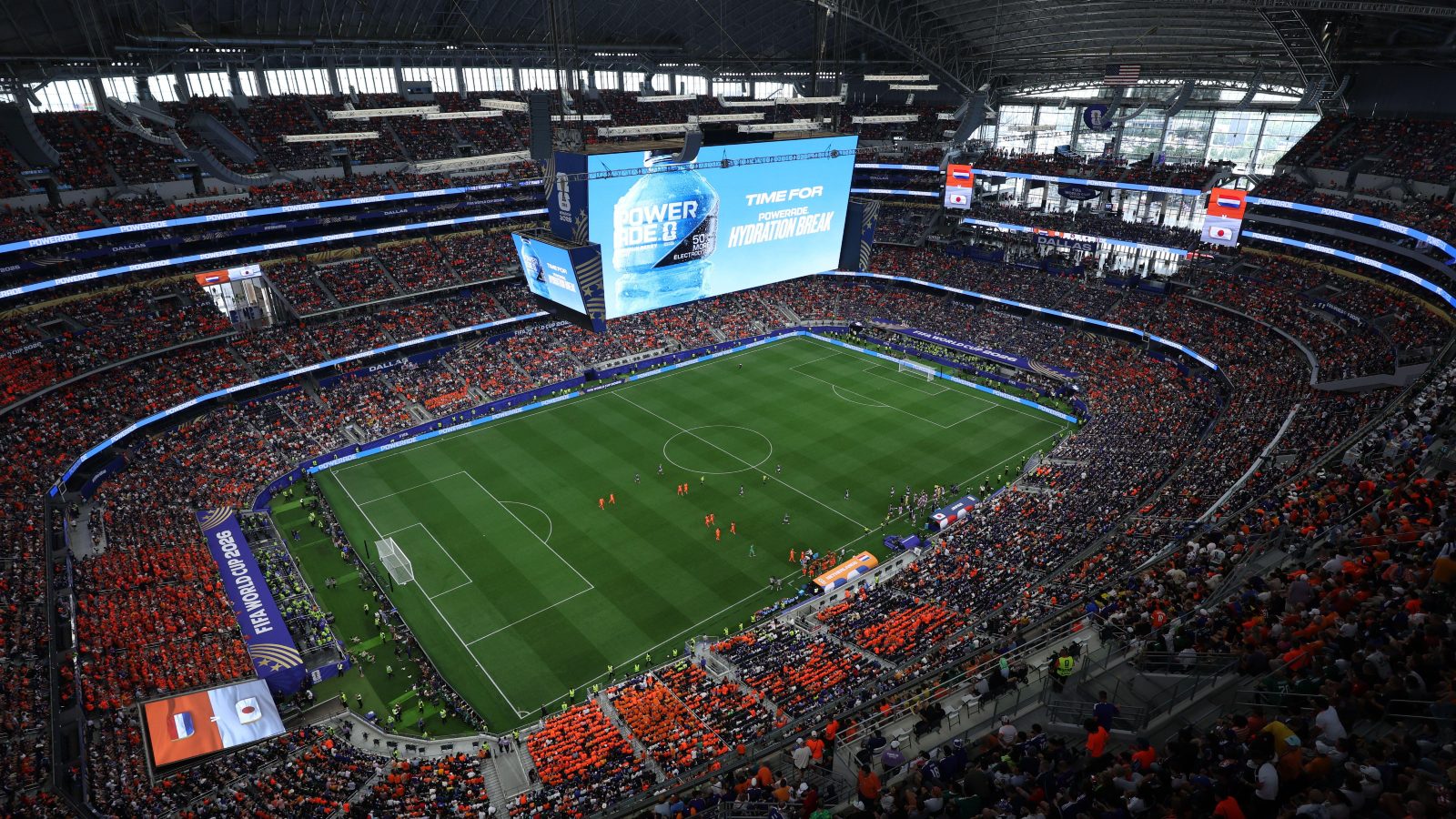
Back in December, FIFA dropped the news that this summer's World Cup would feature mandatory hydration breaks in every single match. The official messaging was all about player welfare: "Players will benefit from three-minute hydration breaks in each half of games as FIFA prioritises player welfare throughout next summer's tournament."
Funny thing, though – the accompanying image on FIFA's website just happened to be a close-up of a Powerade bottle. Coca-Cola's flagship hydration brand. Purely coincidental, we're sure.
At the time, the announcement barely registered. Arsenal were collapsing against Aston Villa, Liverpool were drawing 3-3 with Leeds, and the managerial merry-go-round was in full swing. The World Cup felt like ancient history.
Now it's here. And Virgil van Dijk has articulated what most of us are thinking.
"I think every time going to commercials is a bit… Not really something that I like," the Netherlands skipper said following his side's 2-2 draw with Japan. "I think for the neutral watchers on TV it is also not great. So if it is really hot it would be good to put them in but I think you have to look at it in every game, separately, in my opinion."
Here's the rub: the next World Cup will be staged across Spain, Portugal and Morocco, with matches in Seville, Porto and Marrakesh during June and July. Sweltering temperatures are guaranteed. The hydration breaks aren't going anywhere.
Then comes Saudi Arabia in 2034. Early indications suggest it'll be a winter tournament – January and February 2035, to sidestep Ramadan. Logically, you'd think hydration breaks would be unnecessary in cooler conditions. But after eight years of normalising them, monetising them, building broadcast infrastructure around them – do you genuinely believe FIFA will abandon the practice?
The commercialisation is already spiralling. US broadcaster Fox faced zero consequences from FIFA after their adverts overran into resumed action. Over in Ireland, RTE copped flak for showing ads during the breaks themselves.
"I can't let the moment go without noting that this is my first experience watching a game of football that's been broken in the first half by advertisement breaks," Irish pundit Richie Sadler observed. "I understand there's a water break, I know that's a decision taken externally, but ads during a match is wrong. It just is."
Van Dijk and Sadler have nailed it. The fundamental problem isn't hydration – it's what comes with it. Football's rhythm, its momentum, the sustained periods of pressure that define the sport: all fractured by artificial stoppages that now generate revenue.
This is being rolled out in America, where sport capitulated to commercialisation decades ago. The ebb and flow? Gone. Replaced by tactical timeouts for both managers and guaranteed advertising slots.
RTE's response was telling: "RTE takes its commercial responsibilities seriously and seeks to strike an appropriate balance between generating revenue and delivering a high-quality viewing experience." Translation: we'll try not to overdo it.
The strange thing is, hydration breaks aren't actually novel. They were introduced at the 2014 Brazil World Cup. Qatar 2022 featured them selectively. Here's what FIFA's regulations stated for that tournament:
"Extreme weather conditions may warrant cooling and/or drinks breaks to be implemented during the course of a match in accordance with the protocols established by the FIFA Medical Committee and/or documented in the FIFA Football Emergency Medicine Manual. Such breaks would be considered on a match-by-match basis."
Match-by-match. Sensible. Conditional.
Now compare that to Manolo Zubiria, FIFA's Chief Tournament Officer, speaking at December's World Broadcaster Meeting: "For every game, no matter where the games are played, no matter if there's a roof, (or) temperature-wise, there will be a three-minute hydration break. It will be three minutes from whistle to whistle in both halves."
From conditional to compulsory. From match-by-match to blanket coverage.
Think back to Barcelona ditching their shirt sponsor to carry UNICEF's name – they actually paid for the privilege, donating €1.5million annually to AIDS projects. Admirable. Unobjectionable. Then came the Qatar Foundation deal: €150million over five years, still technically a nonprofit. Fast forward to now, and they're sponsored by Spotify, whose CEO has faced criticism for investing in military AI technology.
That's football's trajectory with hydration breaks. The initial justification – player welfare – is unassailable. Then comes the monetisation, subtle at first. Within a decade, you'll be as accustomed to The Powerade™ Hydration Break as you are to VAR, sleeve sponsors, and every other intrusion that once seemed unthinkable.
The sport is being repackaged, quarter by quarter, break by break. And most of us didn't even notice it happening.
Compare options