From Porto to the Abyss: Chelsea's Doomed Manager Curse Reaches Its Nadir with Rosenior
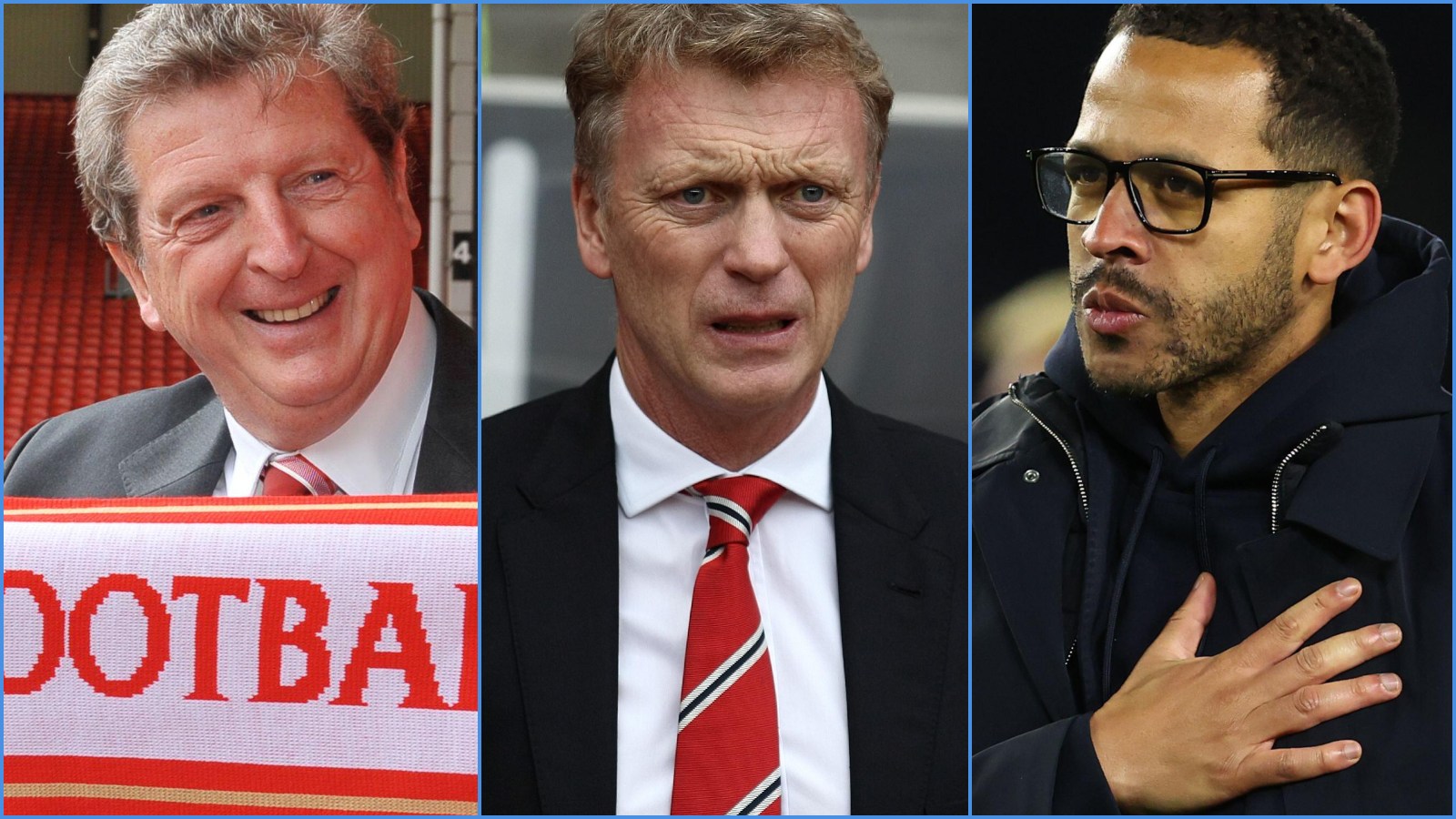
The mathematics of managerial doom at Stamford Bridge have become almost depressingly predictable. Chelsea's latest chapter in this cautionary tale sees Liam Rosenior perched precariously atop a hierarchy of Premier League appointments that never stood a chance.
Following a 3-0 hammering by Brighton—Chelsea's fifth consecutive league match without a goal—Rosenior finds himself navigating the bleakest of circumstances. This particular barren run represents the club's worst since 1912, a year better remembered for rather more catastrophic maritime events.
The writing appeared on the wall from day one. Rosenior's early displays of perceived arrogance have done little to endear him to those watching on, and his subsequent utterances have only reinforced the sense that this appointment was destined for the rocks. Yet the question remains: is he truly the most ill-starred managerial choice in Premier League history?
The Hall of Infamy
10. Unai Emery (Arsenal)
Emery's arithmetic at the Emirates tells a story of impossible expectations. Averaging 1.85 points per game, his return fell marginally short of his legendary predecessor Arsene Wenger's 1.95, though comfortably ahead of what his successor initially managed.
Inheriting from a 22-year dynasty proved insurmountable. Emery steered Arsenal to fifth in his sole full campaign—a finish Wenger hadn't matched in his final two years—while Mikel Arteta's first two seasons saw the Gunners languish in eighth. The transformation Emery later achieved at Aston Villa has sparked retrospective what-ifs, yet such autonomy was never going to materialise at the Emirates.
9. Roy Hodgson (Liverpool)
Having remarkably guided Fulham to the UEFA Cup final in 2010, Hodgson inherited the Liverpool job as what chairman Martin Broughton termed "someone to steady the ship" following Rafael Benitez's departure. His previous Premier League finishes—6th, 17th, 7th and 12th—hardly screamed inspirational appointment.
Kenny Dalglish's involvement added further peculiarity; rejected as manager himself, he was then installed in the selection process before replacing Hodgson mere months later. Hodgson's tenure remains Liverpool's shortest in the post-war era, memorable chiefly for an uncomfortable abundance of Christian Poulsen and the surreal admission that the Reds faced a relegation battle following a home reverse to Blackpool.
8. Andre Villas-Boas (Chelsea)
The template seemed foolproof: Portuguese, youthful, Porto's treble-winning manager. Yet Villas-Boas proved no Jose Mourinho, despite ticking identical boxes.
Where his predecessor revolutionised the Premier League, Villas-Boas merely disrupted his own squad. Club stalwarts found themselves banished to the reserves by this supposed authority figure, their resentment simmering. Sacked in March, Chelsea lifted both the FA Cup and Champions League trophy by May—a vindication that still rankles with those demoted, particularly John Terry, who reportedly bristles at the memory of being sidelined while Josh McEachran received preferential treatment.
7. Ruud van Nistelrooy (Leicester)
Steve Cooper might stake a legitimate claim to this position, though Leicester's managerial carousel has become grimly predictable: Brendan Rodgers, Dean Smith, Cooper, and Van Nistelrooy.
Van Nistelrooy's appointment owed much to a four-game Manchester United caretaker spell, two victories arriving against Leicester themselves. Yet his actual record at the club was diabolical—27 appearances yielding just five wins, three draws and 19 defeats, with a seven-match scoreless streak that would make even Rosenior wince. Nothing in his coaching pedigree suggested adaptation to a relegation fight.
6. Nuno Espirito Santo (Spurs)
Nuno represented fifth choice at best, trailing Mauricio Pochettino, Paulo Fonseca, Gennaro Gattuso and Antonio Conte—who, after initially declining, suddenly reconsidered once Nuno's interim reign proved expendable after 17 games.
The former Wolves manager had fallen upwards from 11th place, departing when matters grew stale before taking over a side in 7th. Handed a two-year deal by an increasingly desperate Spurs, his requests for midfield reinforcement and Harry Kane backup went unfunded. New sporting director Fabio Paratici's touchline scowls seemed less about tactical input and more about forwarding intelligence to Conte, sunning himself during his waiting period before the inevitable changing of the guard.
5. Rafael Benitez (Everton)
Few appointments have landed as offensive a blow to supporter sensibilities. Everton fans hadn't merely lost Carlo Ancelotti; they'd been offered his replacement by a man whose visage had adorned dartboards across Merseyside for fifteen years.
Where Chelsea supporters managed magnanimity during Benitez's Stamford Bridge tenure, Everton fans hung banners of withering hostility at Goodison Park. Benitez's proclamations of civic connection and charitable work—including support for the Hillsborough Family Support Group—couldn't overcome the fundamental wound. A three-year contract always felt optimistically drawn.
4. Ange Postecoglou (Nottingham Forest)
Postecoglou himself would later dissect the decision with brutal honesty, acknowledging that the appointment was fundamentally flawed. Fresh from Tottenham, he admitted the timing was premature and that Forest never truly wanted what he offered—possibly never even wanted to interview him.
His subsequent admission that he'd been blinded by the prospect of improving a talented squad, ignoring reality's warning signs, proved prescient. The collapse came quickly and mercilessly, confounding even those who'd predicted failure.
3. Graham Potter (Chelsea)
Todd Boehly's Clearlake consortium promised a new era: fresh ownership, fresh strategy, fresh thinking. Yet why dispense with Thomas Tuchel only to deny his replacement a pre-season with an assembled squad of players gathered as much to prevent rival acquisitions as from genuine necessity?
Compounding matters was the over-the-hill striker signed five days before Tuchel's departure—a notorious dressing-room disruptor expected to salvage matters through goals alone. Potter's seven-month tenure proved mercifully brief, spared extended ridicule through sheer tedium rather than any tactical vindication.
2. David Moyes (Manchester United)
Moyes inherited a Premier League-winning squad whose key components had essentially expired. Scholes retired alongside Ferguson. Giggs, Ferdinand and Vidic remained but had mentally checked out. Van Persie's constant repairs had exacted their toll.
Taking over from the greatest and most autocratic manager in Premier League history, Moyes faced not merely succession but comprehensive reconstruction. His subsequent decisions—the Marouane Fellaini signing, his baffling appeals to Jagielka and Baines—proved self-sabotaging, yet the poisoned chalice was always destined to be dropped.
1. Liam Rosenior (Chelsea)
Chelsea's ownership appears locked in an exhausting cycle: sack or destabilise a competent coach, replace him with someone manifestly out of his depth who favours questionable soundbites, enjoy a honeymoon period before inevitable collapse, then delay the inevitable reckoning interminably.
Rosenior represents the apotheosis of this dysfunction—an internal promotion of someone over-elevated to elite level, whose squad nicknames will surely feature prominently in forthcoming long-form examinations of institutional chaos. Few appointments have felt more catastrophically misjudged.
Compare options