Sunderland and Palace Outgun Liverpool in World Cup Squad Representation
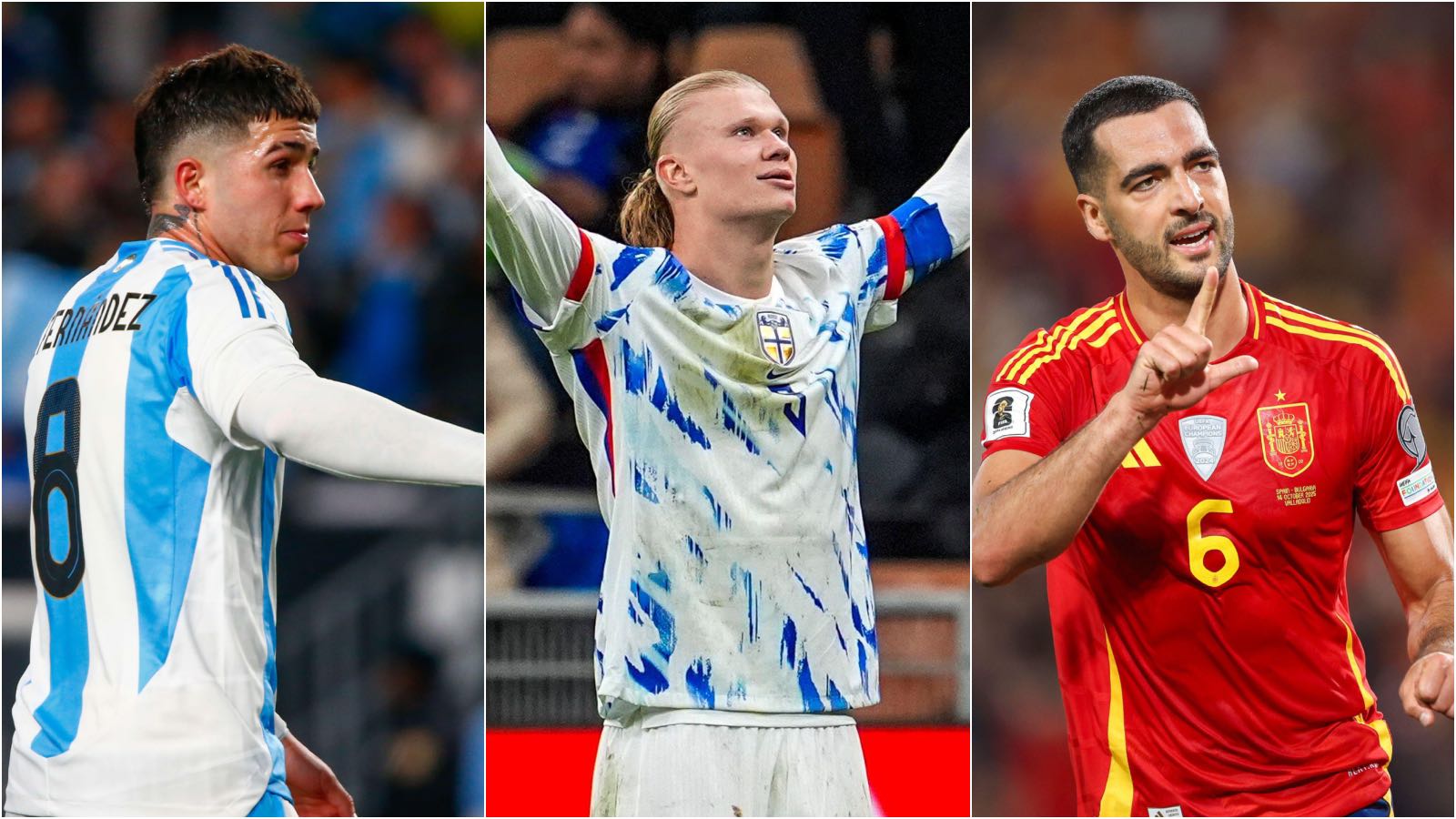
Here's a curious little exercise: now that the 2026 World Cup squads are locked in, which Premier League club can boast the most players boarding the plane to the tournament?
Simple question. Complicated answer—which is precisely where things got properly messy.
The initial premise was straightforward enough. But then reality intervened. What happens to players whose contracts expire mid-tournament? What about those returning from loan spells? What about those currently out on loan? The deeper we dug, the more we regretted the entire endeavour.
The solution was to take next season's Premier League squads as our benchmark. Yes, it requires some subjective calls. Yes, we've made a few. But here's the logic: all loan players return to their parent clubs unless a clear option or obligation has been triggered. Out-of-contract players get the case-by-case treatment—if they've had an obvious farewell, they're out; if there's genuine uncertainty, they stay in. It's imperfect, but it's consistent.
The Bottom End
Coventry and Hull both contribute two players apiece. The Coventry pair—Haji Wright heading home for a World Cup on American soil, and Brandon Thomas-Asante—arrive off the back of a Championship-winning campaign. Hull's representatives are Liam Millar and Ivor Pandur.
Ipswich and Leeds each send four. The Tractor Boys have Ali Al-Hamadi, the first Iraq player ever to grace the Premier League, alongside George Hirst. Leeds' quartet features Brenden Aaronson, Ao Tanaka, Noah Okafor, and Gabriel Gudmundsson—a decent haul, though Dominic Calvert-Lewin might feel mildly aggrieved at missing out when Ivan Toney made it.
The Middle Ground
Everton, Brentford, and Nottingham Forest each field four. Everton's Idrissa Gueye presents a thorny case—out of contract, but no dramatic farewell like the Merseyside departures of Mo Salah and Andy Robertson, so he stays in the reckoning. Brentford's contribution notably exceeds Liverpool's England representation, a fact worth savouring. Forest include Elliot Anderson among their quartet.
Fulham and Bournemouth both reach six. The Cottagers boast Raul Jimenez, Sander Berge, Timothy Castagne, Antonee Robinson, Oscar Bobb, and Issa Diop—two of the three co-hosts represented. Bournemouth's inclusion of a Brazilian from the south coast and a New Zealand goalkeeper on loan in Poland speaks volumes about modern football's peculiarities.
Newcastle clock seven—Bruno Guimaraes, Yoane Wissa, Anthony Elanga, Nick Woltemade, Dan Burn, Malick Thiaw, and Tino Livramento. Anthony Gordon's departure means he doesn't feature in next season's calculations.
The Big Hitters
Liverpool field eight: Virgil van Dijk, Alisson, Wataru Endo, Alexander Isak, Cody Gakpo, Alexis Mac Allister, Florian Wirtz, and Ryan Gravenberch. But this represents a significant drop from previous tournaments. Salah, Robertson, and Konaté have all departed as their contracts expired, marking the first time since 1986 that Liverpool have no representative in an England World Cup squad.
Brighton also reach eight, with a distinctly Dutch flavour to their contingent: Ferdi Kadioglu, Bart Verbruggen, Pascal Gross, Maxim De Cuyper, Mats Weiffer, and Jan Paul van Hecke all heading to the tournament.
Tottenham contribute nine, though injury has wreaked havoc on their World Cup representation. Mohammed Kudus, Dejan Kulusevski, and Xavi Simons would almost certainly have made their respective squads if fit. The standout name is Croatian teenager Luka Vuskovic, who impressed during a loan spell at Hamburg in the Bundesliga and may already have outgrown his parent club—Barcelona, PSG, and Bayern Munich are reportedly circling.
The Elite
Chelsea reach ten, a somewhat futile exercise given the perpetual uncertainty surrounding their squad. Nicolas Jackson and Mike Penders are both returning from loan with questionable futures. Joao Pedro and Cole Palmer are conspicuous absences.
Aston Villa also field ten, including Emi Martinez defending his World Cup title and a trio of England internationals—John McGinn, Ollie Watkins, Ezri Konsa, and Morgan Rogers—combining European and global honours.
The Shock Leaders
Then we arrive at the genuinely surprising part: Sunderland and Crystal Palace, each with eleven.
Sunderland's contingent is bolstered by Granit Xhaka, Omar Alderete, Habib Diarra, Noah Sadiki, Arthur Masuaku, Simon Adingra, Nilson Angulo, Brian Brobbey, Chemsdine Talbi, Wilson Isidor, and Robin Roefs. Yes, Masuaku and Adingra spent the second half of the season in France, but they're due back after the World Cup, so technically they qualify.
Palace's eleven includes Ismaila Sarr, Jefferson Lerma, Daichi Kamada, Daniel Munoz, Chris Richards, Jorgen Strand Larsen, Yeremy Pino, Dean Henderson, Chadi Riad, Jean-Philippe Mateta, and Maxence Lacroix. Managerial uncertainty surrounds some of the out-of-contract players, though Palace are working to retain Lerma and Kamada.
The Summit
Manchester United contribute twelve, with Marcus Rashford's continued presence a source of some discomfort given Barcelona's apparent withdrawal. Casemiro misses out due to his contract situation.
Arsenal field sixteen across multiple World Cup-winning nations: England, Spain, Brazil, and Germany all claiming multiple Gunners. The workload ahead for their internationals is substantial.
Manchester City top the pile with seventeen. Rodri, Erling Haaland, Mateo Kovacic, and Josko Gvardiol lead a contingent that also includes departing stalwarts John Stones and Bernardo Silva, who between them boast nearly 200 international caps.
The hierarchy has spoken—and it's not quite what you'd expect.
Compare options