Tottenham's Transfer Spree Enters Uncharted Territory as Club Finally Backs Manager
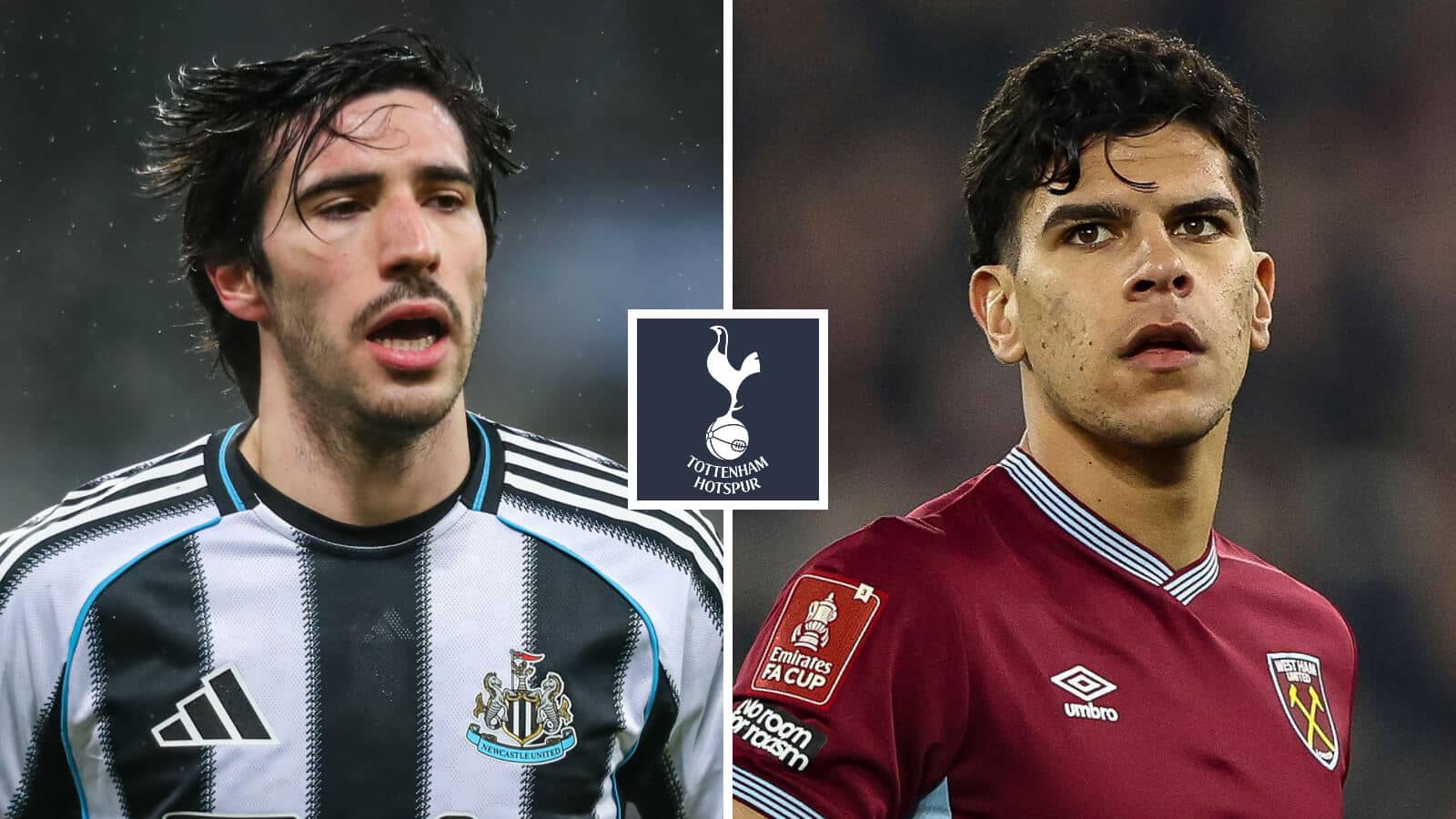
This isn't the Spurs we've grown accustomed to watching operate in the transfer market. Yet here we are in early July, watching Tottenham announce the £85m arrival of Mateus Fernandes from West Ham—and that's apparently just the appetiser.
The main course? Sandro Tonali from Newcastle for £100m, a deal that will genuinely shift perceptions of what Spurs are attempting this window. Nearly £200m committed before August has even arrived. For Tottenham Hotspur. In the first week of July. That sentence alone requires reading twice to believe it.
The Fernandes signing, while undoubtedly record-breaking, fits a recognisable template—a young talent with untapped potential plucked from a struggling Premier League outfit. Strip away a few million from the fee and imagine it happening in late August, and it lands within the realm of acceptable Spurs business. Tonali, however, represents something altogether different: a player at career peak, proven in the Premier League, available mid-window. Spurs have historically created such talents for rivals to poach, not purchased them ready-made.
What makes this genuinely extraordinary is the identity of the manager receiving this backing. Roberto De Zerbi has convinced Spurs' hierarchy to back his vision with meaningful resources and wages—something that has never materialised under previous regimes. His top targets are arriving swiftly and decisively, with minimal haggling. The midfield overhaul follows a defensive reconstruction already completed, with Marcos Senesi, Jan Paul van Hecke and Andy Robertson all added to the squad.
This represents a seismic shift from Spurs' established operating procedures. The old model saw managers politely requesting a Sadio Mane or Jack Grealish, only to receive Lewis Holtby or Gedson Fernandes instead. The club that nearly challenged for the title then let its squad atrophy across three consecutive windows without a single senior addition. The club that settled perpetually for the budget option, the yellow-sticker bargain about to expire.
Two factors explain this transformation. First, last season's terrifying scramble to safety in the final six games served as a wake-up call, shattering any complacency about Spurs' position in the English football hierarchy. That near-miss with relegation has fundamentally altered perspective.
Second, and equally significant, Daniel Levy's departure has removed a figure who appeared more invested in winning individual transfer negotiations than strengthening the team. By his final years, Levy wasn't even winning those battles anymore, yet Spurs still paid premium prices for Brennan Johnson, Dominic Solanke and Xavi Simons. The regime's selling strategy proved equally inept—more concerned with maximising fees than maintaining squad balance.
Signs of pragmatism are already emerging under new leadership. The January sale of Johnson, despite its incompleteness, demonstrated willingness to move on underperforming recruits post-managerial change. Luka Vuskovic's £46m departure to Brighton represents genuine transfer acumen—a substantial profit on a player who never featured for the club, a deal that would earn praise if executed by any other club yet draws suspicion when Spurs attempt it.
The mathematics of this summer's spending become clearer when examining potential outgoings. Vicario, Dragusin, Romero, Sarr, Gray and Bergvall all appear surplus to requirements at a rapidly reconfigured club. Deep-pocketed suitors will circle. Recouping something approaching £200m in sales suddenly doesn't feel entirely fanciful.
The unanswerable question—and the tantalising one—concerns what this spending actually achieves. De Zerbi's football could prove hypnotic, the through-ball count on opening day alone worth monitoring against an entire season's output from 2025-26. The defensive and midfield infrastructure being assembled could genuinely rival anything else in the division.
Yet this is still Spurs. The possibility remains that they construct a formidable defensive and midfield unit only to field Richarlison's chaotic pinball tendencies in attack—11 goals from 35 appearances capturing that particular brand of frustration. Complete collapse remains within their capabilities; another relegation scrap cannot be entirely discounted.
But they've chosen a compelling moment to finally behave like an ambitious club. Liverpool, Manchester City, Chelsea and Manchester United all navigate managerial transitions and uncertainty. None of them appear as compellingly daft as the one genuinely embracing genuine ambition.
A club that finished 17th twice in three seasons is finally giving supporters reason to dream. Whether that dream materialises spectacularly or implodes just as dramatically, the entertainment value is guaranteed.
Compare options