De Zerbi's Tottenham Overhaul: The Ruthless Rebuild Spurs Must Execute
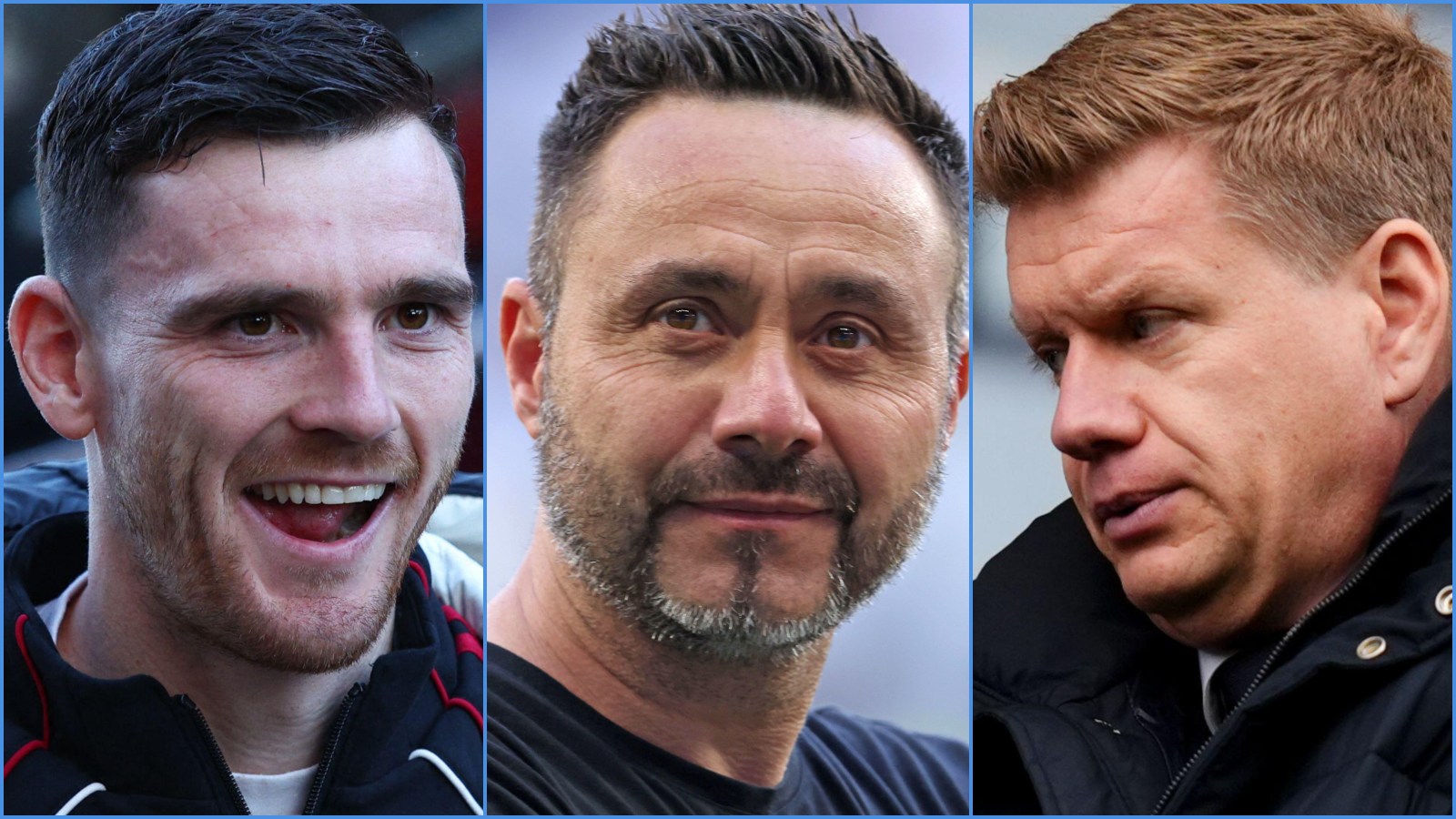
Roberto De Zerbi didn't hang about. Moments after Tottenham secured their unlikely Premier League survival, the Italian manager made his position crystal clear: the club must now "organise and build a new team." He identified roughly 10-12 players worthy of remaining, emphasizing that they must be not just competent footballers but quality human beings. The rest? The squad needs completing with genuine top-tier talent.
Spurs ended the campaign with genuine momentum—11 points from their final six matches represented a transformation from the horror show that preceded it. That's the sort of foundation other clubs have built upon. Tottenham could too, but only if they deliver on the promises made to lure De Zerbi to a sinking ship.
Here's the rub: what De Zerbi wants is precisely what Spurs never do.
The Boardroom Crisis
Change must start at the top, yet the current ownership structure offers precious little hope. Spurs were once a profitable operation; now they're hemorrhaging money and accumulating debt. Vinai Venkatesham arrived to oversee transformation after Daniel Levy's departure, along with his entire circle of trusted advisors. The problem? Nobody who's replaced them has inspired confidence.
The fanbase is clear: Vinai must go, and ENIC must go. These positions are understandable given the catastrophic mismanagement on display. But selling a football club isn't a quick process, and there's scant indication it's even being considered. The Lewis family and their assorted connections aren't disappearing anytime soon, nor is Venkatesham. He should be gone, but almost certainly won't be.
Some positive movement is possible this summer, but not everything the supporters crave.
The Sporting Director Must Change
There's absolutely no justification for Johan Lange remaining in his role. While no single individual bears sole responsibility for Tottenham's predicament, Lange arrived when the club sat atop the Premier League in October 2023 and has presided throughout the descent from those optimistic early Ange Postecoglou days into the current shambles.
His incoming transfers have been uniformly unconvincing. His defining moment came at January's transfer deadline when he proudly announced Spurs hadn't panicked and that returning injured players would solve everything. Panic gets a bad press, but sometimes it's the only rational response to a crisis. Spurs were certainly panicking two months later when they came cap in hand to De Zerbi.
Lange worked briefly alongside Fabio Paratici before the latter returned to Italy. There's widespread expectation that Sebastian Kehl, who departed Borussia Dortmund in March after four years, will arrive as co-sporting director. The appeal is obvious—Dortmund's operational model mirrors what Spurs could aspire to be. If the club is confident in Kehl, they should commit fully and remove Lange entirely rather than burdening a proven operator with a redundant spare part the supporters despise.
Medical Department Overhaul
A comprehensive restructuring of Spurs' medical operation is already underway, and it cannot come soon enough. By the third consecutive season of unprecedented injury carnage, you must acknowledge it's not merely rotten luck. Yes, some misfortune exists, but it cannot explain a campaign where no senior player avoided the treatment room.
Questions linger about the new stadium's pitch—the grass field sits in shallow retractable trays atop the synthetic American football surface. This unusual design may be contributory. What's undeniable is that Spurs don't just suffer more injuries than any other division club; they mismanage them catastrophically.
Dejan Kulusevski has been sidelined for over a year following what was initially dismissed as a "knock" against Crystal Palace in May 2025. James Maddison sustained a partial ACL tear around the same time, was advised against surgery, then suffered a complete tear during pre-season that kept him out until substitute appearances late on. Mohammed Kudus suffered a season-ending setback as Spurs rushed his recovery, while Dominic Solanke never achieved full fitness.
At minimum, Spurs are exacerbating their misfortune. At worst, something far graver is occurring.
The Departures
Cristian Romero must leave. He's been wholly ineffective as captain and unreliable as a player. His reputation now precedes him—referees and pundits treat him differently, though his Manchester United red card looked increasingly harsh as the season progressed and identical challenges escaped punishment elsewhere. Yet he does take unnecessary risks, accumulates bookings relentlessly, and you cannot have a captain perpetually absent through suspension or injury. The whole business of his Argentina trip before the final game was an unnecessary distraction that raised serious questions about decision-making across the club. His recent contract means Spurs can recoup decent money; everyone involved—especially Romero—would be happier at Atlético Madrid.
Richarlison has likely played his final match, earning credit for 11 crucial Premier League goals during Spurs' dreadful attacking season. De Zerbi appears unimpressed with Dominic Solanke; the subtext around his injury absence at critical moments speaks volumes. Randal Kolo Muani's loan won't become permanent. Guglielmo Vicario departs too, despite De Zerbi's public backing—he's heading home to Italy. Antonin Kinsky's redemption arc following his Madrid nightmare in March has been one of the season's finest stories.
The Keepers
De Zerbi's suggestion that 10-12 current players merit retention is simultaneously audacious and depressingly accurate.
The core group likely includes: Kinsky, Porro, Van de Ven, Danso, Bentancur, Gallagher, Tel, Gray, Bergvall, Maddison, and those currently injured with little alternative. Question marks surround Destiny Udogie and Radu Dragusin, though Dragusin was specifically mentioned by De Zerbi as having impressed during the run-in.
Joao Palhinha has expressed interest in returning to Portugal, which is understandable. However, if he'd consider making his loan permanent, Spurs should seize it. Beyond his renowned tackling and commitment, his clutch goalscoring—crucial strikes against Wolves home and away, plus the nerve-settler against Everton—proved vital to the season's trajectory.
Micky van de Ven represents the most crucial retention. His season has been difficult, and he'd clearly lost faith in the project. Yet he, Pedro Porro, and Conor Gallagher have been most visibly revitalized by De Zerbi—good players remembering they are indeed good players. Van de Ven was immense during the run-in and deserves the contract extension and captaincy that should have gone elsewhere. Losing both senior centre-backs cannot be the plan.
Returning loanees require careful consideration. Luka Vuskovic has been sensational for Hamburg in the Bundesliga, while Mikey Moore has thrived at Rangers. Both merit pre-season opportunities to stake claims in positions where Spurs will have space.
The Recruitment Challenge
This is where Tottenham's summer succeeds or fails. Everything above becomes academic if the squad isn't significantly strengthened and rebalanced.
However, fewer new arrivals may be needed than initially appears. Maddison, Kulusevski, and Kudus potentially represent unprecedented "new signing energy" if they return fit. All address Spurs' glaring weakness—their moribund attack. De Zerbi improved their defence dramatically, allowing just 17 shots on target across seven games compared to 41 in the previous seven. His attacking options were simply inadequate. Maddison's guile, Kulusevski's hard running and finishing, and Kudus' dribbling offer essentials Spurs have desperately missed.
Major signings remain necessary. De Zerbi emphasized his "dream" of acquiring "first level" players available for pre-season. The World Cup makes wrapping everything up before pre-season unrealistic, but early business accelerates progress.
Personality recruitment matters too—Gallagher's appeal partly stemmed from his character. Revived interest in free-agent Andy Robertson makes sense; he won't start weekly but offers the experience and nous of a "gilded Ben Davies" type. Marcos Senesi represents another quick option where Spurs hold first-mover advantage over reported Liverpool and Barcelona interest.
A new goalkeeper must arrive, whether as clear number one or Kinsky competitor. James Trafford remains an option, though he'd require assurances about starting status after his Manchester City experience.
The hardest gaps to fill sit in attack. Spurs need at least one, very likely two new strikers unless Will Lankshear is genuinely ready for a full squad role after his impressive Oxford season—and that seems optimistic. Finding two quality No. 9s ready to hit the ground running is far easier said than done.
With no European football, Spurs face roughly 40 matches next season versus this year's 52, allowing a leaner squad structure.
The fundamental point: Spurs might not need as many new signings as initially feared to transform a 12-player core into something genuinely competitive. But they still need significant recruitment, substantial business done early, and a major shift in injury luck.
For a regime with zero margin for error remaining, it's the tallest order imaginable.
Compare options