Spurs' Improbable Resurrection: 16 Key Takeaways from 2-2 Draw with Manchester City
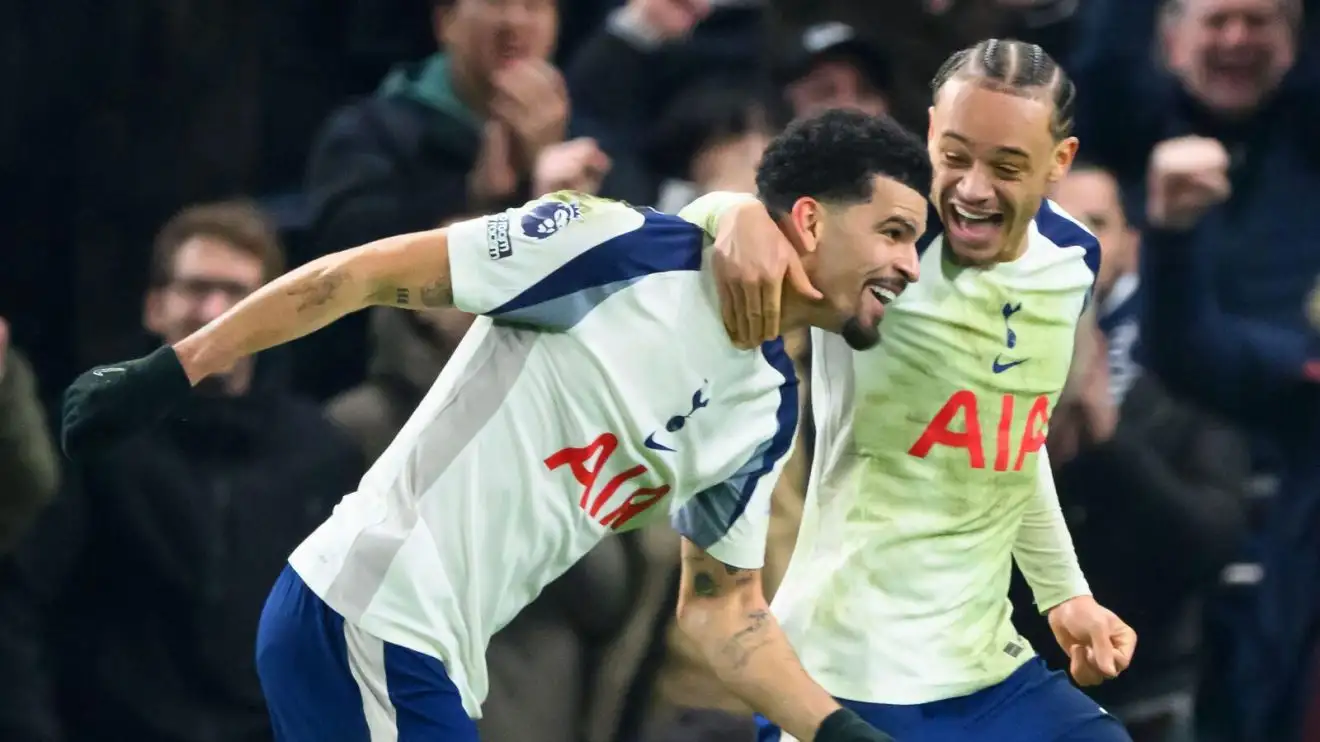
Football remains endlessly predictable in its unpredictability, particularly when Tottenham are involved. Twenty-two players, ninety minutes, and somehow Spurs manage to turn it all into theatre of the absurd.
Predicting what emerges from Tottenham's chaos proves impossible, yet one certainty always holds: the nonsense will flow freely. This fixture delivered every flavour imaginable—a first-half performance ranking among the worst ever witnessed, followed by an unlikely comeback and a finish so outrageous it gifted the real beneficiary: Arsenal.
The Spursy Paradox
Tottenham defy rational analysis. Years of mediocre, excellent, and indifferent squads all share one trait: an unmatched capacity for the ridiculous, whether catastrophic or inspiring. The only sensible approach involves accepting the chaos without searching for deeper meaning.
Their peculiar gift lies in making football revolve entirely around them, weaponising incompetence itself. Recall that infamous 4-1 Chelsea defeat under Postecoglou—a match Chelsea somehow lost despite controlling nothing. City experienced similar bewilderment here, viewing Spurs with deep suspicion, wondering if some elaborate con was unfolding. Between City's first and second goals lay a curious wariness, as though Guardiola feared being dragged into Spurs' gravitational pull. That fixture repeatedly confounds the Manchester manager like no other; overthinking comes naturally when "they're just terrible" would suffice.
The Defensive Catastrophe
Strip away sentiment and one damning truth emerges: Spurs played the entire second half without three of their four best centre-backs (Romero, Van de Ven, Danso) and both recognised right-backs (Porro, Spence), yet Guglielmo Vicario made zero saves after the interval. City, leading 2-0, played within themselves—understandable enough—but their failure to seriously threaten at 2-2 proved shameful. Haaland and company faced softer questions than deserved, another consequence of Spurs somehow setting the tempo throughout.
Solanke's Impact
Solanke's return transformed everything. Four goals in four games represent only part of the story; his presence fundamentally alters Spurs' tactical reality. Hold-up play, intelligent movement, and finishing variety make them genuinely threatening. That late ankle injury causing his departure will worry supporters sick—losing him again could prove catastrophic.
The Second-Half Resurrection
Despite ongoing struggles, Spurs' second-half display deserved genuine admiration. Dragusin, Gray, Palhinha, Simons, and Solanke all delivered career-best performances. Simons finally resembled the summer signing Spurs anticipated—omnipresent, tenacious, capable of decisive intervention. His pass launching Solanke's opening goal represented a combination no other Spurs pairing could manufacture. A deflected effort nearly brought him a deserved goal, with Donnarumma producing a magnificent save.
Injury Context
Dismissing Spurs' season-long struggles as injury-related would be foolish, yet ignoring the toll equally so. Twelve first-team absentees split between guaranteed starters—Romero, Van de Ven, Porro, Kulusevski, Maddison, Kudus—and key squad players—Bergvall, Spence, Danso, Bentancur, Richarlison, Davies—fundamentally weakens any side. A seventeen-year-old made his debut; midfielders played centre-back and right-back; almost nobody finished in their starting position.
Gallagher's Contribution
Conor Gallagher justified January's opportunistic recruitment. While not a complete solution, he injects drive and energy Spurs previously lacked. Even during the first-half disaster, Gallagher delivered a respectable performance. Come the second half, he rivalled Simons and Solanke for man-of-the-match honours. His interception and subsequent cross set up Solanke's second goal—the scorpion kick overshadows Gallagher's intelligence and desire winning a midfield ball against odds. Three interceptions from Gallagher alone proved more than any other player managed. At twenty-five, his puppy-like enthusiasm occasionally suggests headless chaos, yet he reads the game shrewdly, doing things nobody else would or could.
Palhinha's Presence
Joao Palhinha represents precisely what Spurs have needed for years. Deployed out of position against Antoine Semenyo in full flight, he rarely looked troubled—far less so than Dragusin, despite the latter's experience. Six tackles led the match; his season-long Premier League tally remains unmatched. Early-season grumbling proved misdirected; Frank's error involved pairing him with Bentancur in a destructive double pivot. Palhinha's no-nonsense approach provides rare clarity within Spurs' historic commitment to chaos. Assuming relegation fears dissipate, triggering his £27m permanent option becomes a no-brainer.
The Formation Switch
The tactical shift to a back four, enforced by absences, proved revelatory. Previously, a three-at-the-back formation maximised limited resources, but losing Romero, Van de Ven, and Danso eliminated that argument. Romero's illness explained his first-half struggles; Frank's defensive adjustment worked wonders. Adding Pape Sarr levelled midfield numbers, eroding Rodri and Bernardo Silva's influence.
City's first-half approach exploited obvious weaknesses. Haaland occupied Romero centrally while Semenyo and Cherki attacked narrow channels against Palhinha—no centre-back—and Dragusin, making his first Premier League start in a year. Both scored; Cherki nearly added another despite an improbable Vicario save that officials somehow missed deflecting significantly. The second-half back four with more mobile midfielders eliminated those channels entirely.
City's Complacency
Criticising City for earning a 2-0 lead seems churlish, yet they generated only three clear chances and two goals despite Spurs' generosity. They weren't ruthless; they paid dearly. While Spurs improved dramatically, City fell alarmingly. Cherki and Semenyo barely featured; Bernardo Silva lost his bite. Rodri's influence evaporated almost entirely—alarming given his historical ability to dictate proceedings single-handedly.
The midfielder looked diminished, unable to cope with high-tempo football once Spurs applied genuine pressure. Guardiola eventually substituted him to spare further embarrassment, after two fouls within ten seconds could easily have brought second yellows. This represented concerning evidence that the Ballon d'Or winner simply isn't the force he once was.
The Cautionary Note
The second-half brilliance shouldn't obscure underlying truths. Both Spurs goals involved lottery-ticket finishes—spectacular but rarely repeatable. Solanke's scorpion kick deserves immense credit, as does his perseverance on the first goal (marginally avoiding contact with Marc Guehi). Spurs' sustainable path demands performing across full matches rather than single halves.
The Title Race Implications
The draw spares Spurs immediate embarrassment and keeps Thomas Frank employed another week, though one point barely shifts their relegation mathematics. For Arsenal, however, the implications prove substantial. With Aston Villa also dropping points, the real beneficiaries are clear. City's lead over Arsenal remains six points rather than four. North London's unexpected harmony—Spurs returning Saturday's favour to Arsenal—reflects mutual respect between Europe's finest.
Arsenal fans have no grounds for complaint this time. Spurs delivered precisely when needed, and that matters far more than anything occurring on the pitch itself.
Compare options