The Corporate Coaching Crisis: How Premier League Management Became a LinkedIn Masterclass in Waffle
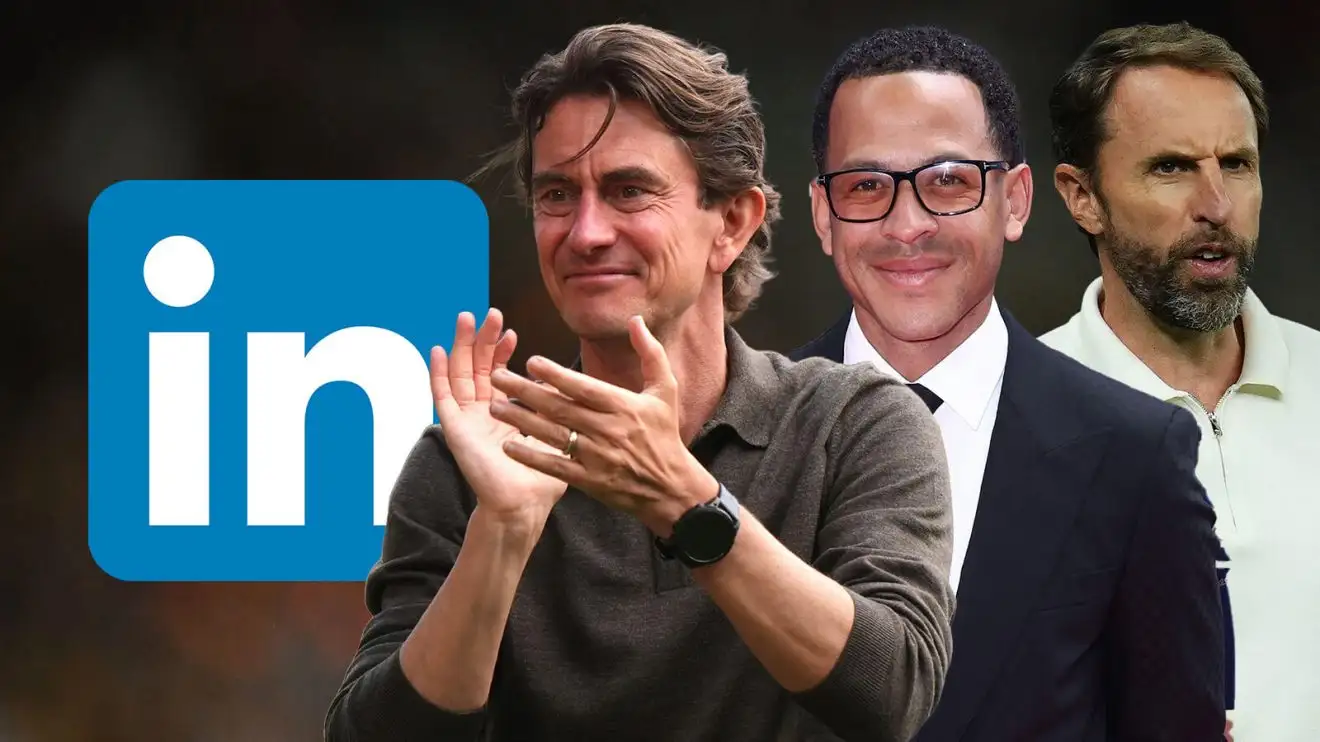
The football manager's role has undergone a peculiar transformation. Is he a boss? A head coach? A leader? The terminology matters less than what's actually happening: the wholesale colonisation of Premier League management by the sort of jargon and self-regard usually confined to LinkedIn profiles and motivational podcasts.
Gareth Southgate has become the unlikely figurehead of this movement. The waistcoat should perhaps have warned us. These days he's front and centre on LinkedIn itself, dispensing the sort of management-speak that makes your teeth ache. His preferred formulation—"Leader, Manager, Coach," each word capitalised with the solemnity of scripture—represents the full embrace of this new order. He's even explained it: Leader comes first, Manager second, Coach somewhere down the line. It's an unintentional parody of corporate nonsense that somehow manages to be simultaneously less self-aware than the Gareth Bale flag fiasco.
The tragedy is that Southgate actually has worthwhile insights to offer. Instead, he's chosen the grifter's route: the book, the podcast, the carefully nodded-along-with appearance alongside some smug media personality. It's the wrong path, and a waste.
His time as England manager clearly ended when it needed to. But the greater loss would be if he's now genuinely gone from football. Without an actual job, we're condemned to parse his LinkedIn musings for hidden messages about Manchester United while he peddles the sort of drivel that keeps the tabloids endlessly speculating.
Meanwhile, the Premier League itself is drowning in this stuff. Thomas Frank at Tottenham has become the latest evangelist. After a defeat to Bournemouth, he offered this gem: "In a storm, some are building fences and hiding behind it, others are building windmills and getting stronger and getting more energy and learning from it." Apparently, Frank sees himself as a windmill-builder—a remarkable delusion for someone visibly draining of energy with each passing week. The real lesson, of course, is that building anything during a storm is monumentally stupid. Build your windmills beforehand.
It's Frank who keeps erecting fences too, though his are marked with excuses: injuries, the difficulty of January, last season's 17th-place finish, encouraging signs that never quite materialise. The frequency with which weather dominates his commentary—vague, powerful, entirely beyond his control—says more than any tactical analysis could.
Eddie Howe operates in similar territory, his delivery so dead-eyed and corporate that he could be auditioning for a Silicon Valley venture capital firm. Mikel Arteta, at least, walks the walk. While most LinkedIn entrepreneurs would only claim to hire pickpockets to deliberately disrupt their staff, Arteta actually lives this philosophy. His sincerity, however terrifying, carries more integrity than the general insincerity on display.
Then there's Liam Rosenior, barely five minutes into his Chelsea role and already auditioning for the throne of self-satisfied waffle. His recent musing about "ageing men" as a profound observation—delivered with absolute earnestness and zero humour—shows a man who's already mastered the art of saying nothing with tremendous confidence.
Here's what matters, though: this isn't really about the words at all. Southgate was commenting on why three high-profile managers recently departed their posts—Ruben Amorim at Manchester United (falling out with executives), Enzo Maresca at Chelsea (problems with staff), and Xabi Alonso at Real Madrid (issues with players). The two Premier League examples are instructive. Neither lost their jobs purely on results. Both failed to navigate the corporate game that's now essential at this level.
We don't yet know whether Rosenior can actually manage football. It's far too early. But he's got a better chance of surviving at Chelsea than recent predecessors precisely because he knows how to play the game that really matters—and it's not the one played on the pitch.
Compare options