When Premier League Bosses Actually Walk Away: The Rare Art of Resignation
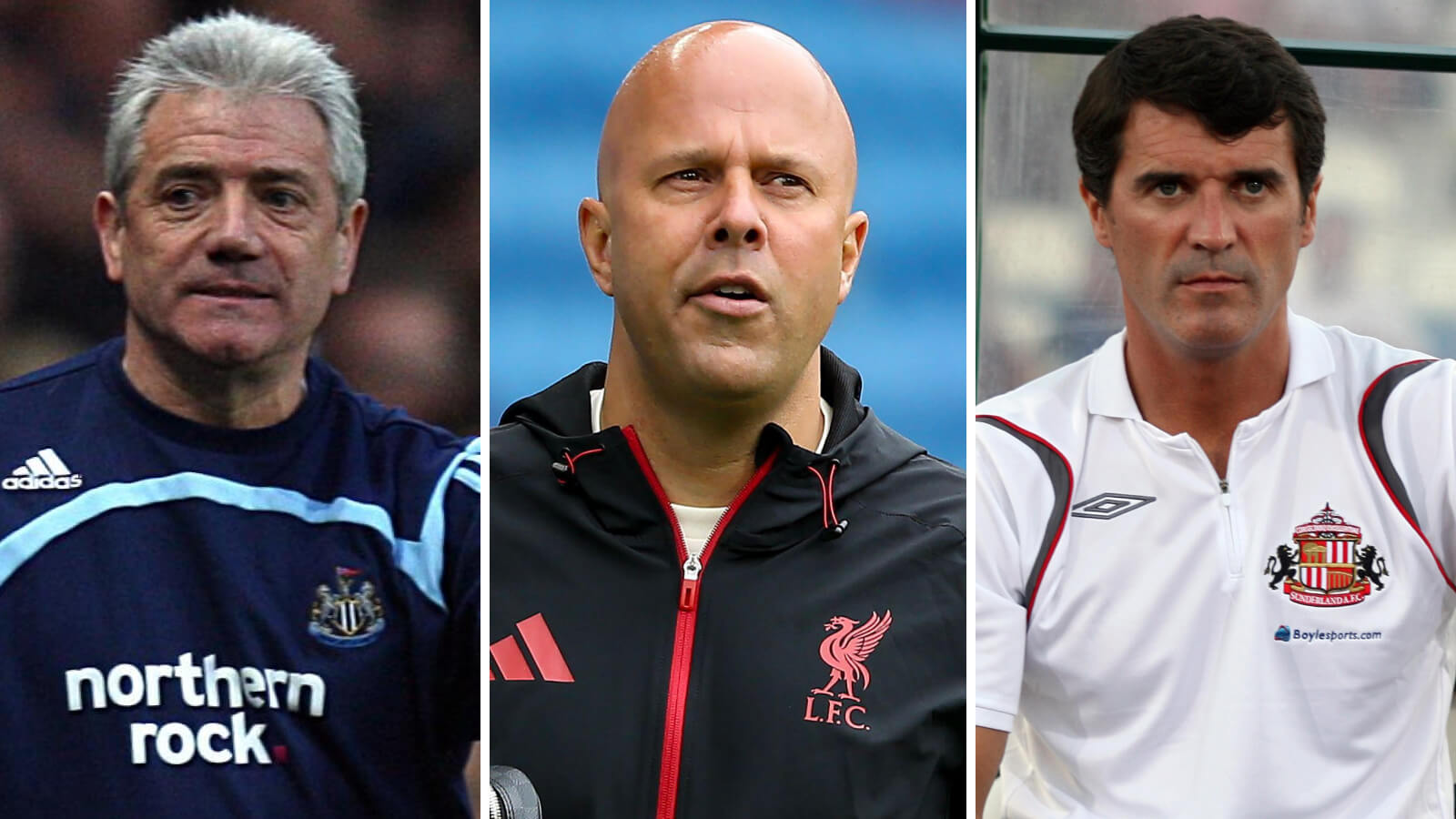
There's been some chatter suggesting Arne Slot might consider stepping down as Liverpool manager, having apparently concluded he's facing an impossible task. Probably wide of the mark, but it got us thinking: how often do top-flight bosses actually resign these days?
The answer? Almost never. Modern football has become a sacking game, with the occasional "mutual consent" arrangement thrown in to sweeten the financial pill. Resignation? That's practically extinct. Only ten managers have genuinely quit mid-season in the Premier League since 2000, and just one did it by text message.
Roy Hodgson (Crystal Palace)
The writing was on the wall here. Hodgson and Palace had already agreed to part ways, with the manager planning to "step aside so that the club can bring forward their plans for a new manager, as intended for this summer." But events accelerated the timeline.
Health became the official narrative after Hodgson collapsed during training in February, forcing Palace to cancel a press conference just thirty minutes before kickoff. Convenient timing, perhaps, though his wellbeing was undoubtedly genuine concern. Still, it did sidestep some uncomfortable media questioning while the club actively hunted his replacement.
Beyond the health scare, a run of two wins in fifteen games had made his position untenable anyway. His remarks about "spoilt" supporters, young players, and the medical team hadn't helped matters either. Oliver Glasner was already waiting in the wings, and he proceeded to extinguish those fires with considerable aplomb.
Dick Advocaat (Sunderland)
Advocaat's story had familiar echoes. He arrived in March 2015 to rescue Gus Poyet's shipwreck, then somehow got persuaded to stay on a one-year deal after initially declining and announcing retirement plans. Eight days of negotiations later, he'd changed his mind.
Four months in, with Sunderland winless and going nowhere, the Dutchman departed. "I felt it was important to give everyone time to turn things around," he explained after just eight games. Brendan Rodgers got the chop from Liverpool the same day. While the Reds landed Jurgen Klopp, Sunderland turned to Sam Allardyce.
Chairman Ellis Short made a point of praising Advocaat's character, noting he'd "forgone any kind of a financial settlement, something which is very unusual in football."
Harry Redknapp (QPR)
Chronic knee problems were plaguing Redknapp in early 2015, though whether they'd have needed surgery remains debatable. What's certain is that QPR's relegation battle didn't help matters—a seven-game winless streak, including a 3-0 home thumping by League One hopefuls Sheffield United, made things worse.
"I haven't got the hump, we haven't had a row," Redknapp insisted, which of course suggested the exact opposite. Transfer frustration seemed to be simmering beneath the surface. QPR's winter business consisted of Ryan Manning on a free and Mauro Zarate on loan—71 combined minutes that did precious little for their survival hopes.
Two months after resigning, Redknapp elaborated. His knee was less the issue by then; rather, he simply "didn't know who was on my side at the end and who wasn't" and suspected "one or two people with their own agendas." The constant speculation linking Tim Sherwood to the job "got on my nerves," which seems entirely reasonable under the circumstances.
Redknapp managed just twice more before calling it quits—the same number of wins Chris Ramsey would rack up in thirteen games steering the Hoops into the Championship.
Roy Keane (Sunderland)
A man now famous for pointing out what everyone's job actually is, Keane showed no hesitation in walking when Sunderland became unworkable.
"Roy Keane hasn't been sacked because we've a bad team; he's resigning because we've a good team he feels he can't bring any further," chairman Niall Quinn explained after being informed of the decision—reportedly first via text, then later by fax. More official, at least.
Keane hasn't dwelled on it much over the years, but did reveal in 2021 that he'd grown "a bit impatient" over his contract situation. Yet he rejected a new deal rather than appear to be "panicking" or "desperate" following a poor run. He'd lost six of his final seven games.
The real kicker came years later when Keane addressed how owner Short had treated him. "I didn't like the way he used to speak to me. The tone of his voice," he reflected. "I shouldn't be spoken down to. I should only be spoken down to by my dad."
Freud would've had a field day with that one.
Kevin Keegan (Newcastle United)
Nobody does resignation theatre quite like Kev. While nothing tops stepping down in a Wembley toilet cubicle, leaving Newcastle in the lurch twice and remaining a folk hero takes some doing.
Keegan first quit in January 1997, crushed by watching Sir Alex Ferguson take Middlesbrough and build something lasting. His return eleven years later was never destined for success. Nine months in, armed with seven wins from twenty-two games, he declared: "A manager must have the right to manage and that clubs should not impose upon any manager any player that he does not want."
Two specific transfer decisions infuriated him and fractured his relationship with owner Mike Ashley and executive director Dennis Wise beyond repair. Times were different then.
Alan Curbishley (West Ham)
For some, signing Xisco and Ignacio Gonzalez represents the final straw. For others, it's the sale of Anton Ferdinand and George McCartney. Horses for courses, really.
"The selection of players is critical to the job of the manager and I had an agreement with the club that I alone would determine the composition of the squad," Curbishley stated from a position of relative strength—West Ham had won two of their opening three matches.
"However, the club continued to make significant player decisions without involving me. In the end such a breach of trust and confidence meant that I had no option but to leave."
West Ham attempted legal action but ended up paying £2.2m for constructive dismissal after Curbishley's contract contained a clause "confirming that I would have final say on the selection of players to be transferred to and from the club."
Ferdinand and McCartney? Both wound up at Sunderland, naturally. The resignation capital of the Premier League.
Sam Allardyce (Bolton)
One of the longest managerial reigns in Premier League annals, Allardyce's Bolton tenure dripped with iconic moments—the sort of folklore that feels almost too perfectly Barclays to be true.
With two games remaining and Bolton sitting fifth, having twice fought back to hold Chelsea to draws that damaged their title ambitions, Allardyce handed in his immediate resignation. A power move if ever there was one.
Chairman Phil Gartside kept the reasons "private" initially, though Allardyce eventually opened up years later, citing insufficient ambition. "We needed to spend some money to give us an opportunity to finish in the Champions League and I was turned down flat and told that we don't want to finish in the Champions League," he recalled. "That was it. I went home and said to [my wife] Lynne, 'That's me finished'. She didn't believe me, nobody believed but, believe you me, when Sam makes his mind up, there is no turning back."
Pure, undiluted Allardyce right there.
Jacques Santini (Tottenham)
"My time at Tottenham has been memorable," Santini offered of his thirteen-game cameo that ended with three straight defeats and an unhealthy chunk of summer transfer funds spent on Noureddine Naybet by sporting director Frank Arnesen.
The Frenchman cited "deep regret" and "private issues in my personal life." Four months later, however, he added with evident frustration that "they promised me a big apartment on the beach and I found myself 200m from the sea with a view of my neighbours."
Gordon Strachan (Southampton)
After steering Southampton to survival and then eighth place, complete with an FA Cup final and European football as reward, Strachan opted not to extend his contract and move on to better things—like getting a hip replacement.
January brought news that he'd depart at season's end. No heartfelt Jurgen Klopp-style message materialized, nor anything resembling the farewell tour the German would later receive. Strachan lasted five more games before exiting early because "the situation has become increasingly difficult."
John Gregory (Aston Villa)
October 27, 2001: Aston Villa topped the Premier League after a 3-2 win over Bolton. Gregory's telling of subsequent events is illuminating.
He asked owner Doug Ellis "if I could enhance the team and the answer was 'no', which was fair enough." Come early January, with Villa struggling in seventh, Gregory insisted resignation was unthinkable: "I wouldn't turn my back on the lads because they are still a fantastic bunch to work for."
By January 24, he'd changed his mind. Villa were sliding, and Gregory resigned, signalling his intention to take a "break" from management. Six days later, he signed a three-and-a-half-year contract at Derby. Some break.
Compare options