The New Manchester City: How Guardiola's Squad Shift Signals a Premier League Evolution
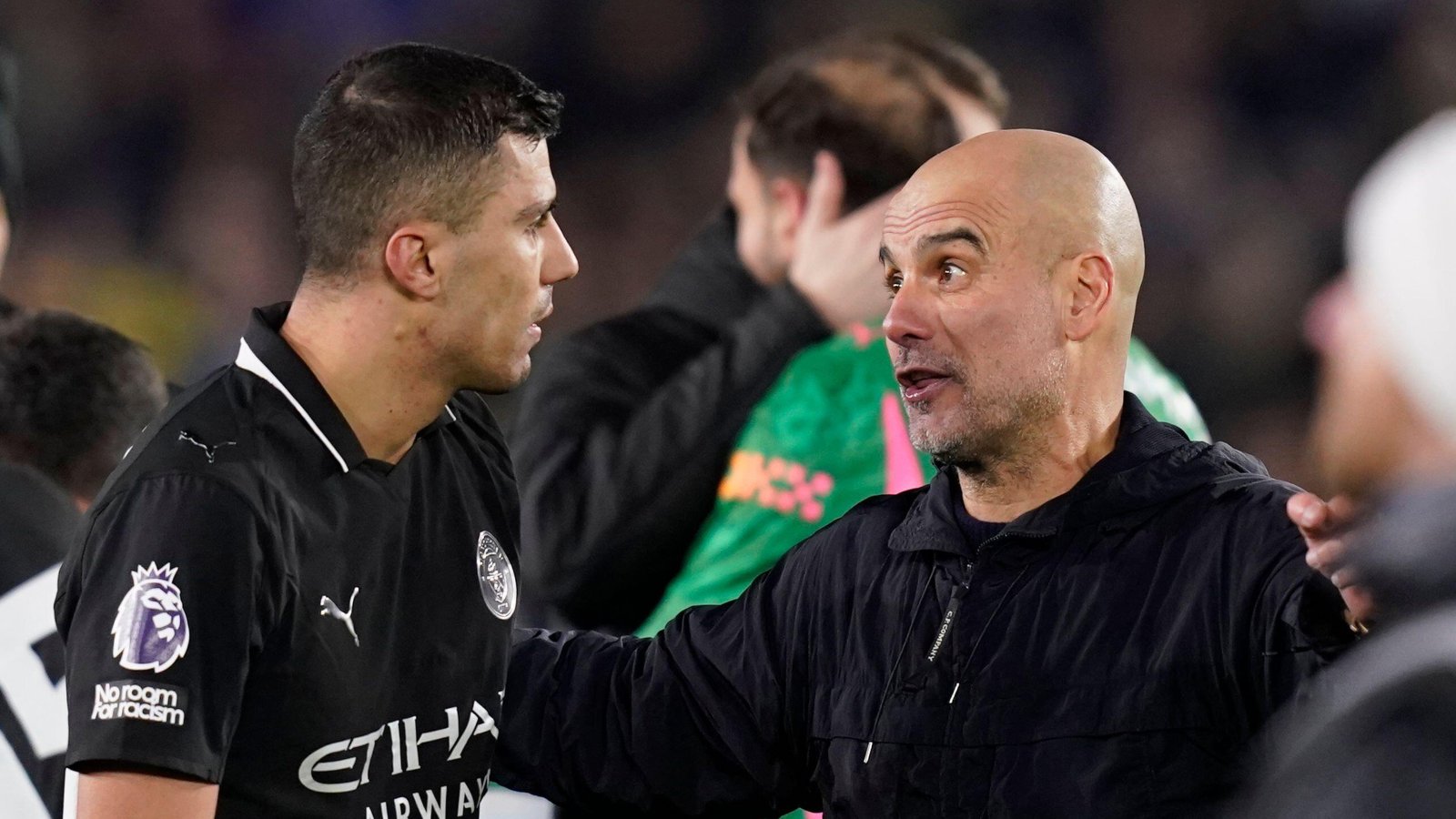
Manchester City have always been Manchester City. Or have they?
On the surface, Pep Guardiola remains unwavering in his footballing philosophy. The principles endure: a keeper's pass to a centre-back can spark an attack; possession remains paramount; control wins titles. Yet something curious is unfolding at the Etihad this season, and it's worth examining closely.
The Premier League itself has transformed. The football is rawer now—more direct, more combative, more physical than anything witnessed since the 1990s. Teams press higher, abandon their defensive shells quicker, and embrace chaos in ways that would have seemed reckless five years ago. City, meanwhile, are rebuilding their identity after a 2024-25 campaign that saw their dominance crumble spectacularly.
Here's the puzzle: Guardiola insists his core beliefs remain unchanged, yet City's transfer activity tells a different story entirely. The squad assembled over the past 18 months reads like a manifesto for transition football. Antoine Semenyo, Jeremy Doku, Savinho, Mateo Kovacic, and Tijjani Reijnders all excel at receiving possession in space and driving forward—precisely the opposite of what a possession-obsessed coach supposedly wants. Even Nico Gonzalez, City's midfield shield alongside Rodri, carries risk in his play.
Then there's Gianluigi Donnarumma. A goalkeeper of immense shot-stopping quality—his interventions against Alexis Mac Allister at Liverpool and Harvey Barnes at Newcastle proved decisive in 2-1 victories—yet one whose build-up play occasionally compromises City's defensive shape. It's an odd signing for a manager who famously demands technical excellence from his goalkeeper.
The old City won through suffocation. Neutrals complained of boredom, but that "boredom" was calculated. City rejected counter-attacks not through cowardice but through risk management. A broken transition meant exposure at the back. Instead, they'd allow opponents to retreat into their shells, then batter them with 90 minutes of relentless, controlled probing. The scoreline invariably read 2-0, 3-0, 4-0—emphatic, clinical, inevitable.
By contrast, the current squad seems built for something messier. Consider the Newcastle match: the first half saw City in their element, dominating possession while Newcastle retreated into their defensive third, yet City's creativity remained muted despite scoring twice. The second half inverted this entirely. City couldn't retain possession, the game became end-to-end and chaotic, yet somehow City created far more chances and should have sealed victory comfortably. Newcastle manufactured almost nothing until Barnes's late effort.
It's a paradox. City possess the personnel to thrive in transition-heavy encounters decided by individual moments, yet Guardiola philosophically prefers matches where City control proceedings. Surely the intention isn't to recruit players naturally suited to direct play, then teach them the nuances of possession?
Perhaps it is.
Guardiola's assistant Pep Lijnders recently outlined the modern Premier League reality: "You have one game played in the opposition half where teams are deep and compact. Then you have a game where teams play man-to-man high press. Before, teams went immediately deep. Now it's a combination—completely different games on either side of the pitch."
This suggests City's recruitment strategy anticipates exactly this evolution. The ball-carriers began arriving after the treble in 2023, signalling Guardiola's foresight. Rather than stubbornly clinging to outdated methods, he's assembled a hybrid unit capable of adapting.
The Leeds victory exemplified this. After a shaky opening 30 minutes, City gradually imposed themselves, forced Leeds into retreat, and then—remarkably—found 40 minutes of stable possession in the second half. When the moment demanded it, City abandoned their principles entirely, heading and kicking away in the final moments. That's new. Previously, Guardiola's sides would see out matches through passing and control; now it's an all-hands-on-deck scramble.
Bernardo Silva articulated this evolution: "With different players on the pitch, you play in a different way and you have to use the quality of your players. But the concepts of Pep Guardiola will never change."
The question becomes: what does this hybrid City actually look like? Perhaps they're seeking a system where suffocation and possession remain the primary objective, yet they're equipped to threaten through directness when defences refuse to drop deep. When control cannot be imposed, City now rely on Donnarumma's shot-stopping, Ruben Dias's last-ditch blocks, or Erling Haaland heading away corners in the 97th minute. That's a different City entirely.
The cracks show most visibly after half-time. Leeds represents an outlier—a second-half performance that remained composed and assured. Before that, City's second-half displays have been conspicuously uneven. Opponents grow bolder; City's technical level dips; possession slips away; the ball finds Donnarumma, who occasionally puts his centre-backs in difficulty or launches hopeful deliveries toward Haaland. It's worlds away from "putting the ball in the fridge" and suffocating proceedings for 45 minutes.
Many assume City will simply ignite one of their trademark end-of-season runs, pile pressure on Arsenal, and cruise to another title. Guardiola himself suggested otherwise: "Many things are going to happen. I don't know about Arsenal, but I have the feeling we are not going to win all the games."
This title race fascinates precisely because everything has shifted. Guardiola is simultaneously adapting to the modern Premier League while embedding his ideology into a group of new players who've never experienced a title run-in and who may not be naturally inclined toward his methods. The squad composition signals acceptance of this new reality.
What emerges is a Manchester City unlike anything we've witnessed before—same principles, entirely different execution. Whether that distinction proves sufficient remains the season's defining question.
Compare options