The Fall of Ruben Amorim: How Wilcox, Martinez, and a Damaging Interview Sealed Man Utd's Managerial Crisis
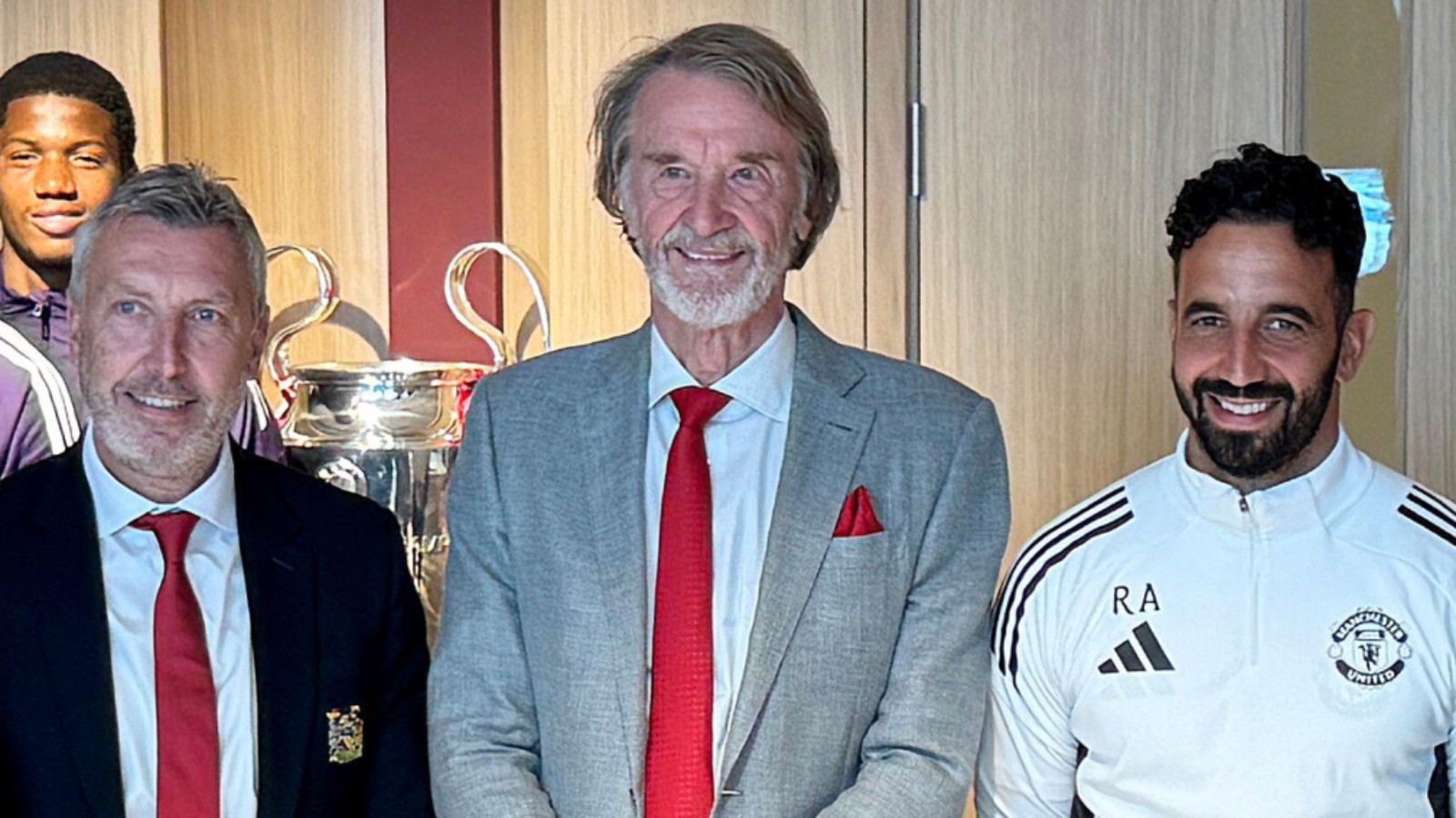
The curtain has come down on Ruben Amorim's Manchester United experiment after 14 months, 63 games, and hundreds of millions in spending—though the manner of his exit tells a far more compelling story than the results alone.
What emerges from the wreckage is a portrait of a manager increasingly at odds with his employers, a director of football fighting battles on multiple fronts, and a fundamental breakdown in communication that made reconciliation impossible.
The Wilcox Confrontation
The meeting between Amorim and director of football Jason Wilcox has already assumed legendary status at Old Trafford. The Portuguese coach arrived emotionally charged, defensive, and prone to what various accounts describe as erratic outbursts when his tactical approach came under scrutiny—particularly following the limp draw at home to Wolves.
That fixture proved the inflection point. Having impressed with attacking verve against Bournemouth and Newcastle, Amorim retreated to his favoured three-at-the-back system against opponents who offered minimal threat. The result was a dismal stalemate that crystallised growing doubts within the hierarchy: was their manager genuinely fearful of the Premier League itself?
When Wilcox raised concerns about flexibility and adaptation, Amorim erupted. Yet the accounts vary in their characterisation of the director's tone. One version portrays Wilcox as measured and encouraging, merely suggesting greater proactivity. Another paints him as the final voice advocating for patience. A third suggests he compared Amorim unfavourably to other elite coaches—a slight that may explain why the manager subsequently name-dropped Antonio Conte, Thomas Tuchel, and Jose Mourinho in his post-Leeds press conference.
During that conversation, Amorim allegedly threatened to resign and contact his agent, only to have his wish granted days later. The official line from the club emphasised his failure to evolve tactically after more than a year in the job rather than any personal rupture, but the reality felt considerably more fractious.
The Squad Meeting and Tactical Stubbornness
Wilcox subsequently addressed the playing staff, expressing bewilderment at recent developments and noting the disconnect between manager and players. Amorim, for his part, had suggested the squad itself required overhaul rather than accepting criticism of his methods.
This inflexibility became a recurring theme. When Antoine Semenyo's representatives explored a move in January, Amorim promised tactical evolution—assuring them he would shift to a dynamic 4-3-3 with Semenyo operating as a left-winger. Within days, Manchester United reverted to the familiar 3-4-3 against Wolves, signalling to the board that such promises of adaptation were merely performative.
The Gary Neville Factor
Amorim's parting shot—a cryptic reference to "the Gary Nevilles" and the criticism from former players—revealed how deeply external voices had penetrated his thinking. He had come to believe that pressure from pundits, particularly Neville and Paul Scholes, was driving the club's doubts about his system. The suggestion that Jim Ratcliffe monitored Neville's podcast only compounded his sense of siege.
Yet whoever inherits this job will face the same structural reality: Wilcox and chief executive Omar Berrada wield final say on footballing matters, a hierarchy that predates Amorim and will outlast him.
The Emiliano Martinez Saga
Transfer disputes festered beneath the surface throughout. The decision to sign Senne Lammens over Emiliano Martinez became a line in the sand for the board—they refused to sanction a move for an older, costlier alternative when younger options existed. Amorim's subsequent praise of Matheus Cunha in October—declaring the need for "some crazy guys"—was internally understood as a thinly veiled swipe at the hierarchy's caution.
Other decisions rankled too. Benjamin Sesko arrived for £72m despite Amorim's preference for an established Premier League striker like Ollie Watkins. Alejandro Garnacho's market value allegedly dropped by £15m following his ostracisation around the Europa League final.
The Interview That Never Aired
Most damning of all was Amorim's approach to public commentary. His brutal honesty—questioning academy graduates' development, lecturing about "entitlement," offering unflinching critiques of senior players—began to feel reckless rather than refreshingly candid.
One television interview proved so inflammatory that Manchester United requested the broadcaster remove it before transmission. They obliged. The club deemed certain comments about a player sufficiently damaging to warrant suppression, a remarkable intervention that underscores how badly relations had deteriorated.
Amorim had convinced himself that such unvarnished truths might shock a "broken" and "fragile" squad into response. Instead, they simply provided ammunition to his critics and reinforced perceptions of a manager losing his grip.
The Reckoning
The final assessment from those inside Old Trafford proved withering. One source suggested Amorim had actively engineered his own exit, spotting the opportunity to depart before matters deteriorated further. His declaration that the squad represented "the worst team in the history of Manchester United" earned him the nickname "Ruben Interim" from player representatives—a cutting epitaph for a tenure that promised transformation but delivered only discord.
The decision to sack him fell to Wilcox and Berrada with the full backing of the decision-making structure. By then, it felt less like dismissal and more like mutual recognition that the experiment had failed.
Compare options