Amorim's Reckoning Arrives: Manchester United Manager's Fate Sealed After Everton Humiliation
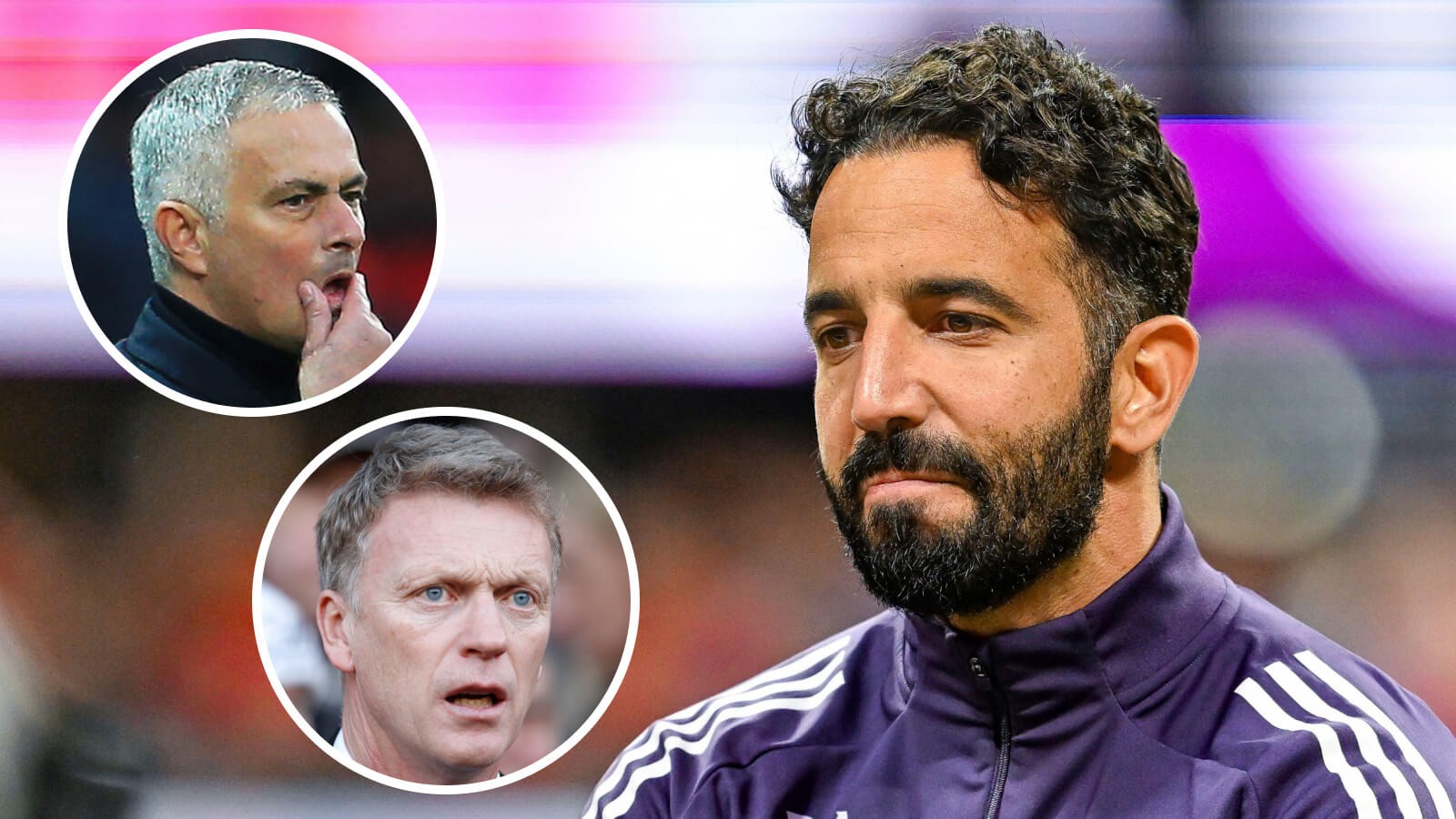
The pattern is becoming difficult to ignore. History doesn't repeat itself at Old Trafford so much as it wearily shuffles through the same tired script, occasionally changing the names but never the ending.
When Manchester United surrendered to Everton at home—a side reduced to ten men for 77 minutes—they didn't merely lose a football match. They surrendered to a familiar, suffocating incompetence that has plagued the club since Sir Alex Ferguson's departure. David Moyes secured his first Premier League victory as a visiting manager at Old Trafford in 18 attempts stretching back to 2002. The hosts suffered their first-ever home Premier League defeat after the opposition had a player sent off. These aren't just statistics; they're epitaphs.
Moyes himself, once the poster boy for Manchester United's post-Ferguson dysfunction, watched from the opposing dugout as his former club imploded with 38 crosses fired into the Everton box. That's nine more than their previous season high across 120 minutes at Grimsby, and their most in a single Premier League encounter since October 2018. The desperation was suffocating. The strategy, transparent. The execution, abysmal.
Dan Burn, Everton's centre-back, hadn't headed that many balls since his Conference days and admitted he was delighted to let United continue their aerial bombardment. Darren Bent echoed the sentiment, noting he knew precisely what was coming and welcomed it. Even Rene Meulensteen described the approach as "quite straightforward" and "easy to defend against." When your opposition is actively encouraging your gameplan, something has gone catastrophically wrong.
What made this display particularly damning was the context. Weeks of tentative progress had been completely squandered. Amorim's most troubling habits—his inability to adapt, his tactical inflexibility—had resurfaced with a vengeance. The manager admitted it was "my fault" that his players "didn't understand the moments of the game," that he needed to better "explain to the players how to play in every situation." This from a coach who, when Casemiro and Matthijs de Ligt scrapped over a misplaced pass, found himself presiding over a team apparently incapable of independent thought against an opponent with one win in four games.
The timeline is haunting. Jose Mourinho was sacked 73 days after his team recorded 81 crosses against Fulham—that was October 2018, with his execution coming in December. David Moyes lasted 72 days after those same 81 crosses epitomised his reign. Following that grim arithmetic, Ruben Amorim's final day at Manchester United could arrive on February 5, with the cruelest of narratives seeing his last match before that date coming at home to Fulham.
Moyes praised his players' willingness to "fight each other" during the match, resisting the temptation to suggest such matters be handled internally. Amorim echoed the sentiment, expressing hope that his side would battle for possession. Yet when a manager must issue reminders about raising intensity and diversifying attacking play against a ten-man opponent, the arrangement has already failed.
This wasn't merely poor. It was the football equivalent of watching someone repeatedly bang their head against a brick wall whilst insisting the wall must be moving incorrectly. For over a decade, Manchester United's list of required improvements has remained painfully static. The manager, it seems, remains near the top of that list.
Compare options