The Successors and the Shortfalls: How Replacements for the Premier League's Greatest Forwards Measure Up
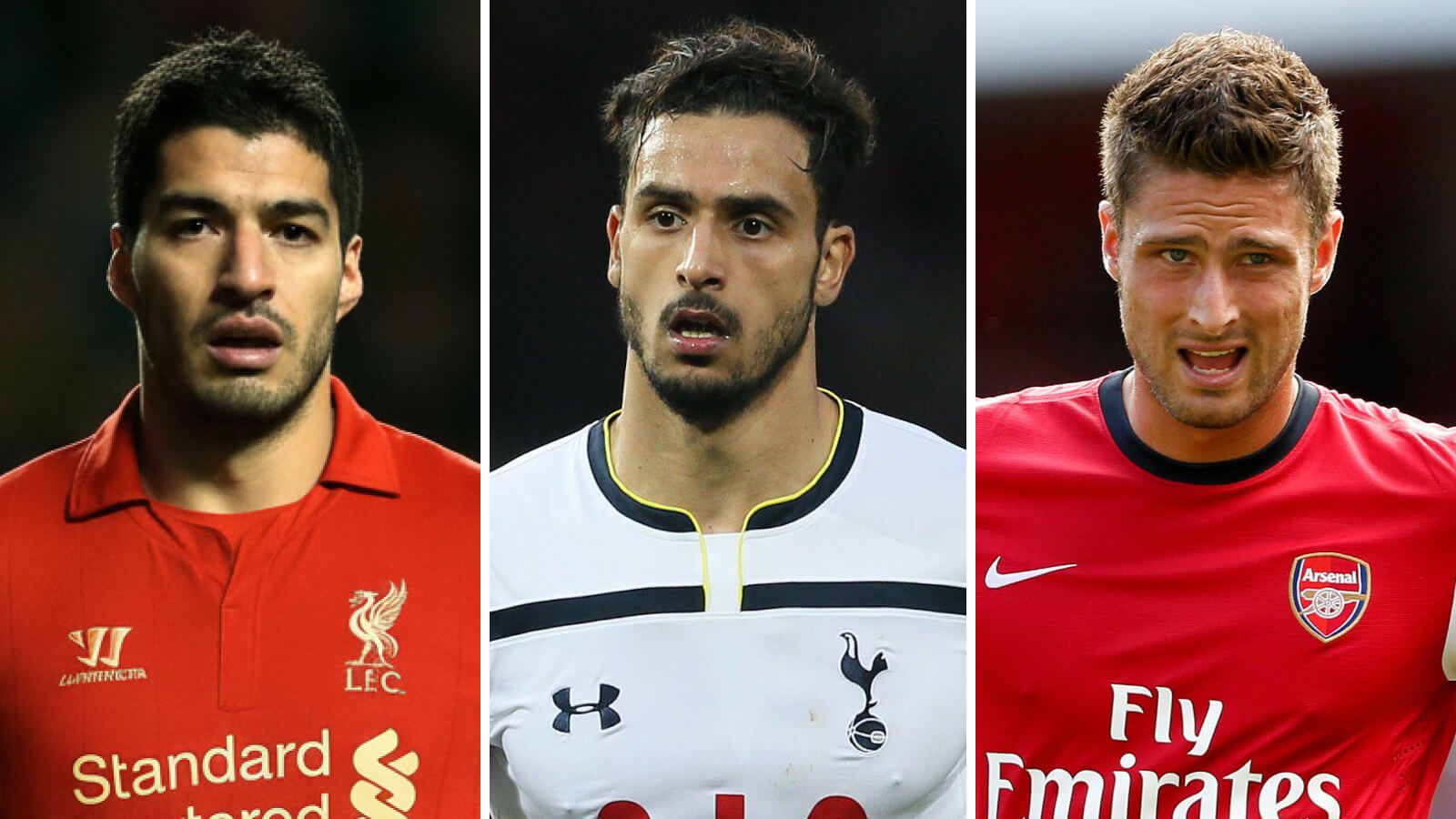
The Mohamed Salah transfer saga has set tongues wagging across Merseyside and beyond. Bayern Munich's Michael Olise sits atop Liverpool's wish list among ten potential targets, though the Reds may well need to temper their ambitions given the calibre of talent they're chasing.
Replacing a forward of Salah's stature is no trivial undertaking, as demonstrated by the chequered history of clubs attempting to fill the void left by the Premier League's greatest attacking talents. Some successors have risen to the challenge; most have fallen decidedly short.
The Cautionary Tales
When Alan Shearer departed Blackburn, Per Pedersen arrived in the winter window as a rather underwhelming replacement—mustering just a single goal across 12 outings. Spurs' decision to replace Gareth Bale with Nacer Chadli, alongside a £85m spending spree that netted Lamela, Soldado, Paulinho, Capoue, Chiriches and Eriksen, ranks among football's most haphazard recruitment exercises.
Erik ten Hag's predecessor faced their own reckoning when Angel Di Maria stepped into the shoes left by Ryan Giggs—a footballer whose devotion to Manchester United was absolute. Di Maria's subsequent disdain for the club made for an uncomfortable marriage indeed.
Luis Suarez's departure saw Liverpool gamble on Mario Balotelli and Rickie Lambert, a pairing that screamed desperation. Brendan Rodgers' attempt to harness Balotelli's talents whilst hedging with Lambert, a striker whose methods belonged to another era, proved unsuccessful.
Mixed Fortunes
Brennan Johnson inherited an unenviable position following Harry Kane's exit from Tottenham, though he was spared the direct comparison courtesy of Richarlison's prior arrival. Both club and player appear content with their respective paths since parting ways.
Didier Drogba's final act—a Champions League-winning penalty—set an impossible standard. Chelsea opted against immediate replacement, eventually stumbling toward Fernando Torres and subsequently Demba Ba, neither capable of filling that particular void.
Son Heung-min's departure left Tottenham with Mathys Tel, a prospect whose indifference to the club seemed palpable during his loan spell. The notion that he could replicate 173 goals and 101 assists across 454 appearances defies logic.
The Respectable Efforts
Christian Pulisic managed a respectable 15 goal contributions during his debut Chelsea campaign following Eden Hazard's departure, though subsequent seasons proved less fruitful. Hazard himself accumulated 31 contributions in his final Premier League season—a gulf that tells its own story.
When Dennis Bergkamp left Arsenal, Alexander Hleb possessed similar aesthetic qualities but lacked the X-factor his predecessor routinely delivered. Thomas Rosicky similarly occupied a place in the Arsenal pantheon without approaching Robert Pires' heights.
The Shrewd Solutions
Pep Guardiola's response to Sergio Aguero's departure proved masterfully unconventional. Rather than panic-buying a replacement, City simply abandoned the traditional centre-forward role, accumulating 83 and 99 goals respectively across the 2020/21 and 2021/22 seasons—much to the bewilderment of traditionalists.
When Raheem Sterling departed Manchester City, Erling Haaland's arrival wasn't a straightforward swap but part of a broader attacking architecture that included Julian Alvarez, Jack Grealish, Phil Foden, Riyad Mahrez, Kevin De Bruyne and Bernardo Silva in support. The result: a treble.
The Statistical Verdict
Olivier Giroud deserves rehabilitation. Whilst Robin van Persie notched 96 goals at 0.49 per game, Giroud's 73 strikes at 0.41 per game suggest he never received adequate recognition on these shores.
Luis Suarez's arrival at Liverpool represented genuine success following Fernando Torres's Chelsea switch. Only Thierry Henry (0.68 per game) and Ian Wright (0.54) bettered Pierre-Emerick Aubameyang's strike rate of 0.53—with Alexis Sanchez (0.49) following closely.
Ruud van Nistelrooy's exit saw Manchester United redistribute his goals across multiple shoulders: Cristiano Ronaldo contributed 17, Wayne Rooney 13, and Louis Saha eight, as Carlos Tevez's subsequent arrival helped forge arguably the Premier League's finest forward contingent.
The Impossible Acts
Some departures simply defy adequate replacement. Eric Cantona's retirement following his fifth title in 1996/97, achieved with 11 goals and 12 assists, left United to rebuild around Teddy Sheringham and Ole Gunnar Solskjaer. Gianfranco Zola's exit during Chelsea's first summer under Roman Abramovich meant Hernan Crespo and Adrian Mutu inherited an impossible standard.
Cristiano Ronaldo's £80m departure to Real Madrid prompted Sir Alex Ferguson's £20m double gambit on Antonio Valencia and Gabriel Obertan—a calculation that proved decidedly unequal. Valencia eventually reinvented himself as a right-back, whilst Obertan managed just 27 appearances and a solitary goal.
The lesson endures: replacing greatness remains football's most vexing challenge.
Compare options