Premier League's Nostalgia Library: A Gift Horse Worth Examining
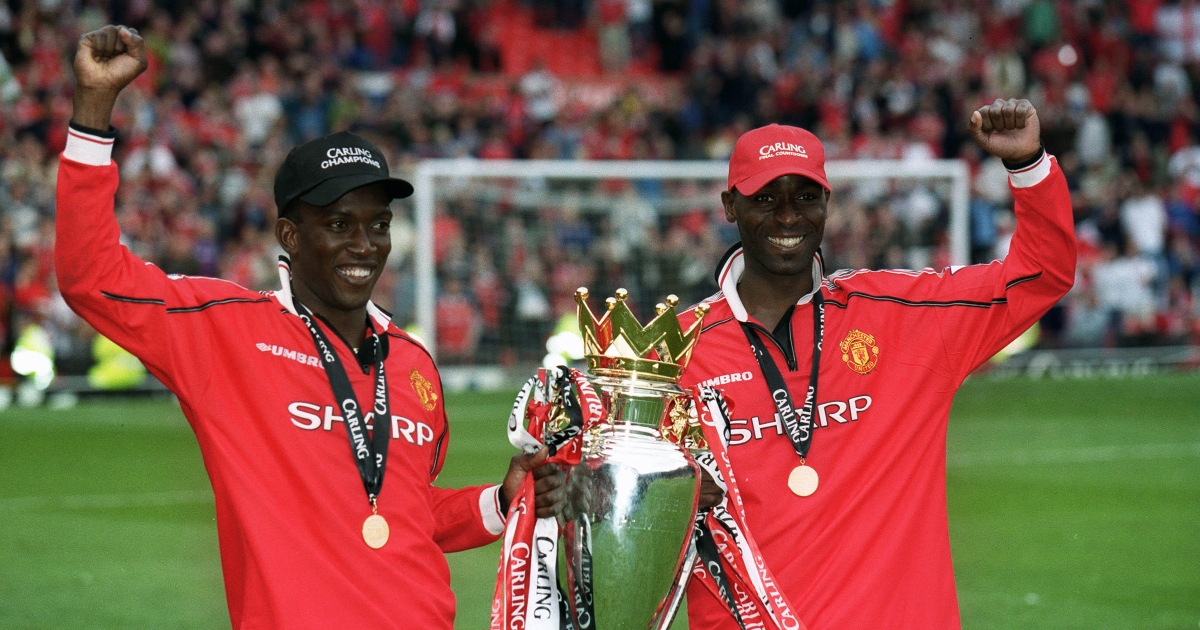
The Premier League's latest offering arrives wrapped in the trappings of benevolence: thousands of hours of historical match footage, all available free to account holders, stretching back through decades of English football's greatest moments. Sounds brilliant, doesn't it? A genuine gift to supporters.
Dig a little deeper, though, and the picture becomes considerably murkier.
United faithful can dust off their nostalgia goggles and revisit 1999's treble triumph. Chelsea devotees might find themselves misty-eyed watching Mourinho prowl the touchline with theatrical menace. For everyone, there's the chance to wander through football's architectural past—Maine Road, Upton Park, The Dell, Highfield Road, White Hart Lane—where pitches resembled building sites and finishing was about as reliable as a Somme artillery barrage.
It's easy to celebrate. But this isn't quite the altruistic gesture it pretends to be.
For the Premier League itself, this represents another brick in the wall of a standalone streaming service. Already being tested in Singapore ahead of next season, the organisation is clearly plotting how to "replicate" this Netflix-style model globally. That's potentially seismic for Sky Sports, whose relationship with the Premier League might charitably be described as one-sided.
The data harvesting angle deserves attention too. Track user behaviour, personalise recommendations, serve targeted advertising—the familiar playbook of modern tech giants. Standard practice, perhaps, but worth noting.
Yet there's something deeper at work here, something that speaks to our collective state of mind in uncertain times. Documentarian Adam Curtis observed in a 2025 interview that people retreat inward when they've lost faith in those supposedly looking out for them. "We live in a society where lots of people have retreated into their own heads," he noted.
Power has fundamentally shifted. Politicians no longer represent citizens against corporate interests; they represent corporate interests to citizens. Most of us feel impotent to effect meaningful change. In that context, nostalgia becomes a refuge—a predictable escape hatch from a chaotic present.
It's a mindset the Premier League seems perfectly happy to encourage. Meanwhile, member clubs continue jacking up ticket prices, systematically locking out vast swathes of supporters from creating fresh memories. The message is clear: look backward, not forward.
Curtis's work on late-20th-century Britain highlights the problem: "To build a better world, you need an idea of what should change and how. One of the things preventing that may be our obsession with constantly replaying the past. In the present age, the fog of experience has been thickened by the mass of recorded data that allows the recent past to be endlessly replayed, refusing to fade away. A constant loop of nostalgia—music, images, films and dreams from the past. It is another block to the future."
English supporters broadly sense that modern football is broken. Yet there's no collective response, no unified voice demanding change. German fans manage it far better, successfully pushing back on ownership structures and fixture scheduling. We take the path of least resistance instead, surrendering to the comfort of what once was rather than fighting for what could be.
This particular brand of mass nostalgia is distinctly contemporary. Thirty-year-olds in 2001 weren't endlessly replaying the 1980s on demand, pining for a mythologised past at every opportunity. We've created something new: a machine that feeds our desire to escape the present.
Nobody has all the answers, and that's precisely the problem. We're all equally paralysed by fear, seeking solutions in an idealised yesterday rather than building something authentic for tomorrow.
By all means, delve into the archive. It's a genuinely valuable resource. Just don't mistake it for something created with your interests at heart.
Compare options