Carrick's Masterclass Masks United's Fragility as Liverpool Crumble at Old Trafford
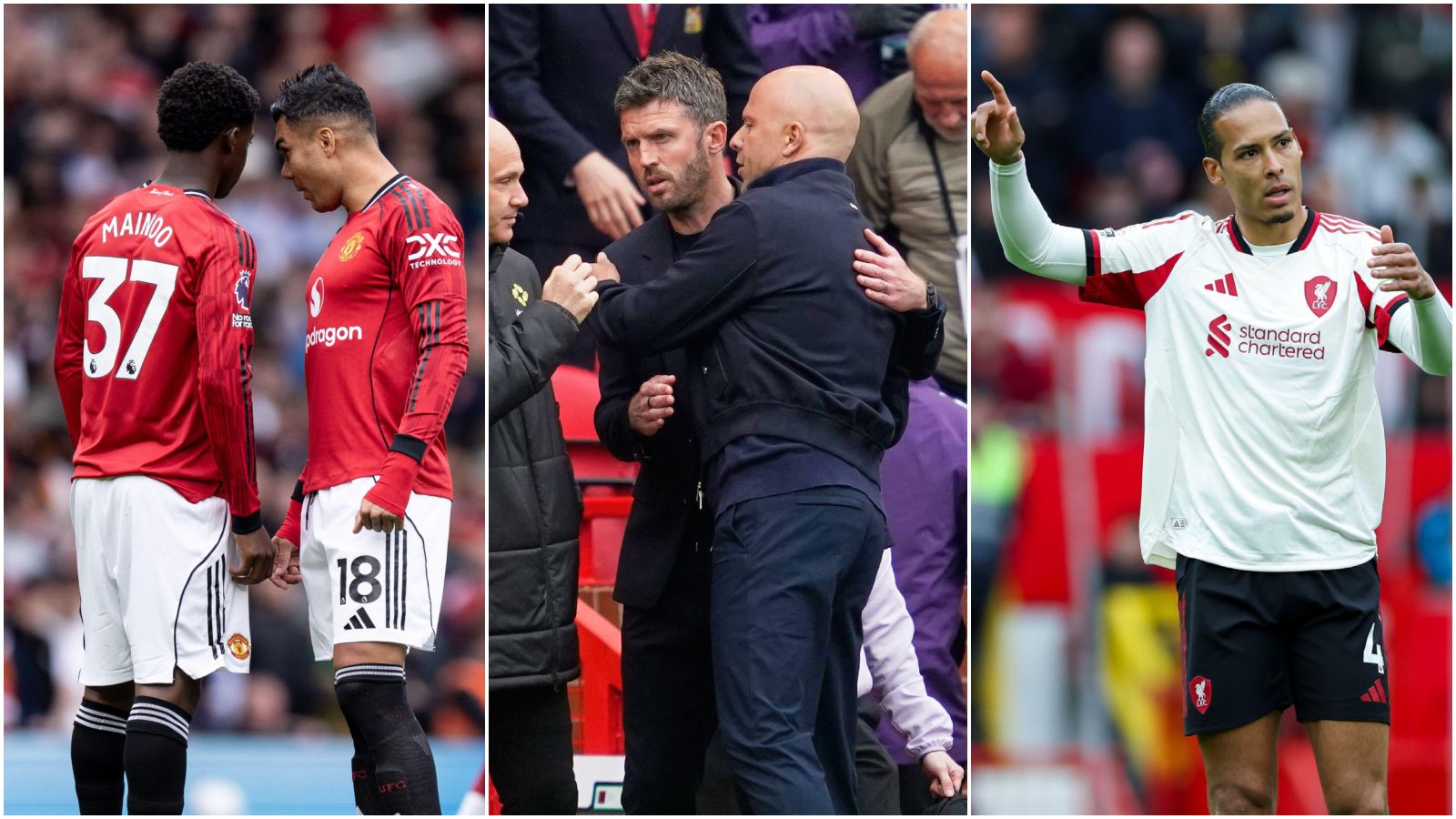
The scoreline read 3-2 to Manchester United, but the real story written at Old Trafford concerned the futures of two managers and the growing chasm between the ambitions and reality of two clubs headed in decidedly different directions.
For Sir Jim Ratcliffe, this win solves nothing and complicates everything. For Arne Slot, it crystallises the doubts that have been festering among Liverpool's support for weeks.
First-Half Dominance Tells the Story
Liverpool's opening 45 minutes was a masterclass in how not to visit Old Trafford. The contrast in intensity between the hosts and their guests was staggering. Where Jurgen Klopp's sides would arrive at this theatre ready for battle, Slot's outfit looked like they'd rather be anywhere else.
Jamie Carragher's exasperation was palpable when Curtis Jones hurled the ball back down the line from inside the United half in the fourth minute—the sort of moment that would see Brentford or Crystal Palace launching it into the box instead. Two minutes later, Liverpool were behind.
United "smelled blood" and hunted relentlessly. They possessed the tactical discipline to press when Liverpool had possession, then pivot instantly to devastating counter-attacking when they regained it. That's the difference between a side that knows what it's doing and one still searching for answers.
The Woodman Conundrum
Freddie Woodman's seventh Premier League appearance revealed why he remains a work in progress. His shot-stopping isn't the issue—it's his feet. That scuffed pass to Bryan Mbeumo in the fourth minute epitomised the problem. His Liverpool teammates lost confidence whenever he had the ball, and by the second half they'd simply stopped passing to him altogether.
When cornered by two United players with a simple pass available, Curtis Jones attempted a ridiculous lofted ball into midfield instead. That's not goalkeeper error; that's collective panic.
Van Dijk's Decline Becomes Undeniable
Virgil van Dijk wasn't just poor; he was exposed as a liability in ways that would have seemed impossible twelve months ago. Wayne Rooney's recent warning about age catching up with players rang particularly true. The composure that once made top-level football look "almost too easy" has evaporated, replaced by casual mistakes and a lack of urgency to correct them.
For Sesko's goal, Fernandes ambled in behind him to cross, and Van Dijk—once imperious, now sluggish—was beaten to the ball. That complacency, if we're generous enough to call it that, has become a pattern rather than an aberration.
Andy Robertson's "dreadful" display, as Roy Keane described it, was compounded by the absence of his defensive partner's usual authority. The two combined to look like they'd never played together before.
The Handball That Shouldn't Have Stood
Benjamin Sesko's opener involved his hand propelling the ball past Woodman. The rule is explicit: if a player scores immediately after the ball touches their hand or arm, it's an offence. Clear? Yes. Obvious? Yes. Gary Neville's insistence that it "wasn't conclusive enough to rule it out" only confirmed that even the most partisan analysis has its limits.
Ayden Heaven Emerges
One genuine bright spot for United was the continued emergence of Ayden Heaven. Bruno Fernandes noted that while Heaven's off-field reputation precedes him, he "switches" entirely once he crosses the touchline, adopting a serious demeanour that matches his football.
He won both aerial duels, succeeded with all five ground challenges, and moved comfortably through tight spaces. He's now clearly ahead of £60m Lisandro Martinez in the pecking order, and Thomas Tuchel has noted his potential after observing him during England's recent international break.
The Second-Half Collapse
If Carrick's appointment remains in doubt, his second-half management provided ammunition for the doubters. An errant pass from Amad Diallo saw United lose all shape and positioning. Both Kobbie Mainoo and Casemiro—who had sat deep in the first half—were frequently caught ahead of the ball as United chased a goal they didn't require.
It was United giving the ball away to invite Liverpool counter-attacks, a complete reversal of the opening 45 minutes. Senne Lammens' inexplicable decision to hoof the ball when clearer options existed epitomised the sloppiness that nearly cost them.
Mainoo's Redemption
Mainoo's first Premier League goal in nearly two years—a controlled side-foot half-volley from the edge of the box—provided the winner and offered further evidence of how puzzling Ruben Amorim's dismissal of him truly was. The youngster responded to Keane's pre-match call for "more from him" with a finish that suggested composure beyond his years.
Casemiro's Final Act
Casemiro's 18 defensive contributions were unmatched on the pitch, yet he was dribbled past five times. As United went 3-2 up, he was almost laughing at his inability to recover after pressing unnecessarily high. It's the perfect encapsulation of his time at Old Trafford: magnificent and damaging in equal measure. He'll leave with the fans' adoration, but also having overstayed his usefulness.
The Wirtz Paradox
Florian Wirtz played like a man who'd rather not be there—an outcast existing on the periphery of proceedings. While Bruno Fernandes nearly equalled Thierry Henry and Kevin De Bruyne's 20-assist tally, orchestrating chances with personality and drive, Wirtz drifted through the match. The forwards around him—Sesko, Mbeumo, Cunha—have been superior to Liverpool's attacking options, but personality arguably separates the two playmakers more than quality.
Mac Allister's Struggles
Alexis Mac Allister's attempted clearance for Mainoo's goal was pathetic; one of many instances this season where he's looked permanently exhausted. He also gifted the ball away in the build-up to Sesko's opener. Liverpool might be wise to seek a decent fee for him come summer.
The Broader Picture
Carrick's record speaks loudly: 32 points from 14 Premier League games, more than any other manager in that period. Victories over all six other "Big Six" sides plus Aston Villa have secured Champions League football. Yet questions persist about how much he's genuinely changed beyond reverting to 4-2-3-1, recalling Mainoo, and deploying Fernandes in his preferred position.
Ratcliffe remains unconvinced by Carrick's personality, preferring "alpha characters." Yet appointing an alternative represents a massive gamble for someone whose tenure has featured far more missteps than triumphs.
The Contrasting Narratives
For United fans, there's hope in the unknown. They can't predict how Carrick will handle permanent appointment, increased fixture congestion, and deeper involvement in the rebuild. Most recognise their league position is somewhat artificial, unlikely to be sustained next season. But there's genuine excitement.
Liverpool have nothing to cling to. New signings continue to underwhelm, the football remains as poor as it's been all season, and the terrifying prospect looms that this—sluggish, unconvincing, fragile—is simply who they are under Slot and will remain so if he stays beyond the summer.
Compare options