Mood Check: Only Four Premier League Clubs Getting Their Kicks Right Now
The eternal truth about football supporters rarely changes: most fans of most clubs spend most of their time in a state of profound unhappiness, punctuated only by fleeting moments of genuine joy that somehow make the whole ordeal seem worthwhile.
Not always, not everywhere, but broadly speaking? The default setting remains one of gloom.
The Daily Telegraph's recent assessment identified just four Premier League fanbases currently inhabiting something resembling contentment: Sunderland, Leeds, Villa and Brentford. Even within those four, it's more a general consensus than universal euphoria. Mention "Sky Six" or "Red Cartel" to a Villa supporter and watch how quickly that happiness evaporates.
Worth noting: Manchester United's current giddiness represents nothing more than a volatile mood swing rather than genuine, lasting happiness.
20) Tottenham (20)
There's something almost admirable about their commitment to chaos. Having constructed an absurdly successful 2024/25 season around winning the Europa League whilst playing football that genuinely hurt to watch, they've simply doubled down this term. Now they're trying the same gamble with the Champions League, except this time without the safety net of three genuinely terrible teams permanently residing below them.
Thomas Frank increasingly resembles a man drowning in complexity he cannot fathom. His insistence on avoiding anything resembling a passing game whilst simultaneously pretending draws against Burnley and defeats to West Ham represent acceptable outcomes suggests he hasn't grasped that the rules have fundamentally changed. His repeated references to last season's 17th-place finish—as if that catastrophic campaign represents a benchmark rather than the specific disaster he was hired to prevent—ring increasingly hollow.
The fan atmosphere has shifted ominously in recent weeks. Where anger was previously scattered across players and coaching staff alike, it's now laser-focused entirely on the manager. A February fixture list containing both Manchester clubs, Newcastle and Arsenal virtually guarantees further descent towards the bottom three, and Frank's survival into March seems mathematically unlikely.
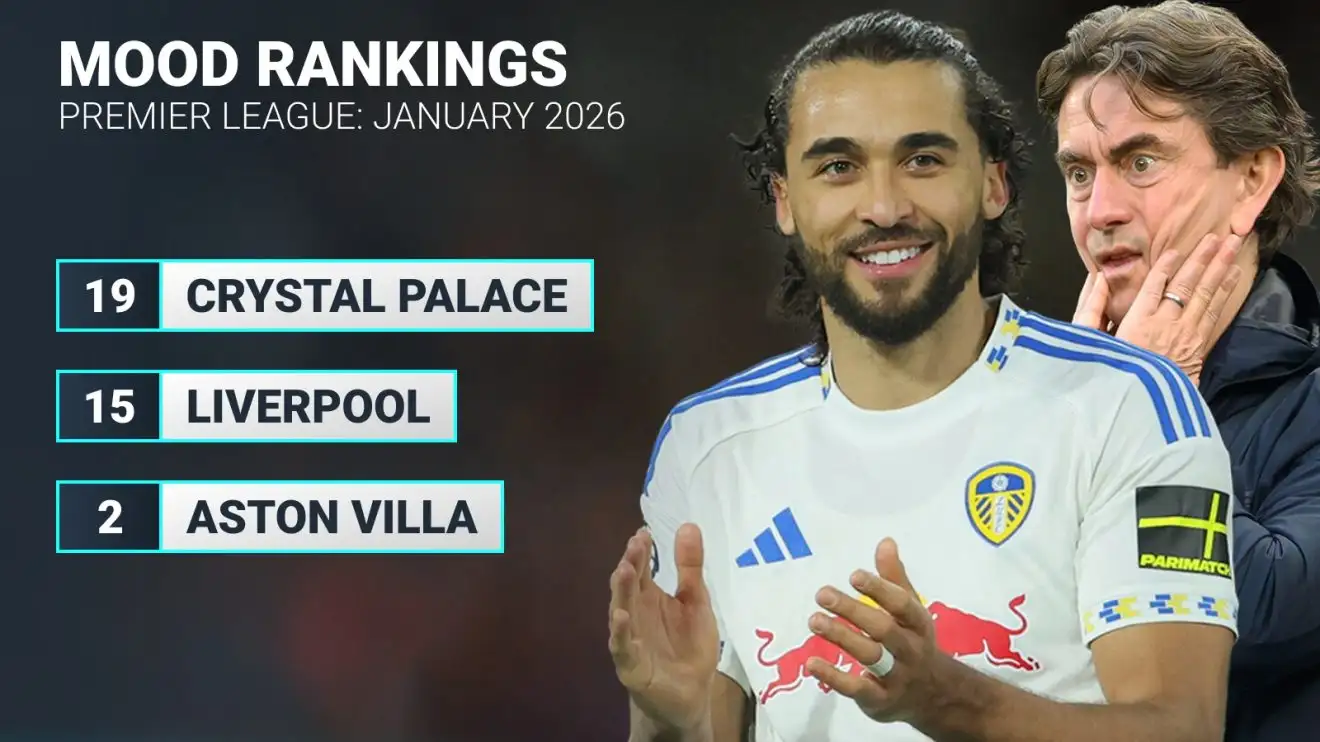
19) Crystal Palace (7)
Palace present a fascinating philosophical puzzle that offers their supporters precious little comfort as everything built over eighteen months crumbles spectacularly.
The essential question remains: would Palace prefer their dramatic rise and fall across two years, potentially ending in relegation, to the previous decade of trudging along finishing twelfth every season with 47 points? Instinctively, the answer feels obvious—those Wembley FA Cup final memories justify any price. Yet the speed and scale of what's been lost since that day eight months ago remains staggering. Their best player, their best goalscorer, their captain, their manager, their Europa League place, their hopes—all gone or going.
Jean-Philippe Mateta might even depart for Nottingham Forest. Adam Wharton will follow next. It's genuinely brutal.
Palace haven't won anything in any competition since beating Shelbourne in December. They've drawn at home to Finland's KuPS, suffered the ignominy of FA Cup elimination to a sixth-tier team, and most damagingly, lost a relegation six-pointer to Tottenham—a result that now carries considerably more significance than anyone anticipated.
Where Spurs still possess avenues to escape their predicament (if they'd only take them), Palace's crisis feels more existential. They're being punished for success rather than failure, a vastly more complicated problem to solve. Even a perfect managerial appointment cannot rebuild what's already being dismantled.
18) Burnley (19)
Burnley's been a curious campaign. They've avoided disgrace despite lacking a league win since October—a statistic that simultaneously reflects how low expectations have fallen for promoted teams and how spectacularly poor Wolves have been.
Individually competitive yet collectively struggling, Burnley rarely get humiliated. Only two defeats by more than two goals all season, with none since September. Recent weeks have brought draws against Big Six opposition, which counts for something despite the variable quality of those opponents.
Scott Parker's job security remains intact because he's doing precisely what anyone could manage in these circumstances, and he'll be exactly the right candidate for a promotion push next year. That's a reasonable assessment. Even during their seven-game losing streak before Christmas, the defeats carried dignity—four by single goals, one to Arsenal (perfectly acceptable), one to Chelsea (decided in the 88th minute), and one to Brentford from a goalless position at 80 minutes.
If anything's happening this season, it must happen now. Three upcoming matches against Sunderland, West Ham and Crystal Palace represent genuine opportunities.
17) Wolves (20)
Eight points from 23 games represents a grim statistic, but improvement nonetheless. Six points from four games, including an actual Premier League victory, should see them comfortably avoid Derby County's eleven-point record.
Rob Edwards deserves credit for functioning competently in horrific circumstances, but the justified anger at boardroom mismanagement on a spectacular scale remains entirely reasonable. The real work arrives this summer. Recent field improvements offer hope, though history suggests relegated clubs struggle returning immediately, and Wolves' previous Premier League drop saw them tumble to League One before clawing back up.
16) West Ham (17)
Remaining outside the bottom three represents remarkable achievement given the depths they've plumbed. Two consecutive wins—particularly the late triumph at Tottenham—have offered renewal to a club where hope seemed extinct. Following that with victory against Sunderland keeps them relevant whilst dragging others deeper into despair.
That late Spurs victory mattered significantly this season. It restored belief to the Hammers whilst simultaneously increasing misery for Tottenham and Palace, reinforcing the fundamental truth that one team's relief inevitably means another's torment.
15) Liverpool (12)
The caveats feel necessary but insufficient—this remains a genuinely poor season. From title winners in May to transfer-window victors in August to scrapping desperately for Champions League qualification in January represents a spectacular trajectory.
Their unbeaten run, billed as historically fraudulent, ended at Bournemouth. They've fallen outside the top five with absolutely no justifiable complaints. Arne Slot already appears destined for departure, with Xabi Alonso's appointment seemingly imminent. Another fresh start follows a title win and summer spending supposedly heralding dominance. Wild.
14) Newcastle United (16)
Newcastle remain infuriatingly impossible to definitively categorize. Earlier, Aston Villa frustrated supporters with their inconsistency; Newcastle have inherited that role.
Defeats at West Ham and Brentford suggested crisis. Then victories over Manchester City and Everton indicated otherwise. Failure to beat Tottenham and loss at Sunderland confirmed they were bad. Three consecutive wins suggested otherwise again. Draws at Wolves and losses to Villa settled nothing.
Ninth position means nothing—they could be sixth or fourteenth within weeks given mid-table volatility. Upcoming fixtures against Liverpool, Brentford, Tottenham and Manchester City should clarify matters, but honestly? Nobody's confident it will.
13) Nottingham Forest (6)
Seven points from three games significantly improve survival odds despite FA Cup complications. Their season contains multitudes—from complete disaster to European glory, though "wasted opportunity" remains most likely.
They probably won't go down, probably won't win the Europa League, and probably will finish in the bottom six regretting fumbled opportunities. Upcoming matches against Palace, Leeds and Wolves plus Europa League play-offs will clarify their trajectory.
12) Brighton (10)
Pop quiz: how many of Brighton's last ten Premier League games have they won? Just one—against Burnley at home. Yet they remain broadly competent whenever observed, somehow descending from fifth to twelfth without anyone particularly noticing or their football changing tangibly. Their FA Cup demolition of Manchester United provided additional satisfaction.
11) Bournemouth (15)
They're at it again—absolute rogues. After months of Champions League-calibre form, they've switched to relegation-form football. This pattern defines their Andoni Iraola era with no signs of stopping. Seven points from recent games against Spurs, Brighton and Liverpool will inevitably precede five wins from six followed by eight games without victory.
It's become as predictable as Spurs' own incompetence, though watching Bournemouth remain streaky remains endlessly entertaining. Whether this represents Bournemouth's nature or Iraola's character remains unclear; summer's big jobs will provide answers.
10) Fulham (9)
Mid-table consistency defines their season. They could accomplish something genuinely amusing at Old Trafford this weekend.
9) Arsenal (5)
Realistically, everything could conclude wonderfully—potentially their greatest season ever with domestic and European glory whilst Tottenham tumbles to the Championship. The quadruple seems plausible. So why aren't Arsenal supporters genuinely enjoying themselves?
They're not miserable exactly, but they're genuinely terrified of failure. That pre-emptive anxiety about disappointment, entirely understandable given the stakes, risks becoming self-fulfilling. The nervousness radiating from the Emirates during Manchester United's visit was almost palpable through television screens.
Two possible endings exist: either Arsenal supporters become insufferably smug, or everyone else becomes insufferably smug towards them. Arsenal fans pray for the former whilst increasingly fearing the latter.
8) Manchester City (3)
Funny thing: City could also win the quadruple. Doesn't feel remotely like it though. They're narrowly favoured in both domestic cups, second in the league, and the Champions League's refusal to be interesting means they'll reach the knockouts regardless.
Technically, everything's progressing well. Practically? The approaching Pep Guardiola departure creates inevitable uncertainty. This City side lacks their trademark invincibility, particularly with Erling Haaland in one of his periodic goal-droughts—just one goal in nine games, including a penalty, with a complete blank across 45 minutes in their 10-1 FA Cup demolition of Exeter.
Their November-December winning streak ended over a month ago. Three wins in eight games since then hardly suggests unstoppable momentum, particularly with Galatasaray and Tottenham upcoming.
7) Everton (4)
Home form at the new stadium has disappointed, with no victory since early December's win against Nottingham Forest. Away performances have compensated with couple of midlands victories maintaining comfortable mid-table positioning.
It hasn't proven as entertaining as hoped, but avoiding fingernail-chewing tension represents genuine achievement. At this season's stage, many clubs would gratefully accept having nothing substantial to play for rather than everything.
6) Chelsea (13)
Functionally, they're not really a football club anymore. That everyone else remains sufficiently dysfunctional for Chelsea to still compete represents damning indictment on the league. Imagine their capability if they actually hired managers confident enough to answer back or signed players aged over 23 to improve performance rather than balance sheets.
Their player-trading business has generated sufficient spending that their on-pitch competitiveness shouldn't surprise anyone. Yet it somehow does, representing a peculiarly modern form of dysfunction that makes them far more problematic than Manchester City's methods, despite City's obvious issues.
5) Manchester United (8)
In genuinely unprecedented circumstances, a shambling Manchester United sacked an incompetent manager unfamiliar with the club and league, appointed beloved former player Michael Carrick as interim, won impressively, and now possess absolute certainty they'll dominate English football for decades.
Much hyperbole belongs to observers, but performances and victories under Carrick have proven genuinely impressive. Orchestrating wins against Manchester City and Arsenal requires no caveats—it's uncomplicatedly impressive.
That relatively straightforward fixes—picking Harry Maguire, selecting Kobbie Mainoo, choosing formations suiting available players—proved so transformative says considerably more about his predecessor than Carrick. Still, it remains undeniably impressive.
The danger lies in familiarity. Carrick receives the permanent role after further wins, the upcoming light fixture list proves straightforward, and everyone knows what happens next. United supporters should absolutely celebrate, but discipline remains essential before street parties and title talk commence.
4) Brentford (14)
They'd dropped to 14th after taking one point from three games and suffering Carabao Cup elimination, including the indignity of losing to Tottenham at their own stadium—the only team Brentford failed to beat in a subsequent five-from-six run across all competitions.
They briefly reached the top five before recent defeats returned them to mid-table. Remaining conspicuously superior to Tottenham under Keith Andrews provides genuine satisfaction.
3) Leeds United (11)
Some minor frustration followed their 1-1 Everton draw, yet Leeds remain firmly positioned among the small group of genuinely happy clubs. Fifteen points from ten recent Premier League games lifted them clear of relegation danger, approaching mid-table security.
Their improved performances deserve greater reward than 15 points from 10 games, but this frustration itself carries positivity. Leeds are playing decent, effective football that's extracted them from immediate danger without suggesting they've peaked or remain on unsustainable runs. They've achieved solid mid-table results through solid mid-table performances.
2) Aston Villa (1)
Villa exemplify how football's default setting remains pessimism. They're second, level with Manchester City, four points behind Arsenal, with Europa League glory remaining plausible. By any reasonable measure, it's extraordinary.
Villa supporters are happy—obviously they're happy. Yet somehow they're not quite as happy as they should be. Too much bleating about Sky Sixes and Red Cartels rather than genuine enjoyment. Hopefully winning the league eventually improves their mood.
1) Sunderland (2)
Things have cooled slightly since their derby victory over Newcastle, though one win in seven games also means only two defeats in seven. They're comfortably mid-table without relegation concerns, remain the best promoted side in recent memory, and since Sunday possess the last unbeaten home record in the Premier League.
Few Sunderland supporters predicted this back in August. Among the four genuinely happy fanbases, Sunderland likely experience the most contentment, having nothing to genuinely fear across the remaining months.
Compare options