Salah's Time Has Come: Liverpool's Egyptian King Must Accept Reality and Move On
The Salah Dilemma
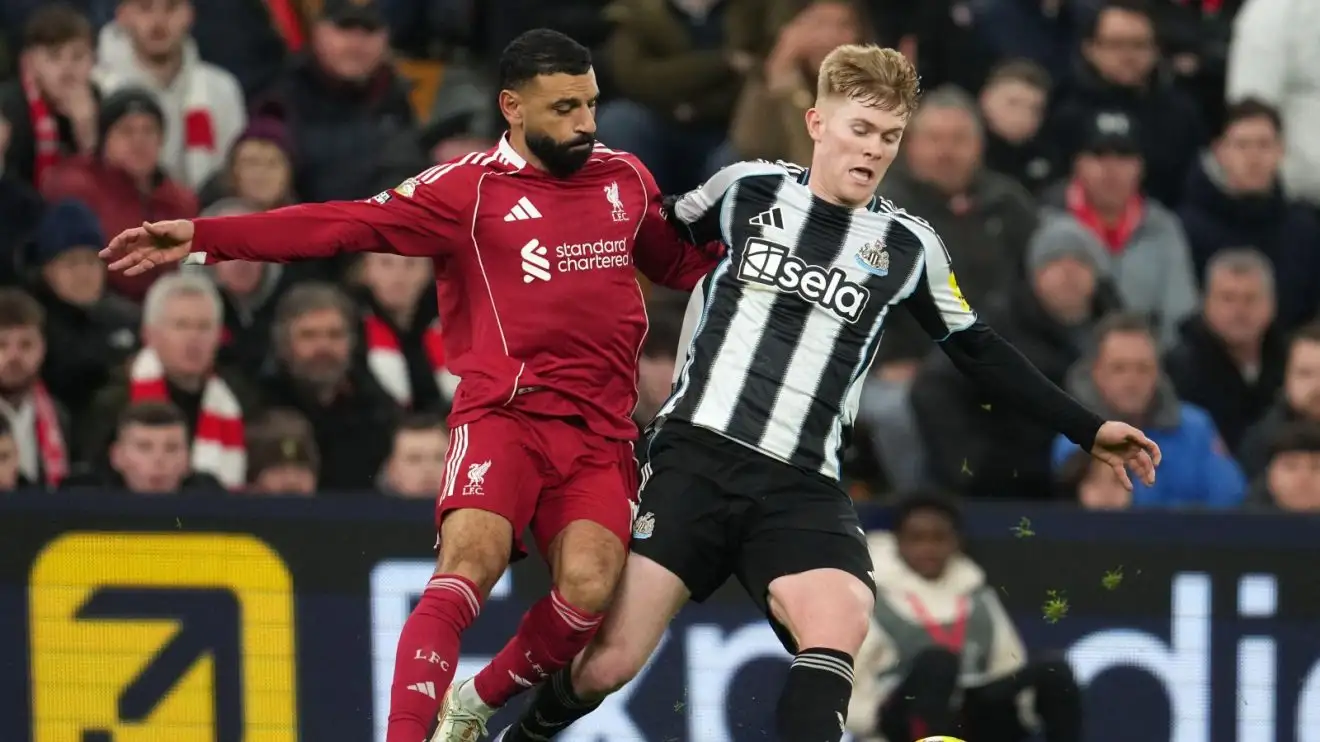
Mohamed Salah's time at Liverpool feels to be approaching its natural conclusion, according to the Anfield faithful. Following Saturday's commanding 4-1 triumph against Newcastle, supporters are united in their verdict: it's time for the Egyptian to accept that his moment has passed and seek a new challenge elsewhere.
The narrative around Salah has shifted noticeably. Whilst Arne Slot has persisted in attempting to restore the winger to his devastating best, observers note that the manager himself recognises Salah has "lost it." The evidence was visible throughout the Newcastle clash—the vacant expression when opportunities went begging, the inability to manufacture that explosive pace which once terrified defenders, the sense that he simply wasn't where he needed to be.
When substituted in the 83rd minute, there appeared a glimmer of acceptance in Salah's eyes. Perhaps he understands what needs to happen next. The Saudi clubs can afford his wages, though whether Salah believes he has another couple of seasons of meaningful European football remaining is the real question. Any move away from Anfield would demand a pay reduction, and Liverpool won't receive substantial compensation.
The message is clear: accept being removed from the pitch, work on the next chapter, and depart with your legacy intact. As one supporter put it, "Leave football before football leaves you"—a philosophy that applies perfectly here.
Newcastle's Tactical Misstep
Eddie Howe's decision to attack a Liverpool side supposedly vulnerable to low-block tactics proved remarkably naive. By committing bodies forward, Newcastle gifted Florian Wirtz and Ekitike the freedom to orchestrate some genuinely delightful football. A more defensive approach—setting up with ten or eleven men and hitting on the break—might have troubled Liverpool considerably. Ibou Konate's emotional display following his return from injury was particularly noteworthy; the centre-back produced a commanding performance.
Supporters are now calling for Liverpool to strengthen significantly in the summer: two central defenders and a right winger at minimum. Questions persist about whether manager Slot will be afforded time to implement his vision, though his pragmatic problem-solving in winning the league last season suggests he deserves patience.
United's Resilience Continues
Three consecutive victories—a sequence that seemed impossible when Ruben Amorim took charge—represents a genuine turning point for Manchester United. Yet the Fulham performance revealed both progress and lingering concerns.
Casemiro remains absolutely crucial to United's midfield stability. The moment he departed the pitch, Fulham exploited the central spaces with ease; United's possession subsequently became difficult to maintain. Any incoming manager must prioritise recruiting at least two midfielders, with Manuel Ugarte needing to depart as soon as practicable.
The penalty decision against Harry Maguire was legitimate, though it joined a long list of similar fouls that go unpunished every week—this one proved the exception rather than the rule. Automated offside technology continues to operate with impressive efficiency.
Antony's performance merits particular praise. Despite The Guardian's rather generous ranking of him as the 55th best player globally, he delivered the league's most assists, created the match-winning opportunity, and pressed relentlessly for 100 minutes. Should United somehow secure top-four football, he belongs in the Player of the Year conversation—though his chronic underappreciation will likely exclude him.
Dalot appears to have been replaced by a superior version of himself, whilst Mainoo continues disproving the doubters who claimed he couldn't run, couldn't tackle, couldn't complete 90 minutes, and couldn't execute long passes. Marco Silva's audition for future employment wasn't entirely unsuccessful either.
The Comeback Culture
Football's most compelling narratives aren't shaped by dominance—that's merely expected. Comebacks possess genuine power because they feel personal, almost confrontational. They're not declarations of competence; they're corrections of misjudgement.
Chelsea, United, Tottenham, Real Madrid—all have experienced that particular sting of being written off, outplayed, nearly eliminated, then striking in stoppage time. Even Paris Saint-Germain recognises this script, though they've typically occupied the wrong end of such reversals. Barcelona 2017. Madrid 2022. The culture teaches that you can purchase almost anything except nerve.
The finest football moments aren't highlights packages; they're rebuttals against consensus.
Aston Villa's Frustration
Being an Aston Villa supporter currently involves genuine confusion. Witnessing Douglas Luiz and Tammy Abraham reappear in claret and blue feels like dimensional displacement. VAR disallowed a Villa goal for a ball that may or may not have ventured out of play 19 seconds earlier, near the corner flag—apparently "looking like it was out" now constitutes sufficient grounds for cancellation.
The financial disparity in modern football feels increasingly insurmountable. Leicester's title triumph gets wheeled out repeatedly as proof that the established order can be toppled, yet who has genuinely threatened the dominance of Manchester City, Chelsea, Liverpool, and Arsenal since then? Nobody. Leicester represented a once-in-a-generation alignment of circumstances, not a repeatable blueprint.
When promoted sides face Arsenal's full-strength billion-pound squad, it's labelled "brave" and a "statement." When Villa, decimated by injuries and the Paulinha situation, wheel and deal to maintain competitiveness, there's no equivalent credit offered. The financial model simply doesn't permit genuine competition.
VAR: Implementation, Not Technology
The technology itself isn't the culprit—it's how it's deployed. Referees were introduced to VAR to prevent travesties like Pedro Mendes' disallowed goal, Lampard's 2010 World Cup incident, and Henry's handball. Yet implementation has created its own problems.
Rather than endless complaints, constructive solutions deserve consideration. A national Command Centre staffed by former referees, ex-players, and technology experts could standardise decisions against a database of previous rulings, significantly reducing subjective inconsistencies. Alternatively, granting teams two VAR reviews per match—one per half—would shift emphasis away from referee influence and towards genuine sporting accountability, as employed in the NFL and cricket.
Time-wasting, not VAR reviews, represents the genuine culprit for extended stoppages. But addressing that would require holding clubs and players accountable, which proves less convenient than blaming technology.
The Carragher Question
Jamie Carragher's continued presence as a prominent pundit despite repeated reversals of his "expert opinions" raises legitimate questions. His recent backtrack on Casemiro follows a pattern of emotional, biased commentary that he subsequently needs to retract. Labelling someone a hypocrite when the evidence supports such characterisation isn't unfair—it's accurate observation. Yet Carragher continues occupying his cushy, highly compensated position, seemingly immune to the accountability demanded of others.
Compare options