Manchester United's Mathematical March to Glory—And Everything Else Going Mad in the Premier League
The Numbers Don't Lie: Why United Will Lift the Trophy
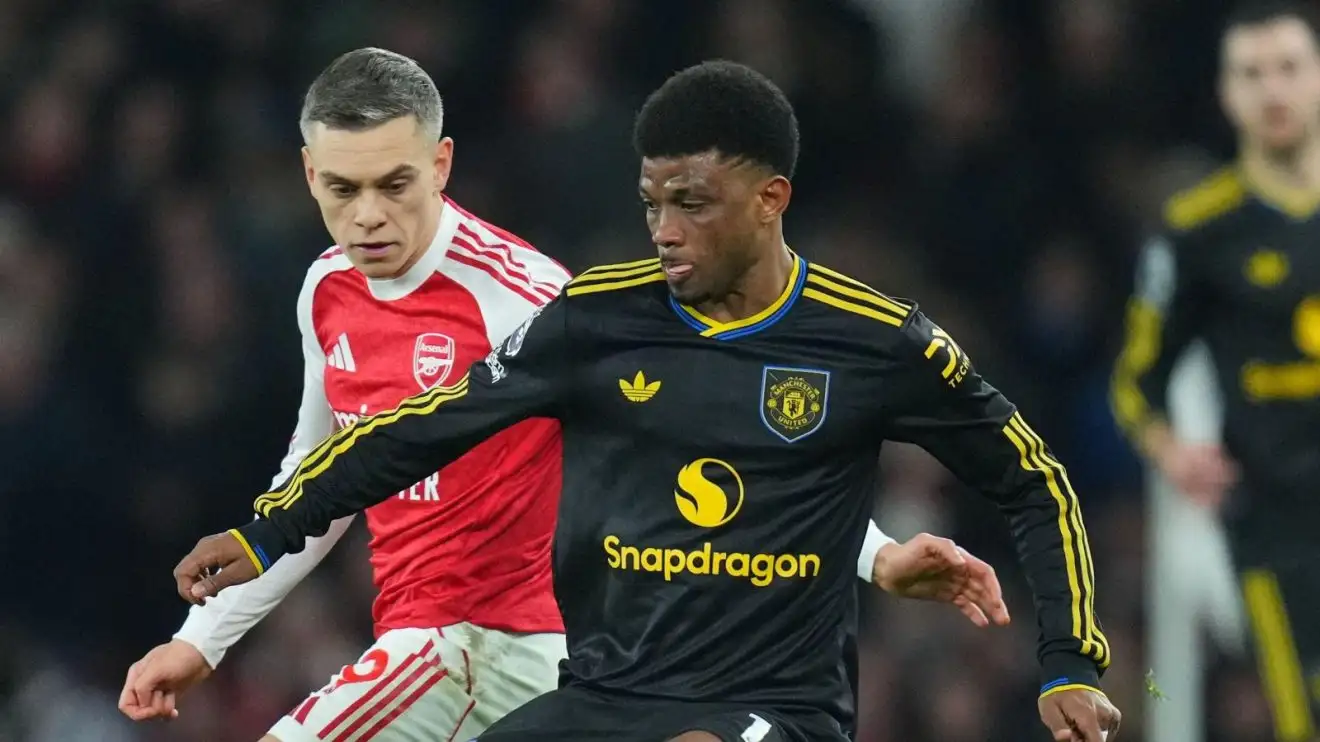
Let's establish the facts first. There are 45 points remaining in the Premier League season. Manchester United have just dismantled both Manchester City and Arsenal in successive weeks—the latter at the Emirates, no less—and the mathematics of their remaining fixtures paints a rather compelling picture.
Their next six games? Opposition they should comfortably dispatch. Then comes Aston Villa at home, a team United frankly ought to have beaten at Villa Park. Chelsea and Liverpool loom as potential banana skins, but United have already seen off both this season. That's a potential perfect run of nine games without facing genuine title rivals.
Here's the thing: United only have 15 matches left to play. No FA Cup distractions. No League Cup dramas. No European competition. Just 15 winnable fixtures across 17 weeks. Win them all and you're at 83 points—a number that Arsenal's three-year average suggests won't quite get them there, whilst City's superior form would land them on 82.
Could it happen? The science and mathematics say yes. Carrick's men are suddenly looking like the expensively-assembled squad they always were, and the manager has them playing to their strengths rather than against them.
The League's Permanent Crisis State
Strip away the hyperbole and one pattern emerges: nearly every club outside the elite six or eight has been in, is currently in, or is heading toward a crisis. Sunderland seem to be the outliers, having avoided the word entirely thanks to their solid start. Fulham might join them. But everyone else? They've all had their moment of panic.
The peculiar paradox is this: with 18 teams experiencing crisis mode at any given moment, you'd think we're witnessing the weakest Premier League ever. Yet simultaneously, the top three could theoretically all crack 90 points this season—something never achieved before. Wolves don't look like champions-elect for "worst team ever."
So perhaps the league is simultaneously the strongest and weakest it's ever been. A division where Liverpool, despite their struggles, remain closer in points to Nottingham Forest than to Arsenal. Where eight or nine teams are still genuinely in the Champions League hunt.
Arsenal's Afternoon and the Narrative Wars
Arsenal remain four points clear, but the post-match discourse has been delicious in its contradiction. United were "tactically brilliant" against City. United were "the better team" at the Emirates. Yet when Arsenal lose to the same opposition, suddenly they're bottling it, playing awful football, lacking mentality.
The inconvenient truth? Dorgu and Cunha both scored absolute worldies. Had Cunha's effort been an inch lower, we'd be discussing a hard-fought 2-2 draw at the home of the league leaders. That's hardly the stuff of existential crisis.
Arteta's record against the big six over three seasons—1.9, 2.11, and 2.0 points per game—compares reasonably to any elite manager. Arsenal have beaten Real Madrid twice in a Champions League quarter-final, Bayern Munich when they were Europe's finest, PSG, City 5-0, Atlético comfortably, and Inter Milan when they topped Serie A. The "they can't beat big teams" narrative has worn thin.
Yet the passivity Arsenal displayed after taking the lead does warrant scrutiny. That moment when the team seemed to forget their structure, when Zubimendi's substitution left them exposed to a loose ball—that's where the concern lies. Not in losing to a wonder goal, but in how they conceded it.
Carrick's Masterstroke
What's been glossed over in the Arsenal post-mortem is the tactical shift Carrick implemented at half-time. United began cautiously, compact and deep, allowing Arteta's side territorial dominance. Then, almost immediately after falling behind—suggesting it was a pre-planned contingency—everything changed.
Bruno and Mbeumo pressed the centre-backs high. Casemiro and Mainoo stepped up on Arsenal's midfield. Dalot and Shaw jumped on the wingers instantly. Caution became aggression. Suddenly United were winning the ball higher, holding possession, pushing their defensive line forward despite the pace concerns of Maguire and Martinez. Arsenal found themselves playing under pressure in bigger spaces, their territorial advantage evaporated.
It wasn't luck. It was management.
The Carrick Contrast
Michael Carrick needed two games for consecutive Premier League victories. Ruben Amorim required 11 months to achieve one, managing just one in 14 months total across all competitions. When you examine the calibre of opposition involved, the difference becomes stark. The real examination begins with Fulham, Spurs, and West Ham ahead—three fixtures where United's sit-deep approach won't suffice.
Villa's Quiet Excellence
While everyone else has been obsessing over Arsenal's wobble and United's resurrection, Aston Villa have been quietly brilliant. Away from home at a ground they hadn't won at in years, without McGinn and Kamara, they delivered a complete team performance. Each player made an impact. Yet the narrative has moved on to more fashionable storylines.
The Bigger Picture
Some perspective: one or two wins don't constitute a turnaround. Arsenal remain favourites. City possess the experience and quality to string together the winning runs that have defined their era. Villa's reliance on spectacular goals and individual brilliance will eventually regress. But for now, in late January 2026, the Premier League is genuinely wide open—and that's precisely what makes it compelling.
The football itself matters too. Dorgu's finish was exceptional. Cunha's volley was a thunderbolt. Sometimes you don't need an inquest into coaching or tactical philosophy. Sometimes you simply have to acknowledge that great players scored great goals, and that's why we watch.
Compare options