Carrick's Manchester United Are Playing Proper Football Again
A Return to Watchable Football
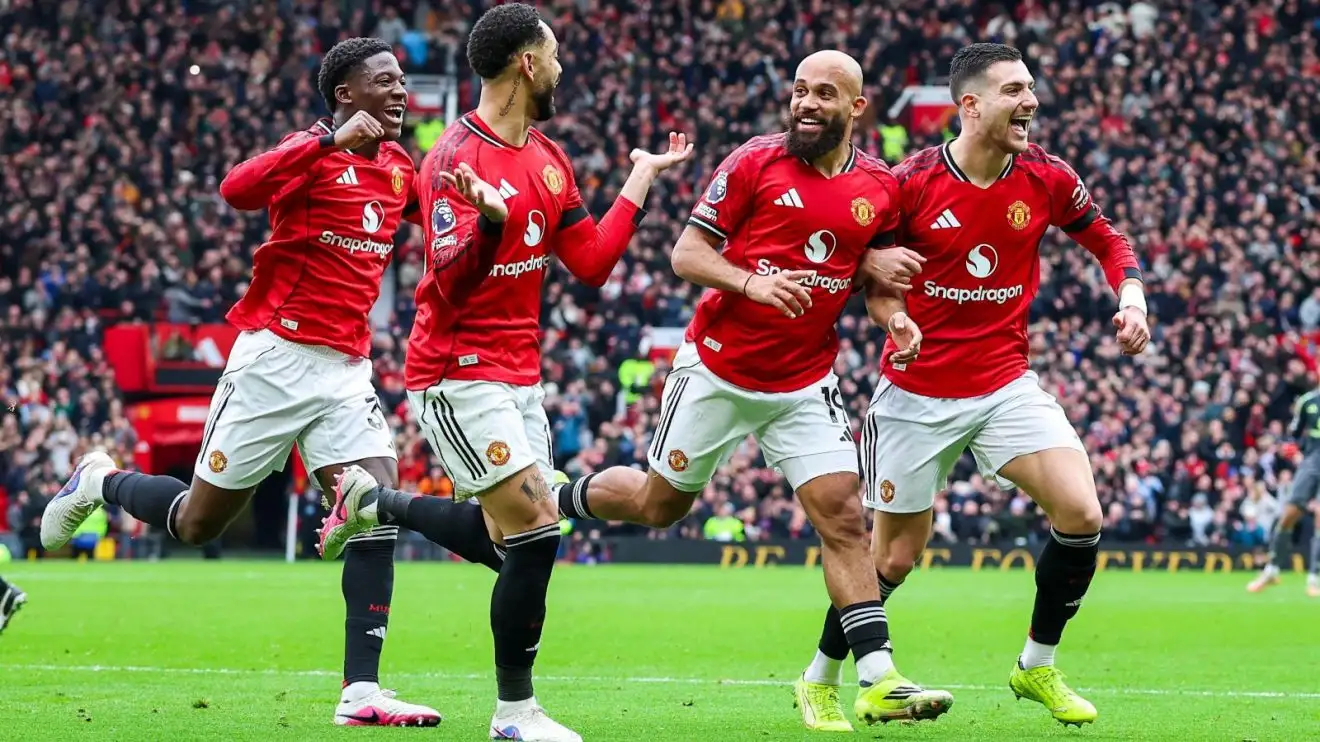
The transformation at Old Trafford has been nothing short of remarkable. After months of tedious possession football under previous regimes, United have finally remembered what entertaining football looks like. The intensity and movement of Cunha, Mbeumo, Bruno, and Amad has unlocked something special—a team that actually wants to take risks and create chances in ways we haven't seen from the established elite in some time.
Compare this to the sterile, predictable football served up by City, Liverpool, and Arsenal. Those three have become so risk-averse they've essentially confined creativity to the final twenty yards. Meanwhile, Carrick's side is threading incisive passes from deep, with Maguire, Dalot, Casemiro, and Martinez launching one-touch combinations that have the opposition on the back foot.
The difference is staggering. Under Amorim, these same players looked timid and disconnected. Ten Hag's tenure was defined by caution masquerading as control. Even Ole's counter-attacking model relied too heavily on Rashford's individual brilliance. This version of United has genuine fluidity, genuine unpredictability. There's a palpable sense of freedom about how they move the ball—one-touch football across the entire pitch, chances created from all angles, defenders actively involved in building attacks rather than simply recycling possession.
Best of all, the players appear to be enjoying themselves. That matters. If this continues, don't be shocked if senior figures start requesting Carrick's appointment be made permanent. The prospect of some high-profile manager arriving to impose rigid systems on a group of players clearly thriving under a trusting, principle-based approach could prove deeply unpopular in the dressing room.
Liverpool's Catastrophic Weekend
Liverpool's performance on Sunday was genuinely difficult to watch. Gakpo, Wirtz, Ekitike, and Salah were all dreadfully poor. Mac Allister and Gravenberch were sloppy in possession. Van Dyke, supposedly the captain, ranged from neutral to poor. Even Alisson was culpable—costing them goals when he should have been commanding his area. Only Domínguez, Konate, and Kerkez managed to scrape above a 6.5 rating.
The recruitment strategy begs urgent questions too. Liverpool were comfortable spending £55-60 million on an unproven centre-back who's just suffered a serious injury and won't arrive until summer, yet balked at £20 million for Guehi—who would walk straight into that chaotic backline right now. The priorities feel fundamentally scrambled.
The VAR Controversy That Won't Go Away
The incident involving Szoboszlai's red card and Haaland's goal continues to divide opinion. The sequence of events remains genuinely confusing: Szoboszlai fouls Haaland, the referee plays advantage, Haaland then fouls Szoboszlai, and the goal is disallowed. Why did City receive the resulting free kick? If the referee gave advantage, surely the second foul should have been penalised with play continuing?
The laws suggest Szoboszlai should have received a caution rather than a sending off when play eventually stopped, yet he was sent off instead. There's a legitimate argument that VAR should have intervened to prevent that red card, leaving Liverpool with a free kick in the final seconds to potentially salvage something.
Additionally, Silva's tug on Salah's shoulder—which went unpunished—would have been a straightforward foul in any other circumstance. Yet VAR deemed it acceptable. Compare that to Trippier's shirt pull on Potter, which was ruled "insignificant contact" despite clear evidence of a foul. The inconsistency is maddening.
Haaland's challenge on Szoboszlai before the penalty deserved a yellow card at minimum. He jumped on the midfielder with no genuine attempt to win the ball. Alisson received a caution for his challenge, yet Haaland escaped entirely. That disparity shouldn't exist.
Spurs Are Genuinely Cooked
The rot at Tottenham runs deep, and it's not the dramatic implosion everyone jokes about—it's far worse. It's slow, methodical, and entirely self-inflicted. Ten years ago, Spurs were competing with Leicester in a crazy season. They were taking points off Liverpool regularly. They went unbeaten at home. Then the penny-pinching began.
When they finally did spend money, they got it spectacularly wrong. Lo Celso and Ndombele were meant to be Mane and Firmino. They were cheaper alternatives to genuine quality, and it showed. The pattern has repeated endlessly—hoarding money, then spending it on available names rather than the right players. Tel and Muani replaced Kane and Son, not because they were superior, but because they were cheaper and convenient.
The current situation is dire. Brentford are 500/1 to go down. Spurs are 11/1. Do the maths—they're forty-five times more likely to be relegated than Frank's side. That's not hyperbole; that's where the club sits. The disenfranchisement runs from Romero through to supporters selling season tickets repeatedly. Spurs look like a well-dressed guest at a rough pub who doesn't understand the rules. The tables are emptying. This club looks finished.
Other Observations
There's a strong case for Thomas Frank to win Manager of the Season given Brentford's performances and current standing. Meanwhile, Jesse Marsch at Newcastle? Absolutely not. One-dimensional, celebratory football that occasionally works but ultimately suffocates creativity. Leeds fans still haven't recovered from watching Raphinha deployed on long throws.
Finally, Reinildo's flying challenge on Gyokeres—studs up, well above the knee, no possibility of winning the ball—should have been a red card. These challenges only seem to merit punishment when serious injury results. That's not good enough.
Compare options