Man Utd's Manager Hunt: Why The Masked Singer Approach Might Be Their Best Bet
The Endless DNA Debate
In the wake of Ruben Amorim's departure, one phrase has dominated the discourse surrounding Manchester United's next managerial appointment: "United DNA." One exasperated correspondent has had quite enough of it, pointing out that every ex-pro with a microphone seems contractually obliged to invoke this particular buzzword whenever discussing the club's future direction. The repetition has reached such levels that even Chelsea's perpetual chaos hasn't managed to generate similar chatter about their own institutional identity—a small mercy for neutral observers, though it does raise uncomfortable questions about whether the Blues have any coherent identity left to speak of.
A Modest Proposal: Hide the Manager
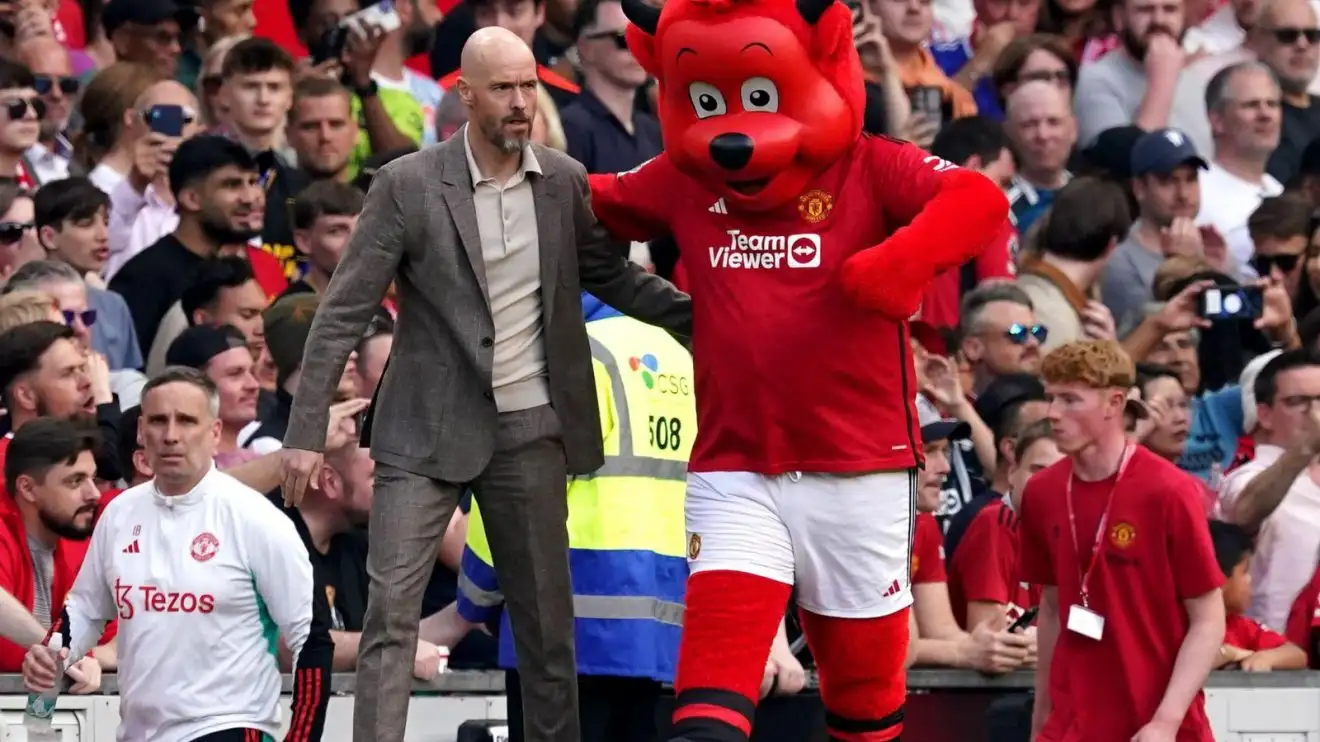
A Belfast-based reader has proposed a genuinely creative solution to spare the footballing public from further "United DNA" discourse: put the next manager in a giant costume à la The Masked Singer. The logic is sound—neutrals won't have to endure endless punditry about how David May could do a better job, United supporters get to enjoy a guessing game after years of watching their side fail to execute basic football, and the manager himself becomes a model of motivation, terrified to drop points lest his disguise be revealed. The only debate remaining is the costume itself. A ringmaster outfit seems fitting for what one correspondent calls a "clown show," though suggestions are welcome.
What United DNA Actually Means
Not all contributors dismiss the concept entirely. One long-suffering supporter since the George Best era at Windsor Park argues that "United DNA" is perfectly coherent—it simply means playing with wingers and pace, built around quick counterattacking football and a willingness to take risks at the back. From Best through Aston and Morgan, Hill and Coppell, Giggs and Kanchelkis to Beckham, the template was consistent: fast, attacking football that prioritised going past defenders and threatening the opposition goal.
The problem, this correspondent suggests, is that multiple managers since Sir Alex Ferguson have abandoned this entirely, instead favouring ponderous sideways passing and defensive lethargy. The Tommy Docherty's side, whilst never winning the league, played with genuine attacking flair. Ron Atkinson's teams were fast and entertaining. Ferguson's wingers were simply the best players available. The current regime, according to this view, simply doesn't understand what made United special.
Amorim: The Tactical Inflexibility Problem
Multiple readers have highlighted the fundamental contradiction at the heart of Amorim's appointment. United's hierarchy, led by Wilcox, had explicitly stated that any new manager would need to work within a defined tactical framework. Yet Ratcliffe proceeded to hire the most tactically rigid manager imaginable—a coach who arrived with the headline that he would not change formation.
This was a manager recently rejected by United's rivals for precisely this stubbornness. A manager who required a massive squad rebuild around his system. A manager whose inflexibility nearly got his previous club relegated. A manager so committed to his 3-4-3 that he reportedly resisted even constructive feedback from the hierarchy, with sporting director Dan Ashworth reportedly sacked for daring to raise concerns.
One correspondent has laid out the timeline with brutal clarity: Wilcox and Ratcliffe establish five new rules in summer 2024, the third stating the manager cannot impose their own style. Six months later, they hire Amorim, who immediately announces he won't change formation. By Christmas, after a year of poor performances in the back three, the hierarchy attempt to evolve the team into a back four. Initial results improve—Bournemouth, Villa, Newcastle all show promise. Then comes Wolves. Amorim either loses his nerve or deliberately reverts to the back three, the team falls behind, and he switches to a back four only when forced. From that point on, arguments with the hierarchy become inevitable, Leeds becomes the final straw, and the manager is sacked.
The Case for Patience
Not all observers have been so swift to condemn Amorim. One correspondent draws parallels with Mikel Arteta's early struggles at Arsenal, when pundits were sharpening their knives despite the fact that a clear system was being implemented. José Mourinho, of all people, defended Arteta at the time, and subsequent events have vindicated that patience. The argument here is that Amorim inherited a genuinely poor squad—not terrible, but mediocre enough to get Ten Hag sacked—and that beneath the frustrating results, a system was gradually taking shape. Football is always ideology versus results, but if you hire someone on ideological grounds, you must accept that implementation takes time.
The Amorim Critics Strike Back
Others take a far harsher view. One contributor argues that Amorim was simply out of his depth—comparable to André Villas-Boas at Chelsea or Roy Hodgson at Liverpool. When a manager's win percentage is worse than Gary Neville's managerial record, when he concedes more goals than any United manager in history, when he loses to Grimsby, can't beat ten-man Everton, and fails to defeat Wolves, West Ham, and Leeds, the statistics speak for themselves.
The argument goes that Amorim was hired with a multi-million-pound budget and showed no signs of improvement. He threw a tantrum when challenged rather than adapting his approach. A good manager should have worked with what he had while gradually implementing his system once the necessary tools were in place. Good managers do need time, but not infinite time, and not when they're actively refusing to learn or improve. When opposition attackers like Alex Iwobi openly mock your tactical setup, something has fundamentally gone wrong.
The Hierarchy's Role
One thoughtful analysis suggests the hierarchy may not deserve all the criticism they've received. The theory goes that Wilcox and Ratcliffe identified a long-term tactical direction favouring a 4-3-3 with attacking wide players—essentially a return to United's historical identity. They hired Amorim with the understanding he would initially be supported while the team evolved toward this style. Amorim accepted this arrangement, perhaps believing he could either change their minds through results or manage the transition later.
After a year of poor performances in the back three, Christmas was chosen as the evolution point. AFCON and injuries provided cover. The Bournemouth and Villa victories suggested the plan was working. Newcastle made everyone happy. Then Wolves happened, and Amorim either panicked or deliberately sabotaged the arrangement. From that point, the hierarchy's nudging made sense—if there had been an agreement to evolve and Amorim had reneged while costing points, they were entitled to challenge him.
External Perspective
An Arsenal supporter writing in expresses relief that Amorim is gone. While acknowledging that United's underlying issues—recruitment, back-office dysfunction—run deeper than any individual manager, they argue that Amorim was simply out of his depth. Everyone outside the club could see it. He was a poor communicator, tactically simplistic, and immature. The performances only improved because of the sheer weight of talent and money involved, not because of any managerial brilliance.
The comparison to Arteta is instructive: the Arsenal manager worked because he had the fundamental flexibility and personality to evolve. Everyone who encountered Arteta before and after Arsenal could see his elite potential. Amorim never showed those qualities. Crucially, Arsenal got their house in order behind the scenes, which raises a fair question: if you don't believe United have done the same, can anyone actually succeed there?
The Deeper Malaise
The most damning perspective comes from a supporter who has watched United since 1955, including the Busby Babes era and the Munich Air Disaster. This correspondent traces United's decline directly to Martin Edwards' sale of the club to the Glazers, arguing that the American owners have treated the club as a cash cow, extracting money while loading it with debt. When forced to sell due to mounting financial pressures and a crumbling stadium, they accepted Ratcliffe's offer—a man who tried to buy Chelsea first, then United, and settled for third choice. Like many of his signings, not top quality.
Ratcliffe's "Best in Class" appointments—Berrada from City, Wilcox from City and Southampton, Brailsford, Ashworth—have similarly underwhelmed. The conspiracy theorists have noted that both Berrada and Wilcox brought numerous ex-City personnel with them. The darker suggestion: Sheikh Mansour has deliberately infiltrated United to keep them permanently mid-table. True or not, it makes for interesting conversation.
What Comes Next?
As for the next manager, most correspondents expect United to disappoint. Rather than hiring an experienced operator with a proven track record of winning silverware and commanding player respect, the smart money is on another punt from a smaller league. One correspondent expresses hope that after the 2026 World Cup, United might finally pursue genuine elite talent—Ancelotti, Tuchel, and others with the credentials to manage a top club. But given the club's recent decision-making, that optimism feels fragile at best.
The alternative? Keep them in a giant costume. At least then the uncertainty would be entertaining.
Compare options