Manchester United's Goalkeeping Hierarchy: Where Does Onana Rank Among Red Devils Legends?
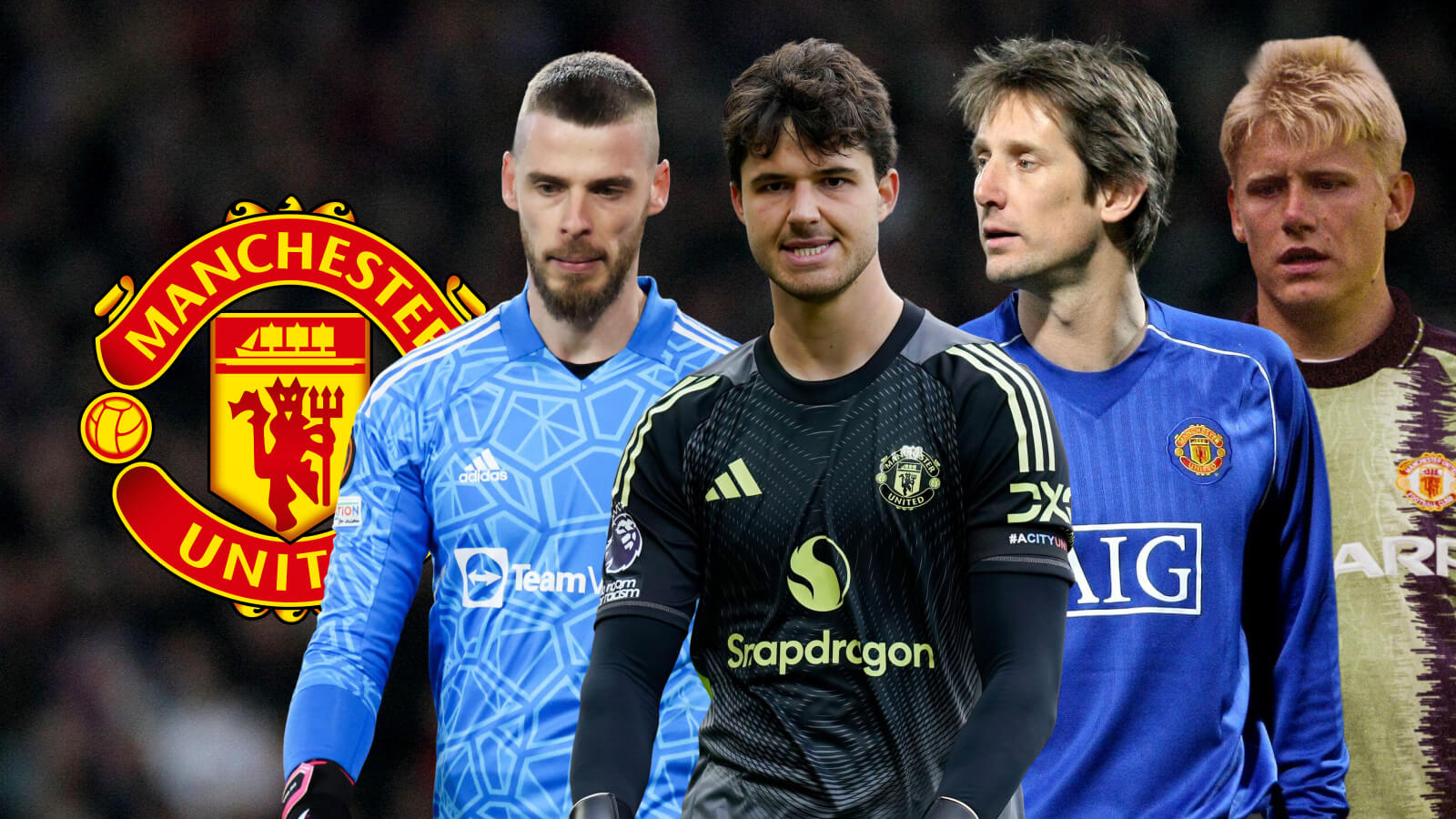
Manchester United have waved goodbye to another goalkeeper, prompting a look back at the various shot-stoppers who've donned the red shirt since Sir Alex Ferguson took the helm in 1986. Andre Onana's exit to Turkish club Trabzonspor marks the end of an experiment that promised much but delivered precious little.
This ranking considers only those who made at least 30 appearances, ruling out the likes of Altay Bayindir, Massimo Taibi, Ben Foster, Ricardo and Andy Goram.
16. Mark Bosnich
Bosnich arrived as a free transfer to replace Peter Schmeichel but became synonymous with one of Ferguson's most baffling recruitment decisions. His fundamental flaw? He couldn't kick a ball. Not pass it – just get it down the field. After watching Schmeichel's commanding presence, witnessing Bosnich flail about was like watching a youth player with size 14 feet struggle to reach the halfway line.
Ferguson's assessment was withering: "a terrible professional," a verdict Paul Scholes has backed. The manager had actually harboured doubts before the deal was done and had approached Edwin van der Sar instead, but chairman Martin Edwards refused to renege on a handshake agreement with Bosnich.
15. Andre Onana
The theory sounded perfect. De Gea wasn't Erik ten Hag's vision of a modern goalkeeper, so United splashed out record money for Onana, the supposed answer to their possession-based ambitions. The Cameroonian was supposed to revolutionise how United built from the back.
Spoiler alert: he didn't. Whether that was entirely his fault remains debatable, but stopping the ball from entering the net – a goalkeeper's core responsibility – is where Onana consistently fell short. Yes, he produced moments of brilliance, but too often he fumbled where he should have commanded. His parries frequently created fresh danger rather than security.
Onana possesses the ego required for Old Trafford, yet his swagger frequently felt misplaced. His presence somehow made those around him anxious rather than assured. The good news for United: he's now Trabzonspor's headache. The bad news: he might return for a pay rise if United qualify for the Champions League in his absence.
14. Tomas Kuszczak
The Poland international arrived from West Brom in 2006 as Van der Sar's understudy, harbouring hopes of eventually displacing the Dutchman. That never materialised. Despite five years at Old Trafford, Kuszczak rarely got a look-in as Van der Sar proved ageless. After finally departing in 2012, Kuszczak accused Ferguson of stunting his career development. Still, he collected three Premier League medals and a Champions League winner's gong, even if his contributions remain largely unmemorable.
13. Sergio Romero
Romero's pedigree suggested he'd be more than a squad player – 96 Argentina caps and Champions League experience – yet at United he became the cup goalkeeper under Van Gaal and Mourinho. He made 61 appearances, kept 39 clean sheets and featured in the 2017 Europa League final. Competent rather than commanding, his distribution was occasionally suspect, but he was never going to usurp De Gea regardless of circumstances. His exit turned messy, with his wife publicly urging the club to let him leave for Everton.
12. Chris Turner
Ferguson inherited Turner from Ron Atkinson, but the Sheffield-born keeper never fully won his trust. At 5ft 10in, Turner would struggle in modern youth football. Ferguson preferred Gary Walsh, and when injuries sidelined the youngster, he looked north to Aberdeen. Turner departed in 1988 for Sheffield Wednesday, where he'd later help beat United in the 1991 League Cup final.
11. Jim Leighton
Ferguson's first goalkeeping purchase arrived from Aberdeen in 1988 for £750,000, having enjoyed tremendous success together in Scotland. Leighton's debut season showed promise – 14 clean sheets in a struggling United side that finished 11th. Everything crumbled in his second campaign as United limped to 13th and Ferguson's job hung by a thread.
The FA Cup run saved Ferguson but buried Leighton. His performance in the final against Crystal Palace was calamitous, with two goals his responsibility. Ferguson's response was stunning: dropping him for the replay. Les Sealey, on loan from Luton, kept a clean sheet while Leighton watched from the bench, his relationship with Ferguson irreparably fractured. "We've never spoken since, and never will do again," Leighton reflected in 2018.
He eventually rebuilt his career north of the border with Hibernian, later returning to Aberdeen to finish his playing days aged 41.
10. Roy Carroll
Carroll arrived from Wigan in 2001 as backup to Fabien Barthez but eventually got his chance when Ferguson lost patience with the Frenchman during a title battle with Arsenal. Carroll helped secure the crown but immediately faced competition from Tim Howard.
His tenure is forever defined by one moment: fumbling Pedro Mendes' long-range effort in a 22-game Premier League run. A costly error in a Champions League last-16 tie against AC Milan hastened his exit when Ferguson finally stopped rotating his goalkeepers.
9. Tim Howard
Few had heard of Howard when United paid £2.3million for the then-24-year-old from the New York/New Jersey MetroStars in 2003. Ferguson thrust him straight into action, but March brought a turning point when Howard parried a Porto free-kick, prompting Jose Mourinho's famous touchline dash and the beginning of a fierce rivalry with Ferguson.
Howard's form wavered thereafter. The 2004/05 season saw both him and Carroll audition for the No.1 role; both fumbled their lines, so Ferguson turned to Van der Sar. Howard would eventually flourish at Everton, suggesting a move south earlier might have allowed him to develop the consistency required for Old Trafford.
8. Gary Walsh
The only homegrown keeper on this list, Walsh might rank considerably higher had injuries not intervened. Ferguson handed the Wigan-born teenager his debut in his sixth league game in charge. Walsh finished Ferguson's first season as No.1 and started the next campaign between the sticks, but a serious head injury sustained in a mid-season friendly in Bermuda – during which Ferguson himself played centre-forward – ended his campaign.
Walsh remained at Old Trafford for seven more years but never recaptured his early promise or the No.1 spot. He eventually carved out a career elsewhere, first at Middlesbrough then Bradford, finally achieving the status that seemed destined at United.
7. Raimond Van der Gouw
Too aesthetically pleasing to be a first-choice keeper, Van der Gouw proved utterly reliable as Peter Schmeichel's understudy. When Bosnich's inadequacies became apparent and Ferguson searched for a proper successor to Schmeichel, Van der Gouw stepped in without fuss. He managed 60 appearances across six seasons, winning one title-winner's medal during his spell. Now in his 60s, he still looks capable of doing a job.
6. Fabien Barthez
Modern goalkeeping wasn't invented recently – Barthez was essentially playing as an 11th outfielder at Old Trafford a quarter-century ago. After Bosnich and Taibi failed to replace Schmeichel, Ferguson turned to the World Cup and European Championship-winning Frenchman in 2000, paying Monaco £7.8million.
Barthez's first season was exhilarating. He saved penalties and frequently wound up opposition strikers, though Paolo Di Canio got his revenge when knocking United out of the FA Cup. By his second season, mistakes crept in, but Ferguson tolerated the risk. When his third campaign saw United lose to Real Madrid in the Champions League, Ferguson's patience evaporated. Barthez returned to Marseille.
5. Senne Lammens
Lammels has made an impressive start to his Old Trafford career by simply not being a theatrical disaster like his predecessor. The 23-year-old Belgian raised eyebrows when United selected him over pursuing Emi Martinez, yet his arrival has brought stability to a previously chaotic backline.
Lammels has made crucial saves whilst committing few errors. His temperament appears suited to football's most scrutinised position, and he looks well-positioned to guard United's goal for years to come.
4. Les Sealey
Sealey wasn't United's No.1 for long, but he made every moment count. His selection for the 1990 FA Cup final replay stunned everyone, particularly Leighton, yet Ferguson's decision proved inspired. The brash Cockney refused to be intimidated by Palace or the weight of expectation, keeping a clean sheet at Wembley.
The following season, Sealey was magnificent, becoming a Stretford End favourite. Ferguson recognised his limitations – "Not the best keeper technically or physically, but he thought he was, and that matters sometimes." Sealey defended United's goal as if his existence depended on it.
In the 1991 League Cup final, he suffered a gash to his knee that nearly reached the bone. Despite pleas to come off, he demanded strapping and continued playing. Infection set in, and he collapsed at the airport en route to Manchester – had he boarded the flight, he might have lost his leg or worse.
Heavily bandaged, Sealey returned for the European Cup Winners' Cup final against Barcelona weeks later, helping Ferguson secure his second trophy of the season. Schmeichel arrived that summer, and Sealey departed, though Ferguson later recalled him as backup. Tragically, he suffered a heart attack seven years after leaving United for the second time in 1994.
3. David de Gea
De Gea arguably deserves ranking higher. Some suggested upon his 2023 departure that he could be viewed as United's finest ever, with four Player of the Season awards supporting that case. His longevity reinforces this – only six players have made more appearances for United than the Spaniard signed from Atletico Madrid in 2011.
He arrived as an uncertain teenager and evolved into one of the world's elite goalkeepers. Yet somewhere around his massive 2019 contract renewal, de Gea became yesterday's news. He lost Spain's No.1 spot entirely and never corrected obvious technical flaws.
The 2022/23 season crystallised the issue: Ten Hag didn't fancy him. De Gea produced wonderful saves and occasional clangers, leaving Ten Hag initially willing to persist with the 32-year-old. Then the manager changed course, deciding replacement became a priority during a calamitous transfer window. United bungled his exit, only affording him a proper farewell when Fiorentina visited for pre-season. The decision proved correct, if clumsily executed, and shouldn't diminish his stellar eight-year tenure under six permanent managers. Yet two superior keepers make stronger cases for the top positions.
2. Edwin van der Sar
Ferguson summarised it perfectly in his autobiography: United endured a torrid period attempting to replace Peter Schmeichel, and it wasn't until Van der Sar arrived that they recovered that standard. The manager admitted he wished they'd signed the Dutchman when Schmeichel departed rather than cycling through six senior keepers over six years.
Van der Sar arrived close to 35 years old, yet his experience meant he handled the pressure effortlessly, making a notoriously difficult role appear straightforward. Despite his age, he kept goal for six seasons, retiring aged 40. The ex-Ajax, Juventus and Fulham keeper, capped 130 times, won four Premier League titles and played a crucial role in United's 2008 Champions League triumph.
Playing behind Rio Ferdinand and Nemanja Vidic certainly helped, but Van der Sar was immaculate – a cornerstone of what many consider Ferguson's greatest-ever side.
1. Peter Schmeichel
United's greatest-ever goalkeeper, arguably the finest the game has seen. Between 1991 and 1999, Schmeichel's presence filled Old Trafford. The Great Dane's personality proved as formidable as his physical frame – strikers wilted when facing him one-on-one.
Schmeichel popularised the star-shaped spread, his limbs covering every inch of goal. His distribution revolutionised the position, with throw-outs reaching opposition territory and turning defences. Technical imperfections mattered little – Schmeichel had mastered goalkeeping as an art form.
He guarded the goal throughout United's first Ferguson title, both doubles, and the Treble, bowing out with the 1999 Champions League final. His eight-season tenure made Old Trafford the most secure goal in England. Later returns to the Premier League with Aston Villa and Manchester City somewhat tarnished his legacy in hindsight, yet only the most bitter United supporter would diminish his extraordinary achievements in red.
Compare options