Brighton's Old Trafford Masterclass Leaves United Fans Demanding Wilcox's Head
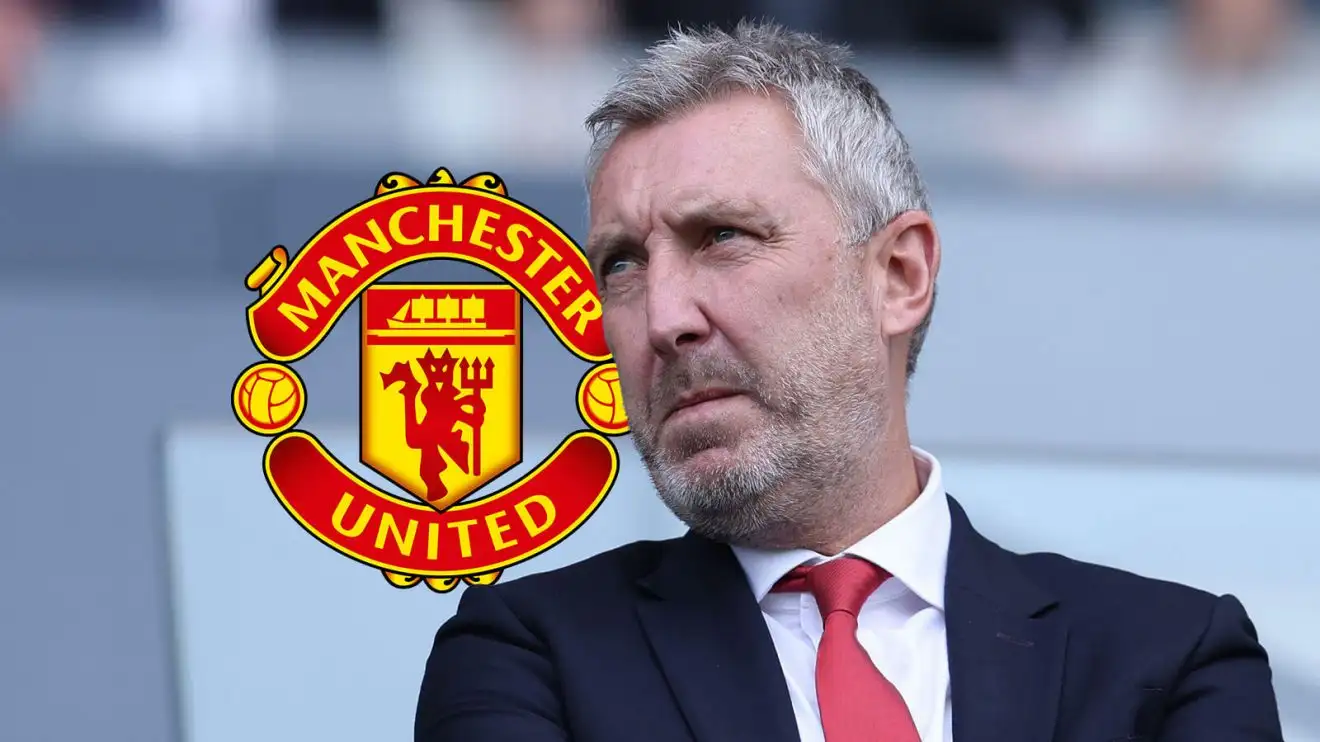
Brighton's demolition of Manchester United at Old Trafford has brought the curtain down on another disastrous campaign, and the recriminations are flying thick and fast among the Red Devils faithful.
The 2-0 defeat to the Seagulls eliminated United from the FA Cup and has left supporters reaching boiling point. While some are finding dark humour in Oliver Glasner's apparent audition for the job, others are directing their ire squarely at executive vice-chairman Jason Wilcox.
The Brighton performance laid bare United's structural problems. With Darren Fletcher's caretaker side operating a 4-2-3-1 formation, commentators were still debating whether Ruben Amorim's preferred 3-4-3 had left the side too exposed. The reality, however, points to a deeper malaise: personnel shortcomings in midfield that no tactical tweak can mask.
One long-suffering supporter articulated the frustration perfectly: Amorim's direction of travel had been promising, even if the pace of progress disappointed. Yet with Champions League football still mathematically within reach, many fear the season will be written off entirely by month's end—and the blame rests squarely with Ineos' decision-making. The suggestion that Wilcox, a senior executive, allowed emotional reactions to override sound judgment has only deepened the sense that the club's leadership is adrift.
Meanwhile, Glasner's Crystal Palace side had their own moment of ignominy, squandering a chance to retain the FA Cup by losing to a non-league outfit at the earliest opportunity. For some observers, he's now passed his Old Trafford audition with flying colours—continuing a tradition of shambolic stewardship that previous regimes have perfected.
The Ghosts at Old Trafford
There's a persistent theme haunting United these days: the club cannot seem to move forward because it refuses to stop looking backward. The songs ring out about Cantona, Solskjaer, Scholes. The cameras constantly find Sir Alex Ferguson in the stands, his face darkening with each goal conceded.
One supporter drew a telling comparison: a friend who longs for university days, constantly reminiscing about nights out from two decades past while remaining stuck in that era. That's Manchester United in 2026—trapped in nostalgia while the modern game moves on around them.
The irony is sharp. When interim managers take the job, they ring Ferguson for his blessing. When permanent appointments are made, they invoke his DNA and methods. Even parking spaces remain unclaimed out of deference to a man who hasn't managed the club for nearly 13 years. It's embarrassing, frankly. Bill Shankly was asked to stop attending Liverpool's training ground because of his towering legacy. United, meanwhile, seems determined to carry the Fergie-sized backpack indefinitely.
Perhaps it's time for those in charge to remember Jürgen Klopp's first interview: the weight of history is a burden that must be shed. Until United learns that lesson, they'll keep stumbling through crises wearing rose-tinted glasses.
Arsenal's Curious Comedy
Arsenal's performance against Portsmouth deserves a special mention for its sheer commitment to the bit. Conceding early, then clawing back with not one but two set-piece goals—the second an own goal no less—feels almost deliberately constructed.
If you're an Arsenal supporter, the fantasy must be: lose a 12-point lead to Manchester City, watch City win the title, then take a record points deduction in late April, Homer Simpson style, to somehow still finish top. "De-fault. De-fault."
Some observers have noted that Gabriel Martinelli appears to have found his level—a rather generous shop window courtesy of Mikel Arteta to display his talents to Championship sides in knockout competitions.
Liverpool's Midfield Puzzle
Liverpool's recent form has sparked debate about Arne Slot's tactical approach. The repeated horseshoe pattern of play has felt sluggish, particularly with key attacking outlets no longer available.
Last season, quick transitions through Diaz or Nunez provided release valves; cross-field balls to Salah offered another outlet. With those players gone, the midfield has become congested, negating the slick passing through Gravenberch that had previously allowed Liverpool to break the press.
When Slot deployed Jeremie Frimpong higher and wider against Arsenal, something clicked. His pace and directness forced the Gunners deeper, creating space for Gravenberch and Mac Allister to operate between the lines. Sometimes, deploying a less accomplished player in the correct position while keeping ten others in their natural roles yields better results than chasing perfection. It's a lesson Liverpool learned when losing four centre-backs and relying on Nat Phillips and Rhys Williams—that Champions League qualification still came because the system remained intact.
The Arteta Question
There's been remarkable coverage asymmetry around Arsenal's position compared to Liverpool's. The Gunners sit six points clear, and the media fawning has been relentless—adjectives pouring forth with barely concealed admiration, the cameras lingering on Arteta with devotion rarely seen this season.
Yet here's the uncomfortable truth: the manager has spent close to a billion pounds for one FA Cup and three second-place finishes. Constant flattery has inflated his ego and afforded him impunity evident in his touchline behaviour. He operates outside his technical area with regularity, instructs players to slow the game at set pieces while complaining when opponents do likewise, and has even dragged injured players back onto the pitch to waste time.
This is learned behaviour trickling down through the squad. When a manager operates outside the rules and faces no consequences, his players follow suit. It's worth revisiting comparisons between Klopp and Arteta—the former understood that history is a backpack to be removed, while the latter seems determined to wear his like a crown.
So here's the dilemma for neutral observers: neither Liverpool nor Aston Villa will win the league. That leaves a choice between Arsenal or Manchester City. Which would be the least soul-destroying? You need a drink already.
Tottenham's Ownership Question
To the Lewis family: sell the club. Please.
You're motivated by money—that's fine, this is late-stage capitalism. You'd get an astonishing return on your investment, which is clearly what drives you. But you cannot credibly claim to have the fans' interests at heart, surely?
In 2017-18, Spurs were better than Liverpool. Since then, Liverpool have won two league titles and a Champions League. In 2019, Villa were in the Championship while Spurs played Champions League football. Now look at them.
In seven years, you've appointed numerous managers without empowering any of them to achieve anything close to the club's potential. You've had world-class players and failed to build around them. You currently have footballers who genuinely seem to care, matching the fans' frustration. Yet you have a manager who, despite being a decent bloke, isn't quite cutting it. The tension between Ange Postecoglou and the squad is palpable.
There's lingering gratitude for what you've accomplished—the club genuinely is in far better shape than when you took over. But your leadership peaked on the final day at White Hart Lane.
It's time to move on. Thanks for your contribution, but we've had enough.
Compare options