Mailbox: Worldies, England's Bench Depth, and the Eternal Hope That Kills
The Mailbox this week trades the usual doom-mongering for something altogether more uplifting—a celebration of the players who made us fall in love with football in the first place.
A Dream Team Built on Nostalgia
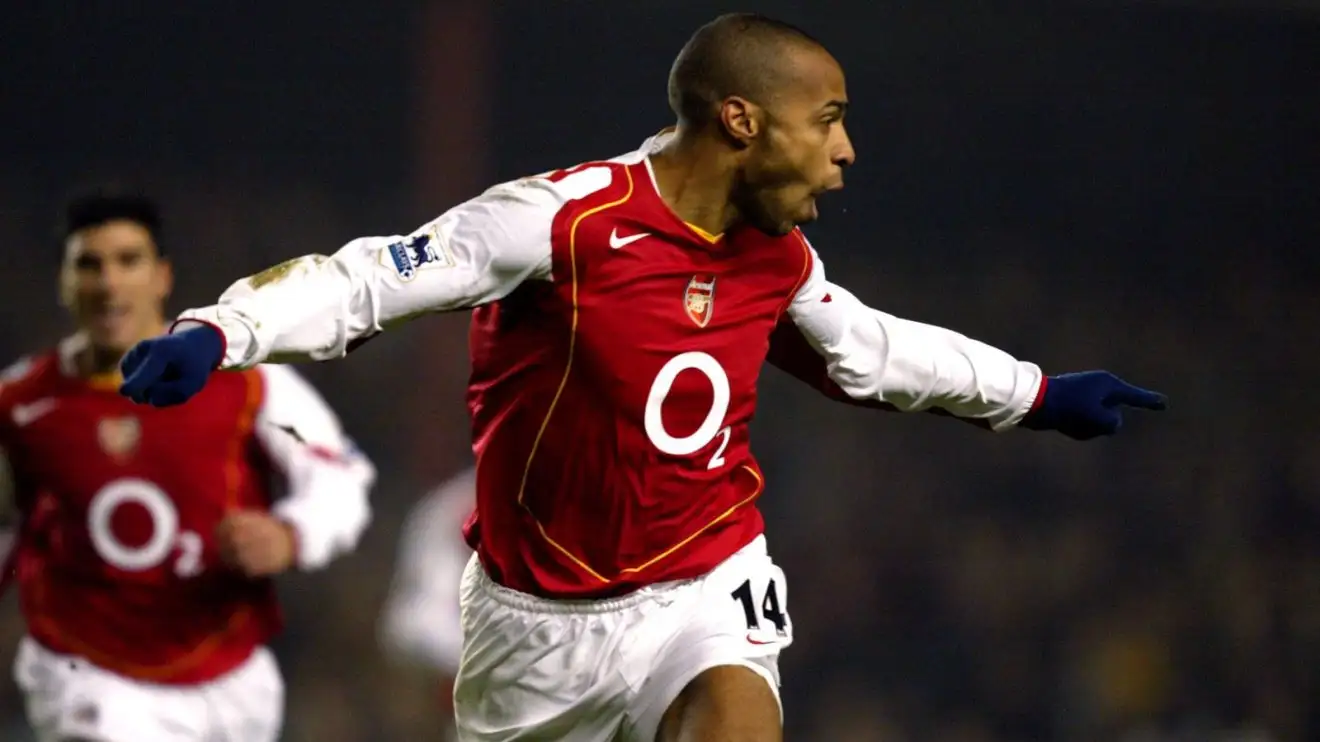
One reader has constructed their ultimate XI based not on sheer ability, but on the pure joy these players brought to the pitch. It's a 4-4-2 stacked with recognisable names: Jens Lehmann between the sticks (mad as a box of frogs, but solid when it counted), Philipp Lahm at right-back (who somehow became even better when Guardiola shuffled him into midfield), and a spine featuring Francesco Totti and Thierry Henry up front. Ronaldinho on the wing, naturally—the man arguably single-handedly responsible for making football worth watching. Alex Song gets a nod as an underrated Arsenal linchpin, while Freddie Ljungberg's inclusion owes more to the Calvin Klein ads than footballing credentials. It's the kind of team that would lose 4-0 to any modern side but win the hearts of everyone watching.
The Worldie Debate: Luck or Skill?
The Arsenal-Manchester United match at the weekend sparked considerable debate when Dorgu and Cunha's strikes were labelled "worldies"—and some readers took umbrage, interpreting the term as code for lucky efforts. One correspondent firmly pushes back: a worldie isn't an insult, it's a compliment to technical excellence.
Any goal struck from outside the box that finds the top corner deserves recognition. The goalkeeper sees it coming, has time to react, and still ends up fishing it out of the net. That's not fortune; that's intentional skill. The writer cites examples from their own beloved club: Savo Milosevic's stunning effort against Leeds in the 1995-96 League Cup Final, Gary Cahill's overhead kick, and Jhon Duran's thunderbastard that embarrassed Jordan Pickford to secure a 3-2 win over Everton—that swerve in mid-air was "utterly ridiculous."
The message is simple: when someone describes a goal as a worldie, take it as a compliment, not an insult. And while we're at it, xG can take a long walk off a short pier.
England's Attacking Arsenal
England's depth in attacking areas is genuinely frightening. Tommy Tuchel's coaching team needs to develop a plan to bring on four attacking players at once, the way Mikel Arteta does, and overwhelm opponents in knockout football. The squad is blessed with options: Elliott Anderson, Wharton, Mainoo, young Lewis Miley, an embarrassment of number 10s, and Harry Kane—a player whose season keeps getting normalised despite him sitting at the summit of the scoring charts.
One reader daydreams of Kane scoring the winner against Brazil in the quarter-finals, exacting revenge on France in the semi, then settling old scores with either Argentina or Spain. Foden performing the Nobby Stiles jig. An open-top bus through drizzly London. But it requires 10 outfield players meshing with five or six substitutes like precision German engineering—imagine bringing on Jude Bellingham for Morgan Rogers, then unleashing Foden, Cole Palmer, and Rashford against a dehydrated, sun-scorched, exhausted defence.
Carrick's Moment
One reader actually found themselves agreeing with a John Nicholson article—a rare occurrence that required no climate change tangents or diversity lectures. The point? Michael Carrick should continue as Manchester United manager if his recent form holds.
The caveat: knowing the club matters, but only up to a point. Carrick's impressive start is partly down to familiarity with United's history and culture, but that advantage has an expiration date. The club's mistake with Ole Gunnar Solskjaer was believing the players would buy in forever simply because he scored against Bayern once and worships Sir Alex Ferguson. That's not a sustainable foundation.
The Southgate Question
While watching the Arsenal-Manchester United game, one reader spotted Steve Holland, Michael Carrick, and Jonathan Woodgate in a touchline discussion—two ex-Middlesbrough managers whose tenures were hardly glorious. It begged an uncomfortable question: has all the time, money, effort, and pain Manchester United expended to arrive at "We've Got Gareth Southgate At Home" actually been worth it? Should they have listened to Dan Ashworth in the first place?
As English football marks anniversaries of Euro 2016, Iceland, Kane taking corners, Roy Hodgson's press conference surrender, and the Sam Allardyce era, why has Southgate been locked away like the Ark of the Covenant?
The United Fantasy
One reader has grown weary of Manchester United supporters suddenly believing their side can win the Premier League. Twelve points off the top, having won just 43% of their league games, dumped out of the League Cup by League Two Grimsby, and knocked out of the FA Cup at the first hurdle for the first time since 1981-82—yet half their fanbase reckons they're title contenders.
The pattern is as predictable as it is painful: three wins on the spin, then draws with Forest and Tottenham, followed by a home loss to Everton. A brilliant Newcastle victory, then draws with Wolves and Leeds. Beat Chelsea, get thumped at Brentford. The cycle repeats. After two decent results, the prediction is certain: zero wins against Fulham, Tottenham, and West Ham.
Slot's Struggles—Bad Luck or Bad Decisions?
One Liverpool supporter takes issue with claims that Arne Slot has been unlucky. Brendan Rodgers wasn't unlucky; he demanded transfer control then spent the Suárez money on Rickie Lambert and Mario Balotelli—he reaped what he sowed. Jürgen Klopp wasn't fortunate to have Roberto Firmino; he transformed a player Rodgers had wasted on the wing into something magical.
Slot, though? Yes, losing Diogo Jota is grim, and Luis Díaz's injury at the start of his tenure was genuinely bad timing. But Liverpool aren't unlucky with Cody Gakpo playing every week while Jarell Queta sits on the bench looking sharp—that's politics over talent, which is sackable offence. Changing formation three times per game isn't careful planning; it's panic. Teams don't concede six goals after 90 minutes because of luck. Arsenal aren't doing it. Mentality, focus, and fight are coached. That's on the manager.
The Arsenal Circus
Finally, one reader has had enough of the "Make Arteta Great Again" crowd's increasingly creative reinterpretations of reality. The latest: Arsenal lost to Manchester United because of two unrepeatable worldies, not because United were the better side.
But that overlooks the slick passing moves that carved Arsenal open before both strikes—progressive, risk-taking football that created genuine chances. When Arsenal beat Real Madrid, everyone celebrated those goals. When Manchester United beat Arsenal via worldies, suddenly they don't count because the goalscorer doesn't "usually" do that. Yet Declan Rice is supposedly scoring Batistuta-esque efforts every other week.
The comparisons to Manchester City's Erling Haaland are particularly revealing. Haaland, at 25, is already a European Golden Boot winner, multiple Premier League Golden Boot winner, UEFA Player of the Year, Champions League winner, and the holder of the record Premier League goal-scoring season. Right now he's managed a "paltry" 20 Premier League goals—more than Arsenal's entire attacking roster combined. If Haaland hit the market tomorrow, Madrid would fall over themselves. If Vinícius Gyökeres were available, not even the worst karaoke night in London would let him audition.
And perhaps most tellingly: Manchester United have spent over £1 billion under their current regime. According to 22 years of Arsenal folklore, spending that much automatically means winning everything. Funny how that argument vanishes when it's inconvenient.
Compare options