Mudryk's Four-Year Ban Shatters Doping Record: The Longest Suspensions in Football History
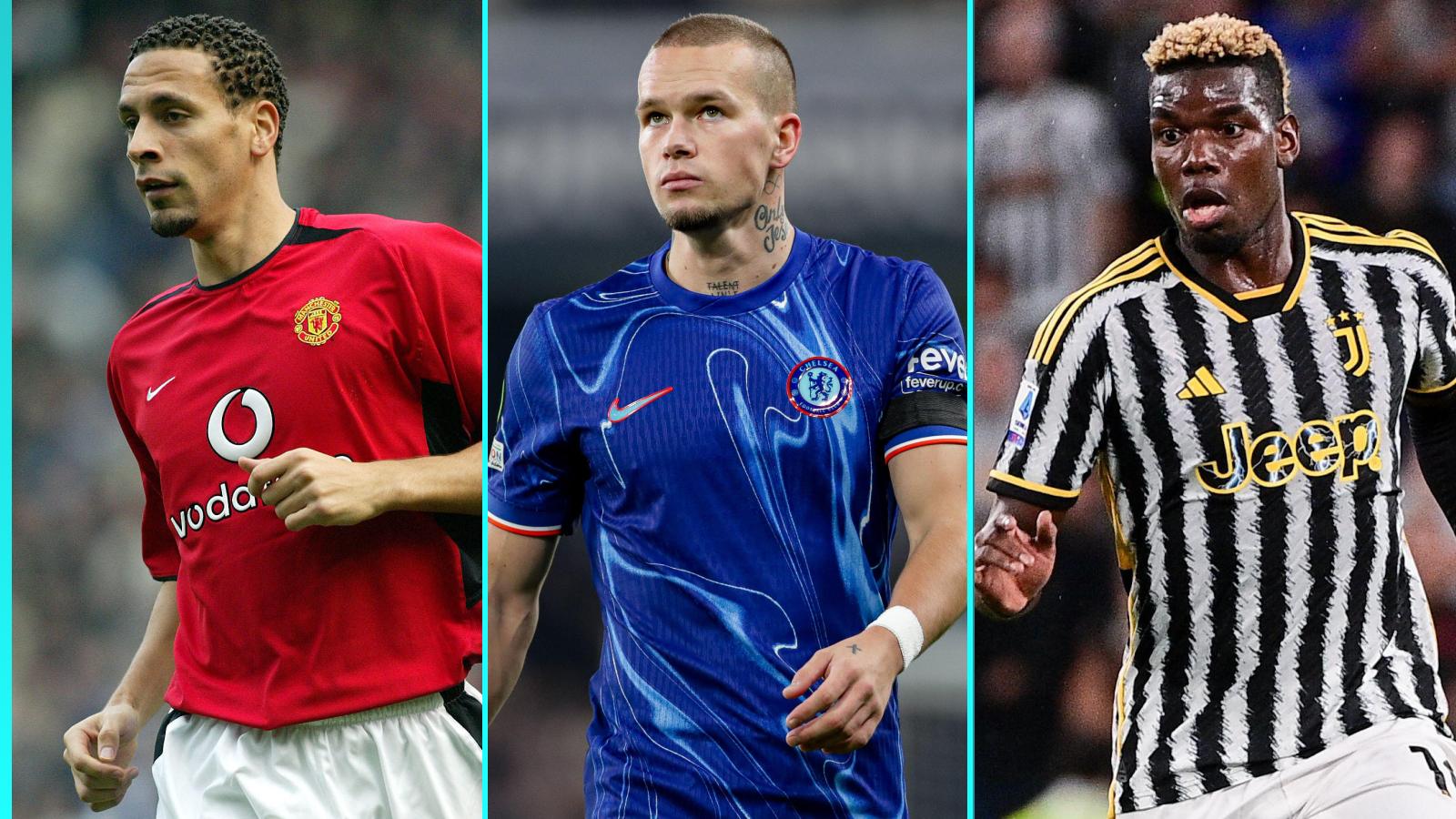
The Ukrainian winger's four-year suspension stands alone at the summit of football's doping shame list. Testing positive for meldonium – a cardiovascular medication that boosts respiratory capacity and stamina – during Ukraine national team duty in October 2024, Mudryk now faces an absence until 2028. The FA handed down the ban following their investigation, though the 23-year-old is currently appealing through the Court of Arbitration for Sport.
Mudryk has maintained he never knowingly took banned substances and expressed "complete shock" at the verdict. He's keeping himself match-fit by training with non-league outfit Uxbridge FC, employing a private coach and goalkeeping staff, reportedly hoping for a return to action this year.
His punishment dwarfs every other sanction in the sport's record books. Here's how the rest stack up:
13. Edgar Davids – Four months
The legendary midfielder with the iconic eyewear tested positive for nandrolone whilst at Juventus during the 2000/01 season. Initially handed five months, Davids successfully appealed the decision and saw his ban reduced. He wasn't alone that season – eight Serie A players were caught in a doping purge.
12. Jaap Stam – Four months
The former Manchester United stalwart suffered a similar fate in Italy. Playing for Lazio, Stam was also found guilty of taking nandrolone. The Italian Olympic Committee had suggested an eight-month suspension, but the Italian FA rejected that recommendation, leaving Stam with four months on the sidelines.
11. Kolo Toure – Six months
The Manchester City defender's 2011 ban stemmed from consuming his wife's diet pills without realising they contained prohibited substances. The FA commission accepted his lack of intent to gain performance advantage, resulting in a lenient six-month suspension backdated to March. Toure became the first Premier League player since 2004 to face such punishment.
10. Adrian Mutu – Seven months
The Romanian tested positive for cocaine at Chelsea in September 2004. While the FA imposed seven months, the real financial reckoning came from the club itself. Chelsea pursued legal action, eventually securing a FIFA ruling that ordered Mutu to repay his entire transfer fee – a staggering €17.17 million. Despite later appeals, including one to the European Court of Human Rights in 2018, Mutu couldn't escape the debt.
9. Rio Ferdinand – Eight months
One of English football's most controversial doping cases unfolded at Manchester United in September 2003. Ferdinand missed a routine drugs test at Carrington after heading home early – his defence being he simply forgot. Pictures of him shopping for bed linen in Manchester city centre didn't help his case. He tested negative two days later, but the damage was done. The eight-month ban ruled him out of Euro 2004. Sir Alex Ferguson's indignation remains undimmed to this day.
8. Andre Onana – Nine months
Manchester United's current goalkeeper was suspended whilst at Ajax after testing positive for furosemide. Onana claimed he'd accidentally taken medicine prescribed to his wife, mistaking the packaging for aspirin. UEFA handed him a 12-month ban, though the Court of Arbitration for Sport reduced it to nine months.
7. Mark Bosnich – Nine months
The Australian goalkeeper tested positive for cocaine in 2002 and blamed a spiked drink. The FA disagreed with his account, but as he'd joined Chelsea on a free transfer, he escaped the financial consequences that befell Mutu. His contract was terminated regardless.
6. Paolo Guerrero – 14 months
Peru's greatest export tested positive for a cocaine metabolite during a World Cup qualifier against Argentina in October 2017. FIFA initially banned him for 12 months, then reduced it to six. Guerrero appealed to the Court of Arbitration for Sport, but the World Anti-Doping Agency filed a counter-case arguing for a longer suspension. CAS sided with WADA, increasing the ban to 14 months. However, Guerrero received extraordinary leniency when the Swiss Federal Tribunal temporarily suspended his ban, allowing him to play at the 2018 World Cup. The punishment was re-imposed after the tournament.
5. Diego Maradona – 15 months (twice)
The Argentine legend earned his place through two separate 15-month bans. His first came in 1991 after testing positive whilst at Napoli, where cocaine addiction had taken hold during his Barcelona years. A second ban followed in 1994 after he tested positive for five ephedrine variants following Argentina's 2-1 World Cup group stage victory over Nigeria.
4. Samir Nasri – 18 months
The Frenchman's 2018 scandal became an internet sensation when his girlfriend exposed his IV drip therapy on Twitter. Nasri had received over 500 millilitres of vitamins, minerals and micronutrients through a Drip Doctors procedure – far exceeding permitted quantities. UEFA initially suspended him for six months before increasing it to 18.
3. Paul Pogba – 18 months
The Manchester United midfielder tested positive for non-endogenous testosterone in September 2023, with a second sample confirming the result. In February 2024, he received a four-year ban – seemingly career-ending. The Court of Arbitration for Sport intervened, reducing it to 18 months and clearing him to play from March this year. However, with Juventus terminating his contract in November, the 2018 World Cup winner remains without a club.
2. Gabriel Barbosa – Two years
The Flamengo forward received his ban not for failing a drugs test, but for obstructing one. Officials couldn't obtain a urine sample before a Rio de Janeiro state league match, leading to a case before the Anti-Doping Sports Justice Court. A narrow 5-4 vote resulted in the two-year suspension. In April 2024, the Court of Arbitration for Sport paused the ban pending a full investigation.
Compare options