Ten Managerial Rescue Missions That Ended in Disaster: Can Igor Tudor Avoid the Same Fate at Spurs?
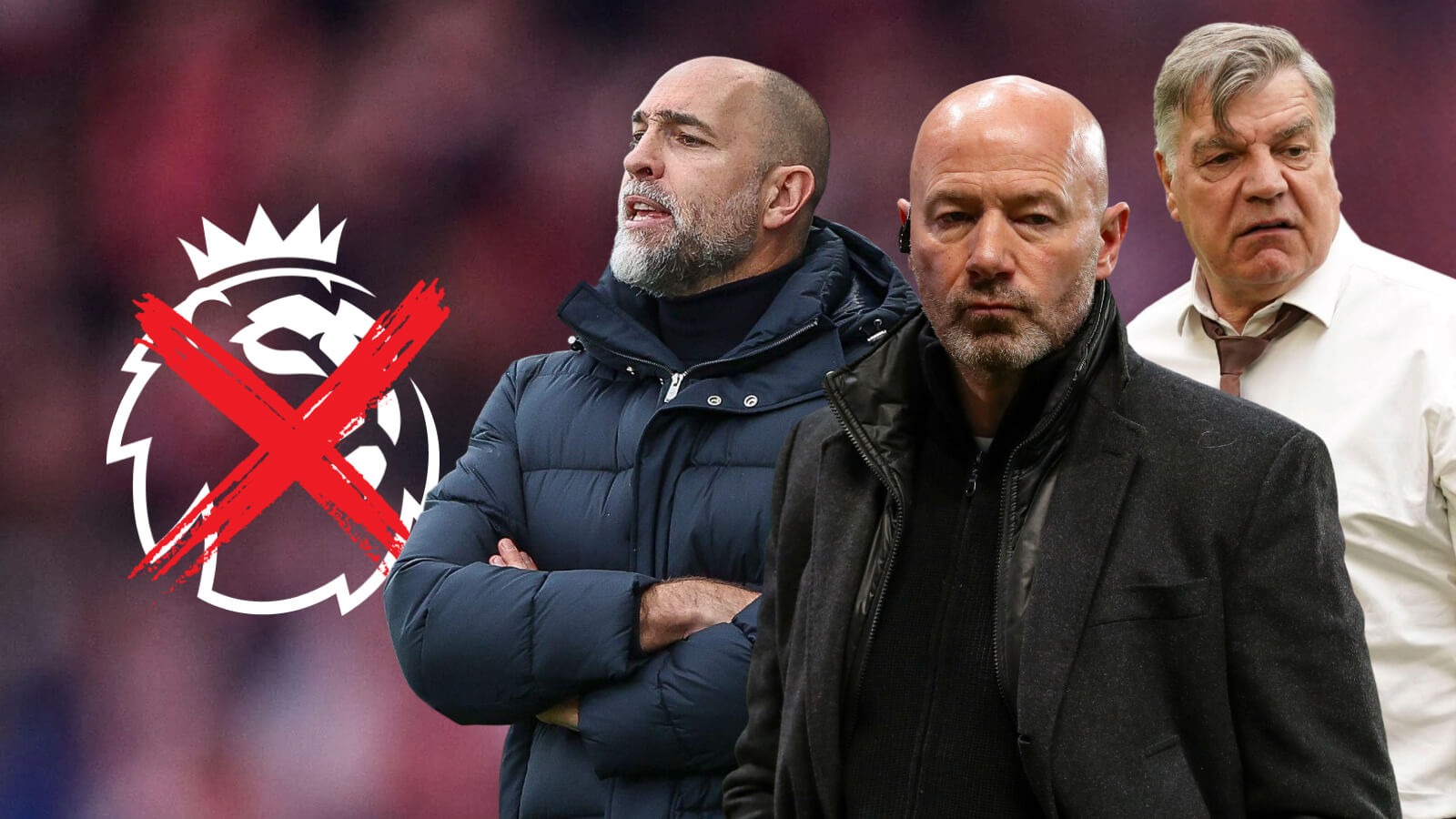
The playbook is simple enough in theory: sack the existing manager, parachute in a fresh face, ride the wave of optimism, and watch your troubles disappear. In practice, it rarely works that way. Sometimes the new-manager bounce becomes something rather more like a new-manager thud into the turf.
Igor Tudor is merely the latest in a long line of managerial heavyweights to discover that a relegation-threatened club is often far more broken than it initially appears. Before long he'll likely be heading back to Serie A, leaving behind a trail of controversial comments about his players and match officials – the sort of behaviour that somehow seems far less acceptable in English football.
To keep things fair, we're focusing on those who arrived when survival remained genuinely achievable. None of these clubs were bottom when their supposed saviour walked through the door, yet all of them went down nonetheless. Whether the manager departed before the final whistle on their fate proved irrelevant; the mission still failed.
As for Spurs themselves: they've already cycled through an interim manager while sitting comfortably in the top six just three years ago. Expect them to do it again once they hit 18th. Poor Ryan Mason will probably get the call.
Sam Allardyce (Leeds United, 2022/23)
Leeds's managerial musical chairs didn't end with Allardyce's arrival. Sporting director Victor Orta departed following a 4-1 thrashing at Bournemouth, with manager Javi Gracia following suit the next day. Enter Big Sam for his four-match cavalry charge – a team sitting outside the bottom three, yet still needing rescuing.
A solitary point from four games later, including a 4-1 home hammering from Mason's Spurs, confirmed Leeds's fate. They finished 19th, five points adrift of safety.
Alan Pardew (West Brom, 2017/18)
Replacing Tony Pulis with Alan Pardew perfectly captured a particular era of Premier League football: one proper football man swapped for another, with zero expectation that anything would actually change. Upon arrival, Pardew spoke of the need to "get the results we need to pull ourselves up the table."
Four months later, he was gone. West Brom had plummeted to bottom spot following an eight-match losing streak and ten consecutive games without victory.
Claudio Ranieri (Watford, 2021/22)
Watford demands representation on this list, and a Premier League-winning manager who took a team down certainly qualifies. Xisco Munoz's October departure (because Watford always sack their managers in October) left the Hornets 14th and four points clear of danger.
Ranieri's tenure proved wildly erratic. His first match featured a Roberto Firmino hat-trick in a 5-0 Liverpool demolition. His second saw Joshua King score three in a 5-2 victory over Everton – a match where Richarlison's curse struck again, putting the visitors ahead before it all went pear-shaped. A 4-1 victory over Manchester United sparked hope, only for six straight league defeats to follow, including a 4-1 FA Cup exit at Leicester after losing 4-2 in the league.
A Newcastle draw proved merely a pause. The 3-0 home defeat to Norwich, which dropped Watford below their visitors, sealed Ranieri's fate after 13 Premier League matches. Roy Hodgson eventually arrived and managed to lift them above Norwich, but no further.
Nathan Jones (Southampton, 2022/23)
Nathan Jones's Southampton interlude deserves its own feature, frankly. In three frenetic months – encompassing an entire World Cup, because 2022 was genuinely strange – Jones managed to offend Frank Lampard, take potshots at lower-league managers, claim a 50 per cent win ratio by excluding a Liverpool league game whilst counting a Lincoln Carabao tie, and generally embody a bewildering hybrid of Tim Sherwood and Brendan Rodgers.
Two points from six opening league games preceded a press conference where he lavished praise upon himself for his personal dignity. The Premier League has been noticeably better since his departure.
Alan Shearer (Newcastle, 2008/09)
Shearer has somehow evaded responsibility for Newcastle's relegation despite, well, taking Newcastle down. Chris Hughton's departure following Joe Kinnear's health issues created the opening, and Shearer's willingness to step up earned him considerable credit.
Yet five points from eight games tells the real story. Newcastle went down by a single point. Hughton returned the following season and promptly amassed 102 points, finishing 11 clear at the top of the Championship.
Terry Connor (Wolves, 2011/12)
Long-time assistant to Mick McCarthy, Connor stepped into the breach when McCarthy departed with Wolves just inside the relegation zone in February 2012. A 2-2 Newcastle draw suggested better times ahead – a false dawn if ever there was one.
Seven straight defeats followed. From 13 games, Connor's side managed four points and no victories. Wolves went down, and Connor's top-flight managerial career was effectively over before it began.
Ruud van Nistelrooy (Leicester, 2024/25)
Leicester's descent seemed almost inevitable in retrospect, yet they actually occupied a position of safety when Van Nistelrooy's appointment followed his brief Manchester United caretaker role – a role where he'd beaten them twice. His opening game brought a West Ham victory and genuine optimism.
Then came two separate eight-match losing runs, broken only by a 2-1 Spurs victory. Leicester's other two wins arrived in May against Southampton and Ipswich – fellow promoted-relegated sides – far too late to matter. Van Nistelrooy departed last summer, though Leicester have scarcely prospered since.
Ole Gunnar Solskjaer (Cardiff, 2013/14)
Before Manchester United, between Molde spells, Solskjaer's Premier League debut came at Cardiff. It was dreadful. They were struggling but outside the bottom three when he arrived, yet lost 12 of 18 games to finish rock-bottom.
Defeats to both Manchester clubs came swiftly after a crucial home loss to West Ham. A 4-0 Hull humbling, a 6-3 Liverpool collapse, and successive north-east nightmares – 4-0 at Sunderland and 3-0 at Newcastle in consecutive weeks – epitomised the chaos. Solskjaer kept his job through summer before the Championship proved equally unforgiving, and he drifted back to Molde while somehow remaining a United manager-in-waiting.
Neil Adams (Norwich, 2013/14)
Adams joined Solskjaer in 2014's managerial meltdown, though neither were the season's worst offender – that honour belongs to Felix Magath, whose Fulham tenure began from an already hopeless position. Adams, a youth-team coach with no first-team experience, replaced Chris Hughton after a West Brom defeat with Norwich five points clear of the bottom three and five games remaining.
Those five games pitted them against Fulham, Liverpool, Manchester United, Chelsea and Arsenal. A Norwich statement claimed they'd appointed Adams "to give the club the maximum chance of survival" – largely self-delusion. After losing at Fulham, the writing appeared on the wall.
A 3-2 Liverpool defeat where they trailed 2-0 after 11 minutes proved oddly prescient of the chaos about to engulf the Reds. Manchester United's 4-0 demolition came as Giggs replaced Moyes. A Chelsea draw – their first away point since New Year's Day – offered brief respite, but Arsenal's final-day victory confirmed the formalities.
Harry Redknapp (Southampton, 2004/05)
Redknapp's Portsmouth-to-Southampton switch sparked south-coast fury, though Pompey fans didn't anticipate quite how comprehensively he'd dismantle their rivals. He took Southampton down in 2005, then hung around to ensure they wouldn't bounce back, finally departing when Rupert Lowe appointed rugby legend Sir Clive Woodward to the coaching staff – perhaps the most Rupert thing any Rupert has ever managed.
By year's end, Redknapp was back at Portsmouth, and equilibrium had been restored.
Compare options