Kane's Late Strike Cannot Mask Bayern's Champions League Heartbreak Against PSG
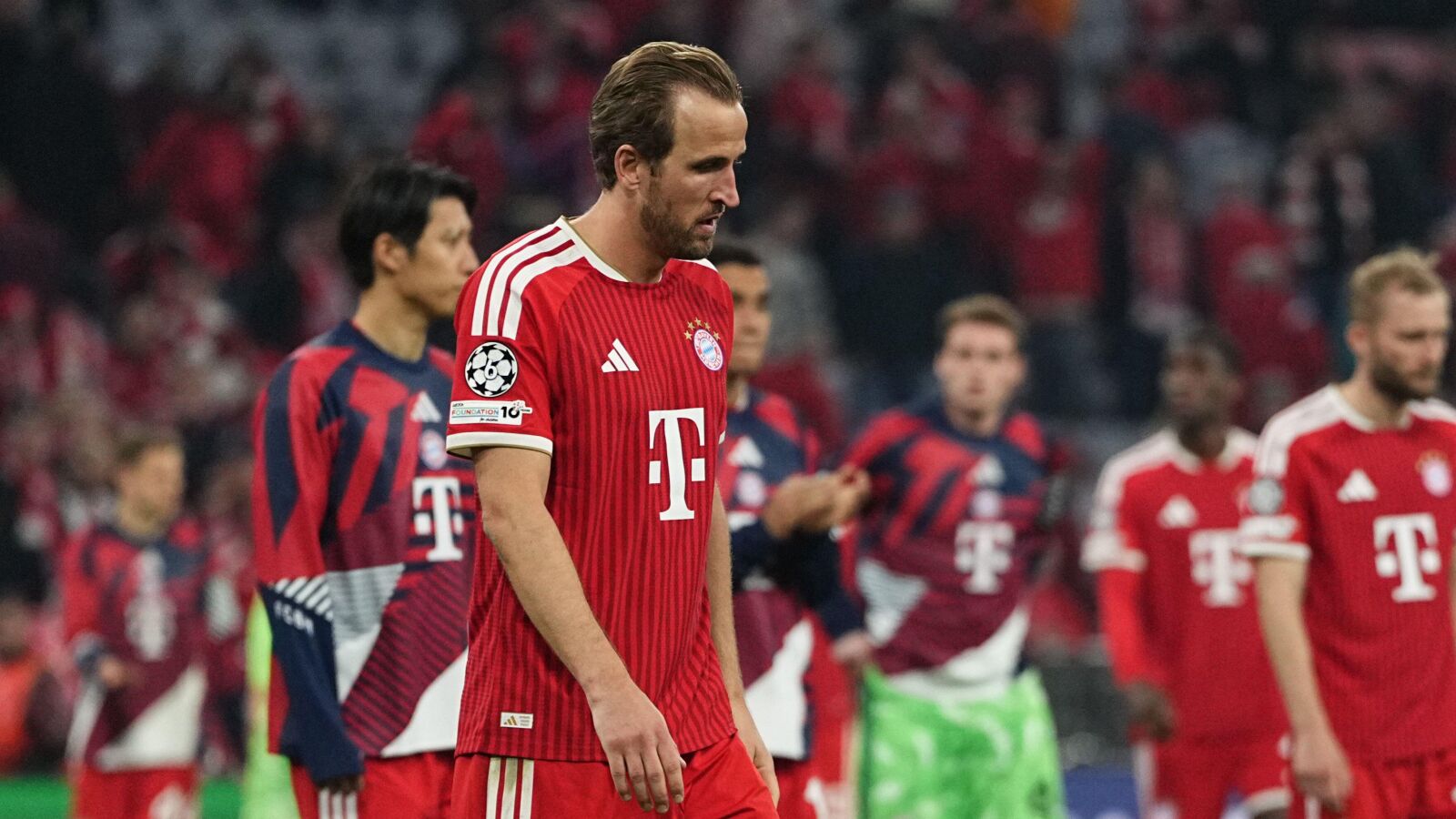
Harry Kane opened and closed the scoring sheet in a thrilling Champions League semi-final encounter, yet finished on the losing side—and, more significantly for his legacy, without the career-defining big-game display his CV still conspicuously lacks.
Kane's strike at the Allianz Arena arrived in the dying moments, securing a 1-1 stalemate on the night but merely reducing Bayern Munich's aggregate damage to 6-5 following last week's chaotic first leg in Paris. While this return fixture proved less utterly unhinged than its predecessor, it somehow produced six additional attempts on target. Barring a ragged opening quarter-hour after the interval, the contest rarely dipped below exceptional quality.
For Kane, however, the night proved another exercise in frustration despite that late contribution.
The old jokes about trophyless seasons have finally evaporated following his second Bundesliga title, with further silverware almost certainly en route. Any lingering questions about his standing among the elite have been thoroughly extinguished since his German switch took effect.
It remains somewhat baffling that only by amassing goals for a superior outfit in an inferior league did neutrals finally grasp that a player who once plundered 30 Premier League goals in a season for an Antonio Conte-managed Tottenham side that couldn't organise themselves properly might actually possess considerable talent. But most have now accepted this reality.
Without Kane's consistent output, Spurs would likely be fighting relegation battles by now. The club never maximised the potential of having the world's most complete number nine fall into their lap, yet his departure has starkly illustrated precisely how much his guaranteed 20-plus seasonal goals masked their chronic dysfunction.
Kane's true impact at Spurs has only become apparent in retrospect. Combined with his Munich achievements and their subsequent struggles, everyone now recognises just how exceptional he was and remains. His standing among the all-time greats is no longer debatable. That recognition—rather than the inevitable trophies—represents the genuine achievement of his Bayern move. Operating within a genuine elite institution has elevated him considerably, despite his daily footballing existence now being demonstrably more straightforward than during his London years, when he regularly suffered undervaluation.
Yet one persistent criticism—even from Spurs loyalists—concerned his absence from decisive contributions in genuinely important matches. His 2019 Champions League final performance remains infamously dreadful, recalled to the side on principle despite obvious unfitness, a poor call made worse by replacing semi-final hero Lucas Moura.
That wasn't an isolated incident. FA Cup semi-finals and League Cup showpieces have passed him by. Even England's impressive tournament runs—undoubtedly Kane-influenced—haven't delivered him a standout personal performance when stakes are highest.
This represents the sole glaring omission from an otherwise magnificent résumé. The uncomfortable reality persists: even after scoring across both legs of this tie, nothing has fundamentally changed.
Kane performed adequately, though that arguably understates the problem. For 94 minutes he barely featured meaningfully. Willian Pacho expertly neutralised him throughout. Only when Bayern's cause was lost did PSG's rearguard briefly relax, offering him the rare opportunity. That solitary opening came courtesy of PSG weakness on an otherwise near-flawless defensive display—emphasising precisely how thoroughly the Parisians had shackled him previously.
Before his clinical finish with barely sixty seconds remaining—when another goal was still needed—he'd managed only a couple of hopeful attempts, one per half, both blocked immediately. He did technically register a key pass, though recalling the specifics proves difficult. His pass-completion rate of 65.5 per cent ranked lowest among Bayern's XI.
On football's grandest stage, he remained peripheral until the moment passed—precisely the pattern that defined his Spurs and England experiences. Unable to dictate proceedings. Unable to exert the influence expected of someone whose responsibilities extend far beyond typical striker duties.
Singling him out feels harsh given Bayern's attacking unit misfired collectively: Michael Olise operating slightly off-colour, Luis Diaz resembling the inconsistent Liverpool version, Jamal Musiala largely invisible except for a brief pre-interval spell. Yet nights like this are precisely when Kane now faces scrutiny. Discussing Ballon d'Or credentials after semi-final performances like these might seem premature, but those conversations do happen—and such evenings determine their outcomes.
Ousmane Dembélé stepped forward. Khvicha Kvaratskhelia genuinely stepped forward.
Kane battled hard but couldn't match their impact when it genuinely mattered. His expertly-taken goal, finally released from PSG's grip, only compounds the frustration. Had that moment arrived five minutes earlier, narratives might have shifted entirely. Yet at his level, such marginal differences prove decisive.
His summer will bring fresh opportunities. The pressure will intensify further still.
Compare options