England's G-Team: Gascoigne and Grealish Leave Gerrard Plenty to Contemplate
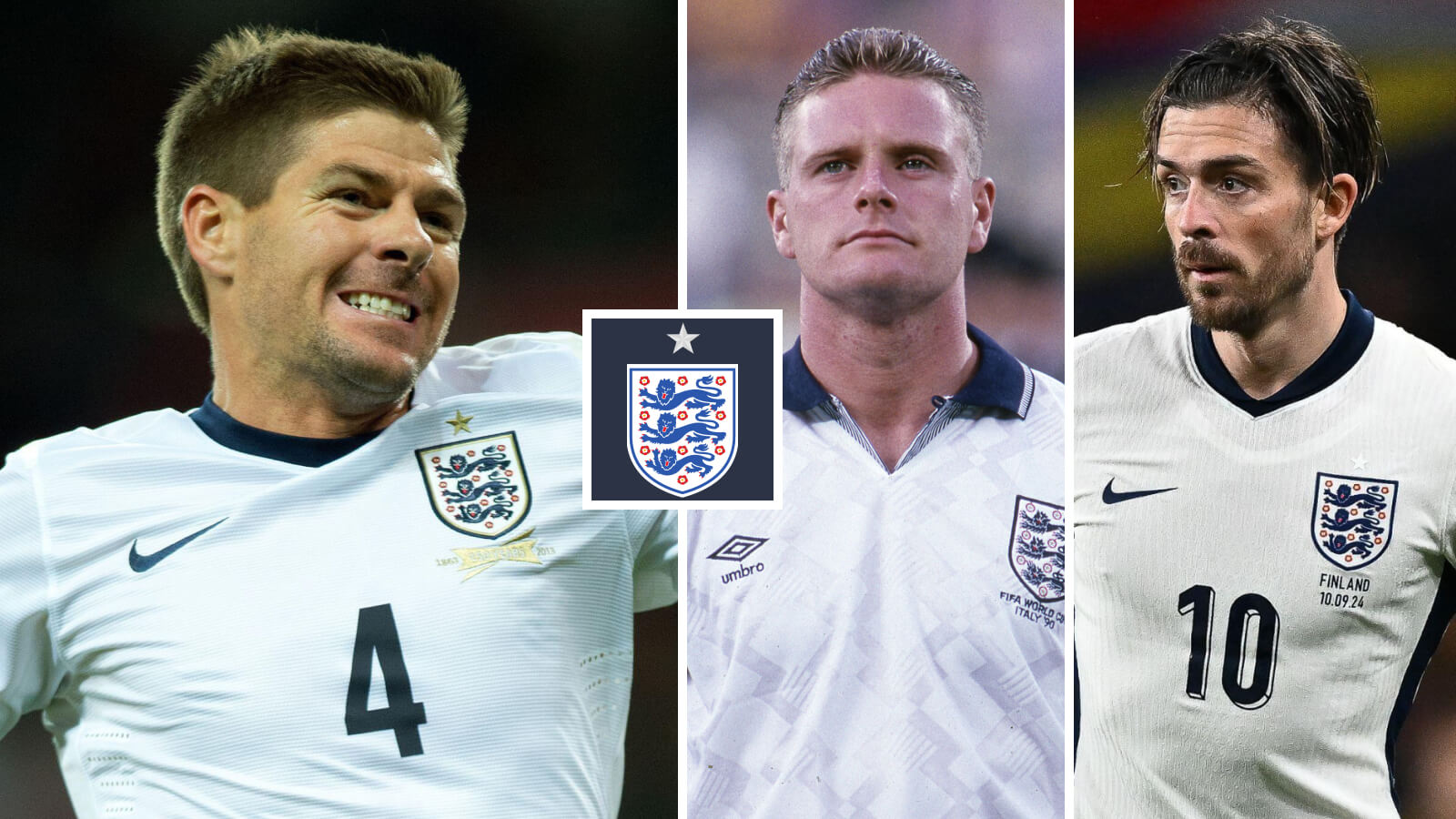
A peculiar exercise in nomenclature produces an England G-Team of considerable intrigue—one that marries contemporary internationals with some of the game's most storied names, blending craft with steel in equal measure.
In goal: Rob Green
Rob Green's entrance onto the international stage came in 2005 with a 3-2 victory over Colombia, making him the fourth England goalkeeper to carry the initial and the first in 84 years. His international peers—Leslie Gay, Bill George and Harold Gough—managed a combined seven caps between them, leaving Green as the most capped of the quartet by a considerable margin.
The 2010 World Cup proved his undoing. His calamitous error against the United States effectively ended his hopes of becoming Fabio Capello's trusted number one. A solitary appearance followed under Roy Hodgson, collecting his 12th and final cap in the new boss's inaugural fixture.
Right-back: Roy Goodall
Goodall was integral to Huddersfield Town's remarkable run of three consecutive top-flight titles during the 1920s, establishing himself in the England side shortly before the Terriers completed their historic treble. The full-back ascended to the captaincy in 1928, though his inaugural match as skipper ended in a 5-1 humbling by Scotland. Redemption came swiftly—his next outing saw England demolish France by the same scoreline.
The FA's stubborn refusal to enter the 1930 World Cup robbed Goodall of the opportunity to become England's first captain on football's grandest stage.
Centre-back: Brian Greenhoff
A cornerstone of Manchester United's resurrection at Old Trafford during a turbulent era, Greenhoff helped the Red Devils secure promotion in 1975 and FA Cup success two years later. By then, he'd cemented his place in Don Revie's England plans.
His older brother Jimmy, however, remained perpetually overlooked—a mystery that continues to baffle observers. Jimmy's winning strike in that 1977 FA Cup final prevented Liverpool from claiming the treble, yet somehow he never received a senior England cap, despite possessing exceptional talent.
Centre-back: Marc Guehi
Ineligible for Manchester City's League Cup triumph at Wembley, Marc Guehi remains England's most promising defensive prospect, poised to anchor the Three Lions' backline throughout this decade. The selection here was almost predetermined given the shortage of alternatives in central defence. Joe Gomez offers backup options, with Anthony Gardner and Ben Godfrey contending for further consideration.
Left-back: Kieran Gibbs
Though Gomez could theoretically slot in on the flank, recognised specialists are available. Kieran Gibbs claims the shirt as the most capped left-back with the G surname, boasting 10 England appearances. Micky Gray, a Nineties fixture at Sunderland, earned three caps under Kevin Keegan, whilst QPR's Ian Gillard appeared occasionally during Don Revie's tenure in the seventies. Further back still, Tommy Garrett represented England in the early fifties under Walter Winterbottom, the Blackpool defender making his debut a year before the famous 1953 FA Cup Final.
Central midfield: Conor Gallagher
Conor Gallagher occupies a midfield berth, though should he play a role in Spurs' first relegation in nearly half a century, the celebration might prove particularly spirited. His potential successor is a figure who guided Tottenham from the second tier in 1920—Arthur Grimsdell, who spent nearly two decades at White Hart Lane and captained the club to FA Cup glory a year after their promotion. Wolves fell victim to Grimsdell's side in that 1921 final. Angel Gomes, currently on loan at Wolves, provides depth from the bench.
Central midfield: Steven Gerrard
Whilst Gallagher's position remains vulnerable, Gerrard's spot here is beyond dispute. The Liverpool colossus stands alone as the most capped player eligible for this XI, commanding double the appearances of his nearest rival.
A cornerstone of England's celebrated generation, Gerrard featured in six major tournament squads, beginning shortly after his international debut at the millennium's turn. He captained the side on 38 occasions, though his international journey concluded disappointingly following a winless campaign at the 2014 World Cup.
Attacking midfield: Paul Gascoigne
Gascoigne never received the opportunity for a dignified exit on football's biggest stage. The supremely talented star of Italia '90 and Euro '96's memorable semi-final campaigns suffered a shocking omission from Glenn Hoddle's 1998 World Cup squad—an exclusion that symbolised the end of an illustrious era. The tears, brilliance and turbulence of the Gateshead prodigy remain etched into the memory of generations of Three Lions supporters.
Winger: Jack Grealish
By September, Grealish will reach the age Gascoigne was when earning his final cap, and whether Thomas Tuchel retains him when Nations League action resumes remains uncertain. Despite being part of a treble-winning squad, Grealish's international contributions have predominantly arrived from the substitutes' bench—Gareth Southgate deployed him exclusively in that capacity throughout the 2022 World Cup.
Should the prospect of Grealish and Gascoigne sharing the pitch prove too combustible, Nottingham Forest's Morgan Gibbs-White stands ready to displace the Manchester City winger once more.
Winger: Anthony Gordon
Newcastle's Anthony Gordon completes the quartet of current internationals in this line-up, though yesteryear's icons lurk on the bench. Arsenal's 1971 FA Cup winner Charlie George managed a solitary cap, Ipswich legend Eric Gates waits in the wings, and Preston's John Goodall—an invincible from their undefeated campaign—offers another forward option. Goodall topped the scoring charts in the Football League's inaugural 1889 season, when Preston completed the domestic double with a 3-0 FA Cup victory over Wolves.
Striker: Jimmy Greaves
Recent displays against Uruguay and Japan underlined precisely why Harry Kane anchors England's attacking hierarchy—the notion of the Three Lions mounting a World Cup challenge without their principal striker seems almost unthinkable.
Yet exactly that occurred 60 years ago. Greaves ranked among the planet's finest operators, accumulating four top-ten Ballon d'Or finishes. The Spurs marksman started England's opening games in 1966, only to suffer injury in the final group fixture against France. Geoff Hurst stepped in and refused to relinquish his spot for the final, despite Greaves' recovery. Hurst's hat-trick sealed glory against West Germany, while Greaves waited until 2009 to finally receive his winners' medal. That's football for you.
Compare options