Schlotterbeck's World Cup Over After Ankle Ligament Rupture
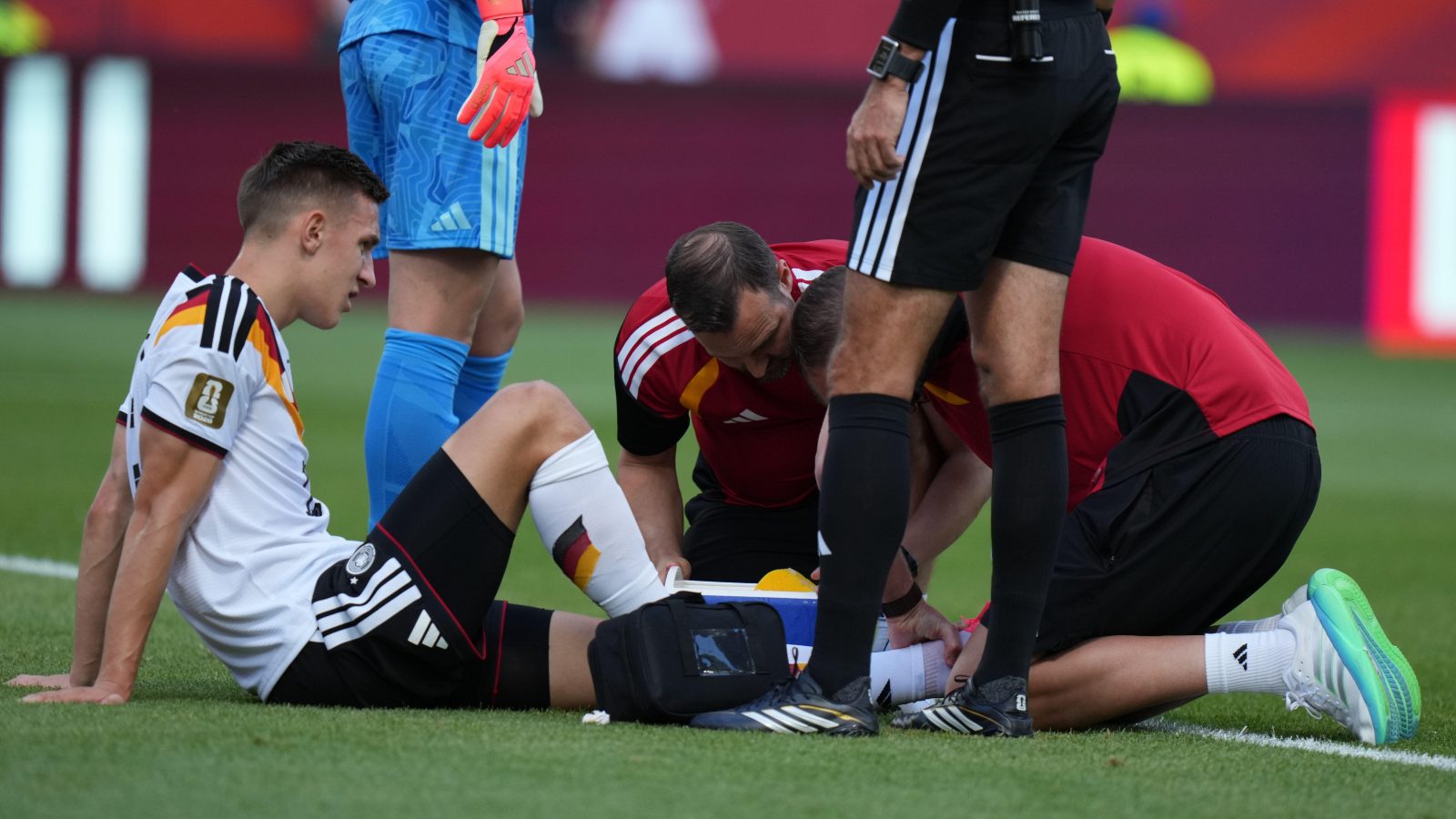
Germany's World Cup campaign has taken a significant blow with the confirmation that central defender Nico Schlotterbeck will play no further part in the tournament. The Borussia Dortmund stalwart sustained a torn medial collateral ligament in his left ankle during Saturday's 2-1 Group E victory over Ivory Coast, with Sunday's scan delivering the unwelcome verdict.
Schlotterbeck was forced off at the interval, with Antonio Rudiger assuming his defensive duties for the remainder of the clash. The setback leaves him facing a lengthy spell on the treatment table—a recovery period spanning several months—though the German Football Association confirmed he would remain with the squad in the USA for now.
Manager Julian Nagelsmann expressed his disappointment at losing such a commanding presence. "Schlotti will be greatly missed on the pitch as an outstanding defender, especially his excellent build-up play," he reflected. "It could have been his World Cup. Yesterday, we all tried to lift his spirits – fortunately, he is a very positive character who is already looking ahead again."
The coach emphasised that Schlotterbeck's value extends beyond mere appearances, noting his influence within the camp. "It is a very positive sign that he will initially remain here within the team, because he also has an influence off the pitch. Despite his absence, we are still very well positioned in central defence for the World Cup with Jonathan Tah, Antonio Rudiger, Waldemar Anton and Malick Thiaw," Nagelsmann said.
With the tournament already underway, FIFA regulations prevent Germany from calling up a replacement, forcing the side to shuffle resources from within their existing squad.
The Germans have already sealed top spot in Group E and secured knockout football for the first time in 12 years, facing Ecuador in their final group fixture on Thursday. Yet Schlotterbeck's absence has thrown selection decisions into sharper focus, particularly regarding the increasingly irresistible form of Deniz Undav.
The striker has been a revelation off the bench, bagging both goals in the Ivory Coast comeback and netting three times across Germany's opening two matches. His two assists have elevated him to the tournament's leading scorer, yet Nagelsmann has persistently resisted starting him from kick-off.
The manager's reluctance to deploy Undav in the opening XI has become something of a puzzle, particularly given his prolific record. Back in March, Nagelsmann suggested the forward would lack effectiveness if handed a starting role, a comment that drew criticism for its perceived disrespect. Though the coach apologised the following day, he continued to keep Undav anchored to the bench for both World Cup encounters—a strategy that now appears increasingly difficult to justify.
Undav's tally is particularly impressive when set against his recent history: nine goals across Germany's last eight matches represents a striking return that demands regular football.
Against Ecuador, Undav appears certain to finally earn his place in the starting lineup. The question now centres on who makes way. Kai Havertz represents the most obvious casualty in a direct striker swap, though mounting pressure surrounds playmaker Jamal Musiala following an uninspiring showing and his substitution during the Ivory Coast victory.
Musiala, recovering from a broken leg that sidelined him for half a year, has yet to recapture his previous standards. Undav could slot into a deeper attacking role behind Havertz, offering an alternative solution to the selection puzzle.
Nagelsmann, however, appears determined to resist wholesale changes. Germany currently ride an 11-match winning streak, and the manager is keen to maintain that momentum rather than overhaul proceedings for the Ecuador encounter. "We will discuss this within the coaching staff and with Rudi Voeller," Nagelsmann said. "I don't believe in changing everything completely. We need to stay in our rhythm for the next challenge."
Compare options