A Catalogue of Chaos: Sir Jim Ratcliffe's Missteps at Manchester United, From the Mundane to the Inexcusable
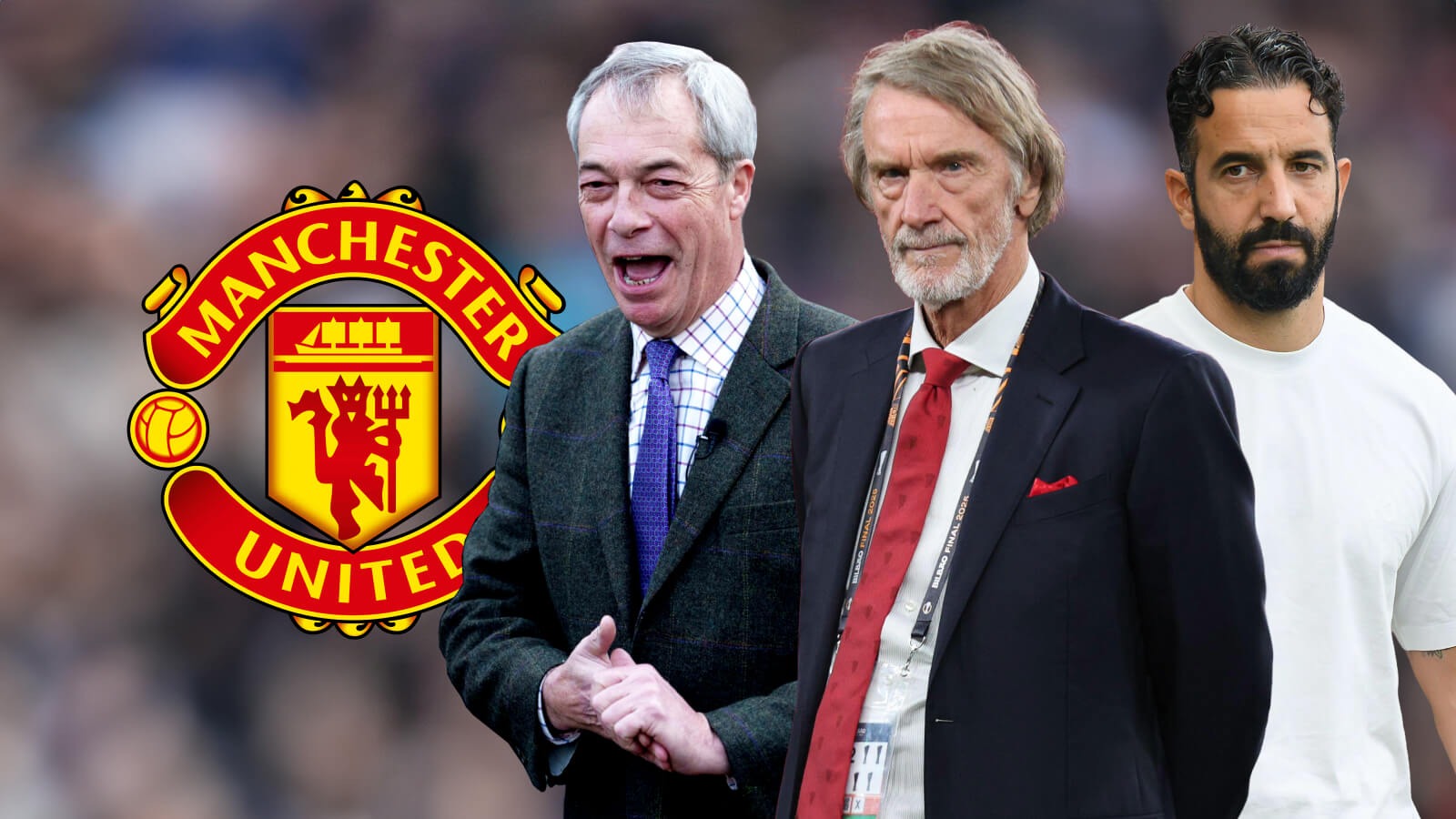
When Sir Jim Ratcliffe seized control of Manchester United's football operations, he arrived with assurances that lessons learned from previous ventures at Lausanne and Nice would prevent similar catastrophes at Old Trafford. Nearly two years on, that promise rings increasingly hollow.
The billionaire and his INEOS outfit have compiled an extraordinary inventory of questionable decisions—some trivial, others genuinely damaging to the fabric of a historic institution. While defenders of Ratcliffe may protest that not every misstep bears his direct fingerprints, the overarching culture of his stewardship has enabled virtually all of them.
The Smaller Transgressions
The penny-pinching began almost immediately. Staff received M&S vouchers instead of Christmas bonuses—a decision that might have passed without comment had it not formed part of a broader austerity programme that saw redundancies whilst facilities deteriorated. A leaked company-wide email revealed Ratcliffe's hands-on approach to cost-cutting, with the billionaire personally inspecting academy facilities and labelling the museum "crap." He demanded staff return to offices despite insufficient desk space, warning those unhappy with the arrangement to seek employment elsewhere. Such heavy-handedness created what insiders described as a "toxic feeling" at Carrington.
The "Wembley of the North" proposal exemplified Ratcliffe's audacity. Rather than fund Old Trafford's redevelopment himself—a man worth approximately £11 billion—he sought government backing, effectively asking taxpayers to subsidise his investment. This proved particularly galling given his status as a tax exile since 2020, a relocation to Monaco estimated to have saved him £4 billion.
Paranoia seeped through the corridors as well. An INEOS executive reportedly assumed an increasingly prominent role at the club, cultivating what staff described as a culture of fear, with employees carefully monitoring their words in this individual's presence.
Travel arrangements for the FA Cup final saw staff charged £20 each for previously complimentary transport. The club simultaneously rejected Bruno Fernandes's offer to cover these costs, fearing it would reflect poorly on the regime. Meanwhile, thousands continued flowing towards chauffeured vehicles for executives attending the same event.
The disabled supporters' association budget faced potential halving—a move so transparently indefensible that it never proceeded, though the mere consideration revealed troubling priorities for an institution that had squandered tens of millions on mediocre footballers.
Katie Zelem, the women's captain, encountered Ratcliffe at the club and found herself asked "What do you do, little lady?"—a condescension suggesting the new owner had not bothered learning the names of his female players. The women's team subsequently relocated to portable buildings, making space for men's operations. When asked about the women's achievements, Ratcliffe credited their FA Cup success as if he possessed any involvement, despite admitting he hadn't watched the match.
The handling of Kath Phipps epitomised the erosion of the club's soul. The longest-serving employee, beloved across generations from Ferguson through Beckham to Evans, passed away in 2024. Rather than receiving condolences from the club she'd served since 1968, her family received a call enquiring about her season tickets. The decision reflected not Ratcliffe's personal cruelty but the cost-cutting environment he'd cultivated, where even basic human decency became expendable.
The Structural Failures
Two hundred and fifty staff members lost their jobs as Ratcliffe pursued aggressive cost reduction. Many possessed legitimate grievances—poor recruitment had wasted considerably more capital than these redundancies would save. The mathematics proved brutal: each dismissed employee would need to earn £55,000 annually for their removal to prove more economical than retaining a single underperforming centre-back like Matthijs de Ligt, let alone the transfer fees involved.
Ticket prices increased mid-season, an unprecedented move that prompted accusations the club expected supporters to fund management incompetence. Ratcliffe's response—noting United's mediocrity relative to their historical standing—only aggravated matters. Fans had already financed years of Glazer-era waste and saw no reason to subsidise further decline.
The recruitment strategy careened from one disaster to another. Technical director Jason Wilcox, supposedly brought in to establish a coherent "game model," apparently concluded that Erik ten Hag represented the ideal custodian of United's future and should receive players tailored to his system. This assessment proved spectacularly wrong, yet the club invested over £200 million in summer 2024 on players who barely featured.
The Managerial Carousel
Retaining ten Hag after overseeing the club's worst season in living memory constituted a decision of staggering magnitude. His contract received an extension despite overwhelming evidence of incompetence. The convenient excuse—lack of suitable alternatives—dissolved when Ruben Amorim became available so readily that he flew to London mid-season to meet West Ham whilst his Sporting side pursued a crucial Champions League fixture.
Dan Ashworth, the sporting director, arrived with considerable fanfare only to depart after five months. His appointment had supposedly been contentious, particularly regarding managerial recruitment. Ashworth had advocated for Gareth Southgate, Thomas Frank, or retaining Ruud van Nistelrooy on an interim basis—a position that proved prescient when Amorim's tenure imploded.
The Amorim saga represents the nadir of Ratcliffe's tenure. Ashworth had explicitly warned of "mass disruption" should a manager with such specific philosophical requirements arrive mid-season. His concerns proved entirely justified. Amorim arrived in November 2024 with his own coaching staff, displacing van Nistelrooy and René Hake after merely three months—a humiliating conclusion for both. The club spent hundreds of millions acquiring players supposedly suited to a system that no longer existed, whilst remaining too constrained by financial regulations to adequately address obvious deficiencies, particularly a chronic midfield shortage.
Amorim himself had suggested waiting until summer, but Omar Berrada insisted the timing was "now or never." By January 2026, both parties clearly regretted that urgency. The Portuguese manager lasted just fourteen months, leaving behind a squad fractured by competing tactical philosophies and a club that had effectively written off multiple seasons.
The Reputational Catastrophe
Just as United showed signs of moving forward, Ratcliffe granted an interview to Sky News in Belgium—ostensibly to discuss the chemicals sector—where he veered into immigration commentary. He claimed the UK had been "colonised by immigrants" and cited population figures that bore no relation to reality. The Office for National Statistics recorded UK population at 67 million in mid-2020 and 70 million in mid-2024, contradicting Ratcliffe's invented statistics.
The irony proved difficult to ignore. Ratcliffe, who relocated his tax domicile to Monaco in 2020 and accepted a £120 million public subsidy for INEOS in December, lectured about the nation's financial unsustainability. His remarks drew rebukes from the Prime Minister and Manchester's mayor, with supporter groups expressing particular concern about the message such rhetoric sent to foreign players in the dressing room.
The comments appeared designed to appeal to a particular political constituency rather than reflect any genuine concern about governance. They represented a betrayal of the socialist roots Ratcliffe once claimed to support before treating United as merely another asset in his portfolio.
The Reckoning
Ratcliffe's stewardship has transformed Manchester United from a club—albeit one managed poorly by the Glazers—into something altogether more cynical and transactional. The decisions accumulate: the penny-pinching that demoralised staff, the managerial carousel that destabilised the squad, the recruitment failures that squandered hundreds of millions, the public utterances that embarrassed supporters worldwide.
Whether viewed individually or collectively, these missteps suggest an owner fundamentally unsuited to custodianship of a historic institution. The club's future depends upon learning from these mistakes rather than repeating them.
Compare options