From Hiddink's Masterclass to Rosenior's 106-Day Nightmare: Ranking Every Chelsea Manager Since Abramovich
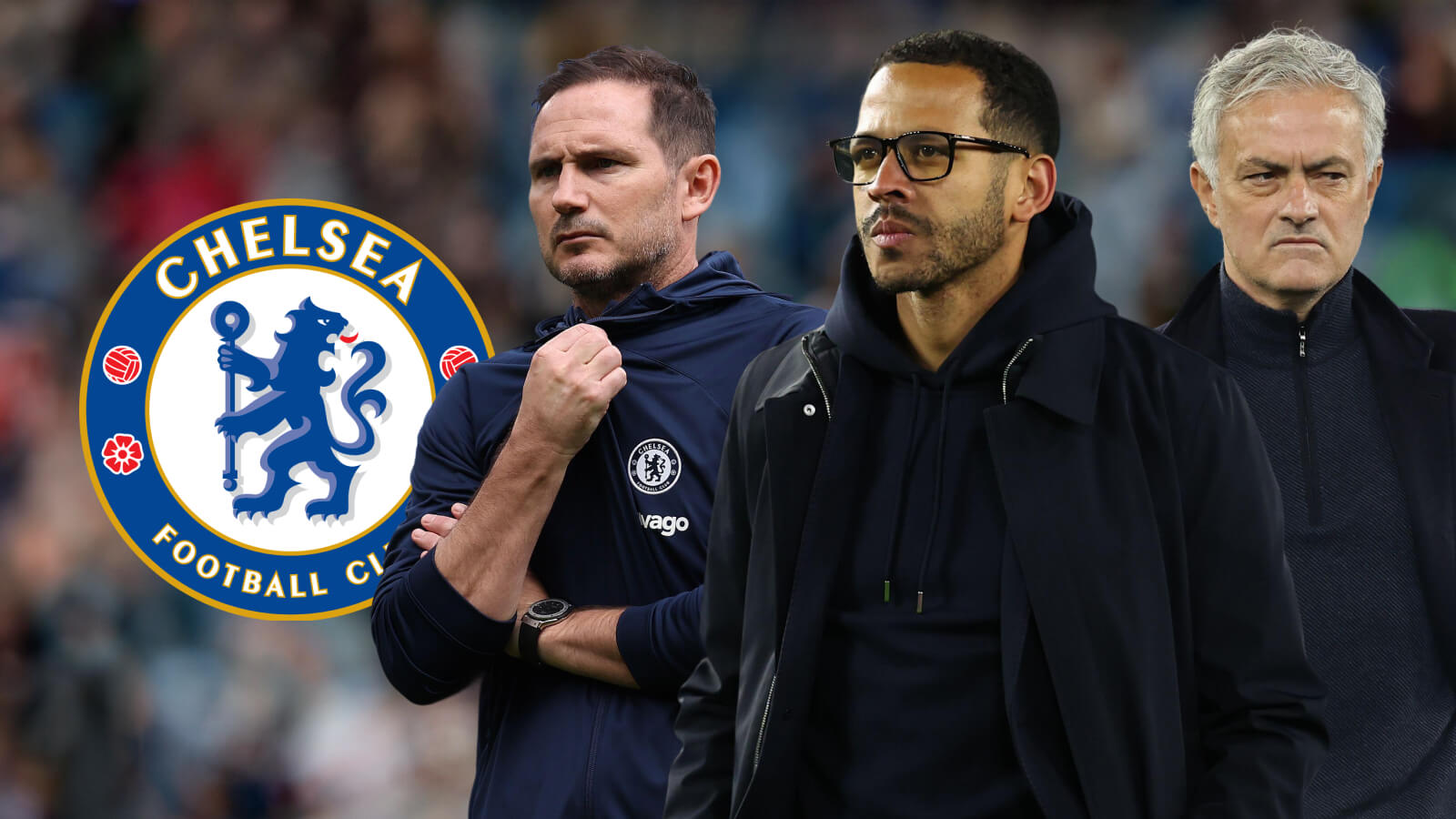
How truly dire was Liam Rosenior's 106-day spell at Stamford Bridge? A fresh look at every Chelsea manager since Roman Abramovich's takeover and the subsequent BlueCo era provides the answer: not catastrophic by Chelsea standards, but certainly uninspiring enough to warrant the chop.
Across 23 years and two ownership regimes, 22 different managers—caretakers and interims included—have taken the Chelsea hot seat. Some have left monuments to their tenure. Others have left scorch marks.
The Bottom Tier
At the very bottom sits Frank Lampard's final Chelsea chapter. His 2023 interim stint produced just one victory across 11 matches, a win percentage that barely registers at 9.1 and a points-per-game return of 0.45. The man who insisted "you can't say no to your club" when seeking his return has since learned, apparently, that sometimes you absolutely can.
Callum McFarlane's fleeting January-to-January 2026 appearance saw Chelsea draw with Manchester City before stumbling against Fulham, leaving him pointless but not entirely disgraced. Bruno Saltor's single-match caretaker run—a goalless draw with Liverpool—remains the only undefeated managerial record in the club's history, a distinction he'll treasure despite the circumstances.
Graham Potter inherited an impossible situation: a bloated squad of 427 players, most seemingly surplus to requirements, no pre-season, and the unenviable task of following Thomas Tuchel. His 38.7 win percentage and 1.42 PPG tell the story of a man undone by circumstance rather than incompetence. The BlueCo poster boy became one of the Premier League's most doomed appointments before he'd barely begun.
Guus Hiddink's first interim spell in 2015-16 couldn't overcome the wreckage Jose Mourinho left behind. Rosenior himself finished 17th—11 wins, two draws, ten losses across 106 days—with a 47.8 win percentage and 1.52 PPG. The assessment is damning: a man with an inflated self-opinion promoted well beyond his capabilities.
The Middle Ground
Andre Villas-Boas arrived as the next Mourinho after his Porto triumph, only to bench club legends and depart hastily, leaving Roberto Di Matteo to restore order and claim Champions League glory. That hurts.
Frank Lampard's full managerial tenure (2019-2021) earned credit for youth development and attacking football, yet moved the team from third to fourth while accumulating fewer points than Maurizio Sarri. The Lampard revisionism following his Coventry success now serves as indictment of Chelsea's current chaos.
Mauricio Pochettino managed 27 wins, ten draws and 14 losses with a 52.9 win percentage before his sacking despite five consecutive Premier League victories to close out 2023-24. Cole Palmer provided one silver lining.
The Respectable Operators
Claudio Ranieri's tenure from 2000-2004 saw a 53.8 win percentage overall, though his post-Abramovich arrival performance (61% wins, 2.03 PPG) would have ranked him alongside Carlo Ancelotti. Finishing second whilst reaching the Champions League semi-final hardly justified his dismissal, yet Jose Mourinho's arrival changed everything.
Roberto Di Matteo's 2012 spell produced 24 wins in 42 matches with both Champions League and FA Cup trophies. That he achieved this with Ryan Bertrand and Saloman Kalou on the wings speaks volumes—though whispers suggest senior players were effectively running both training and tactics.
Rafael Benitez transformed hostile placards ("Not wanted. Never wanted. Rafa out") into forgiveness ("We forgive you, Rafa") by winning the Europa League and securing third place, finishing with a 58.3 win percentage and 1.96 PPG. He probably didn't need the absolution.
Luiz Felipe Scolari's February 2009 sacking came with Chelsea seven points adrift of top spot—a ruthless decision that nonetheless looks questionable given Guus Hiddink's subsequent success with identical personnel.
The Elite
Enzo Maresca has compiled 55 wins, 16 draws and 21 losses with a 59.7 win percentage since August 2024, capturing the Conference League and Club World Cup whilst restoring Champions League football. His tactical acumen elevated nearly every player he touched, though his outspokenness occasionally rattled BlueCo's cage.
Jose Mourinho's second spell (2013-2015) culminated in Premier League title glory in 2014-15, with Eden Hazard operating at peak license and the Fabregas-Costa partnership proving devastatingly effective. It ended in dressing room discord, but the football justified the tenure.
Carlo Ancelotti delivered the Double in 2009-10, famously dismantling Wigan 8-0 on the final day to pip Manchester United. Second place the following season simply wouldn't do, and he departed for Real Madrid where he'd subsequently claim three Champions League titles.
Maurizio Sarri received shameful treatment from Chelsea's fanbase despite a 61.9 win percentage and Europa League success. His 2.06 PPG benefited from that continental triumph, yet Sarri-ball's principles deserved more time to flourish. Every Chelsea supporter should feel embarrassed at his forced exit.
Thomas Tuchel's September 2022 sacking represents perhaps BlueCo's worst decision: a 63.0 win percentage and 2.08 PPG wiped away by boardroom dysfunction.
Antonio Conte switched to 3-4-3 after back-to-back defeats and orchestrated a 13-game winning streak with 32 goals and four conceded. The 2016-17 title arrived in cruising fashion, though a text message dismissing Diego Costa signalled the beginning of the end. Fifth place and an FA Cup in year two couldn't save him.
The Immortals
Jose Mourinho's original reign (2004-2007) fundamentally altered Chelsea's trajectory, winning back-to-back titles and establishing the foundation for all subsequent success. His 67.0 win percentage and 2.23 PPG remain monuments to that era.
Avram Grant arrived from the boardroom and endured ridicule, yet his 66.7 win percentage and 2.24 PPG nearly delivered the Champions League and came within two points of the Premier League title. A slip and John Terry's studs denied what might have been the greatest season in the club's history.
At the summit sits Guus Hiddink's 2009 caretaker spell: 16 wins, five draws, one loss. A 72.7 win percentage. A 2.41 PPG that remains the highest in Premier League history. An FA Cup. Rock up, deliver the goods, and depart—the ultimate power move in football management.
That's the standard. Everything else is measured against it.
Compare options