The Great Summer Reckoning: How Premier League's Priciest Signings Stack Up After Three Months
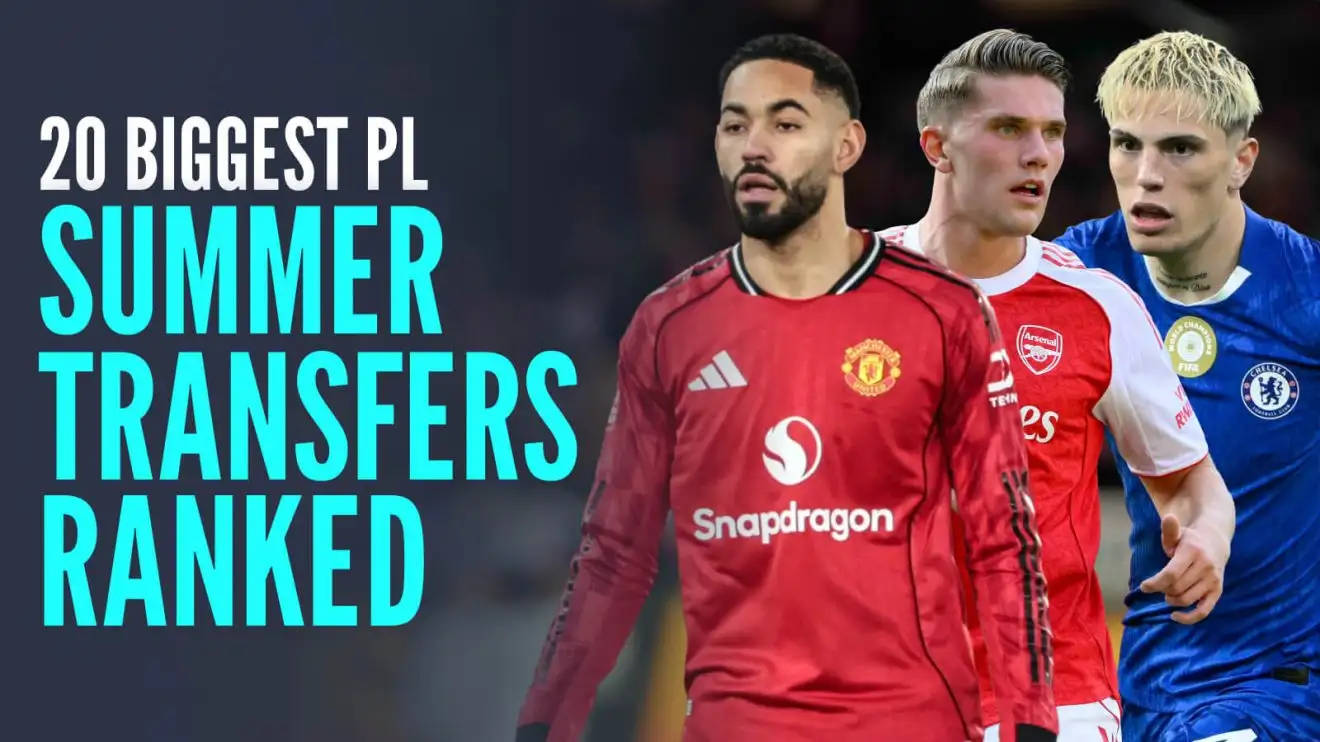
Three months into the campaign and it's time to take stock of how the Premier League's biggest summer spenders have fared. The picture is decidedly mixed: some have vindicated their eye-watering price tags, others have become cautionary tales, and a few remain works in progress.
20. Alexander Isak (Liverpool)
Whatever legitimate grievances Isak harboured about Newcastle's conduct, there's something rather satisfying about watching him flounder at Liverpool. His early Premier League goal against West Ham promised better days ahead, but subsequent performances have been nothing short of disastrous. Another injury has compounded matters. Whether he recovers to reclaim his form or continues this trajectory of mediocrity, at least there's entertainment to be found in the watching.
19. Anthony Elanga (Newcastle)
The theory that Elanga's £55m fee made sense for Newcastle's counter-attacking prowess has aged poorly. Over 1,000 minutes of action has yielded a barren goalscoring record and just two assists. He's spent considerable time warming the bench behind Jacob Murphy, forcing Eddie Howe to shuffle his tactical setup. The investment looks increasingly questionable.
18. Yoane Wissa (Newcastle)
Fenerbahce's cheeky £30m approach just six months after his £55m arrival tells you everything about Newcastle's assessment of his contribution. Missing four months through injury or sulking—or both—he's since notched three goals following his December return, including an impressive showing against PSV. The jury remains out on whether he'll prove a sound investment or a costly mistake.
17. Benjamin Sesko (Manchester United)
Sesko's defining moments have been unfortunate ones: a wayward stoppage-time effort against Grimsby that forced a penalty shootout loss, and an injury suffered while through on goal against Tottenham. A brace against Burnley offered encouragement, but he's since found himself on the periphery under Michael Carrick, barely featuring in the manager's opening fixture against Manchester City.
16. Viktor Gyokeres (Arsenal)
Despite Arsenal's commanding seven-point league lead and perfect Champions League record, pessimism has crept back into the fanbase—and Gyokeres' profligacy is the primary culprit. His fine finish against Inter was overdue; his only Premier League goal since November 1 came from the penalty spot against Everton. With Gabriel Jesus and Kai Havertz waiting in the wings, his starting berth in meaningful matches looks precarious if performances remain as insipid as his display against Nottingham Forest.
15. Jamie Gittens (Chelsea)
There's genuine concern that Gittens will become another casualty of Chelsea's overcrowded attacking ranks. A stunning League Cup strike against Wolves and a tidy assist in a Leeds defeat showed promise, but Premier League starts have dried up since December. New manager Liam Rosenior's preference for Pedro Neto on the left and Alejandro Garnacho's recent brace off the bench won't have filled him with confidence.
14. Milos Kerkez (Liverpool)
Kerkez arrived at Anfield expecting to flourish but instead found himself floundering. Early season performances suggested a player desperately trying to atone for mistakes not yet made. Arne Slot's functional approach to football has since tightened the ship defensively, but it's also neutered Kerkez's attacking contributions—one goal and no assists in 29 appearances represents a poor return for a player signed partly for his raiding prowess.
13. Xavi Simons (Manchester United)
Undoubtedly talented, Simons nonetheless faces a familiar problem: the game flows around him rather than through him. History is littered with high-profile playmakers who've arrived in the Premier League under conservative management only to depart soon after. Whether a different tactical environment would unlock him remains an open question.
12. Alejandro Garnacho (Chelsea)
A couple of goals off the bench against Arsenal followed by anonymity against Brentford encapsulates Garnacho's inconsistency. The outlook for the campaign appears frustratingly unpredictable—flashes of brilliance interspersed with long stretches of mediocrity.
11. Tijjani Reijnders (Manchester City)
One magnificent display against Wolves raised hopes of a Kevin De Bruyne replacement, but subsequent performances have been underwhelming. There are stretches in matches where you forget he's on the pitch entirely, which is hardly ideal for a midfielder operating under Pep Guardiola. He's shown glimpses and scored recently, but nowhere near the standard anticipated.
10. Eberechi Eze (Arsenal)
His first Arsenal goal coming against Newcastle, his former club, felt serendipitous. Yet his only other three goals have come against Spurs—the side he nearly joined—adding narrative weight to what seemed a destined homecoming. However, limited opportunities since tell a different story. Just 23 minutes across the last six Premier League games, failing to displace an out-of-sorts Martin Odegaard, doesn't augur well for his prospects or World Cup hopes.
9. Noni Madueke (Arsenal)
The #NOTOMADUEKE petition crowd must have winced watching his thunderbolt against Club Brugge ricochet in off the crossbar. Recent weeks have seen his output dip, however, and those relishing his success will need to brace for the inevitable "I told you so" brigade.
8. Florian Wirtz (Liverpool)
Wirtz has slipped down Liverpool's growing list of concerns, partly because he's proved relatively undemanding compared to other problem areas. Whether his recent uptick reflects adaptation to English football or simply the natural emergence of talent given sufficient minutes remains unclear. Either way, improvement is evident, though he's far from elite yet. Establishing himself as the figurehead of Liverpool's post-Mohamed Salah era will require considerably more.
7. Joao Pedro (Chelsea)
Two goals and three assists in his opening four Premier League games sparked genuine optimism. Since then, five goals and one assist across 18 matches have dimmed those hopes considerably. While a capable footballer, he appears better suited to a withdrawn role—one likely to be occupied by Cole Palmer if Chelsea deploy their wide attacking options properly. He's proven himself worthy of the Brighton step-up, but he's not the centre-forward Chelsea need.
6. Nick Woltemade (Newcastle)
There's something endearing about footballers who don't look the part, and Woltemade's early goalscoring blitz provided tremendous entertainment—especially given the scepticism about his fee as Newcastle's fourth or fifth-choice striker replacing Alexander Isak. A brace against Chelsea just before Christmas represented his last goals in 13 games, however, and seven appearances without a goal is a concerning trend.
5. Hugo Ekitike (Liverpool)
Ekitike's season reads like a contradiction: five goals and an assist in seven games raised eyebrows about Liverpool's £125m striker investment; a barren 12-game spell largely from the bench suggested buyer's remorse; then five goals in three games after reclaiming the starting role. The cycle of bewilderment continues—Liverpool shouldn't have needed a £125m alternative striker in the first place.
4. Mohammed Kudus (Tottenham)
Sceptics questioning Kudus' price tag on the back of five goals and three assists for West Ham have been vindicated by his Spurs performances. He's shouldered the attacking burden largely alone under Thomas Frank, and potential managerial change looms as he recovers from injury.
3. Matheus Cunha (Manchester United)
Four goals and two assists in 21 appearances don't tell the full story. Cunha possesses an intangible magnetism; things simply happen around him on the pitch. He's already demonstrated the character and resilience to avoid the psychological pitfalls that have claimed so many Old Trafford big-money signings before him.
2. Bryan Mbeumo (Manchester United)
Like Cunha, Mbeumo has bucked the trend of talented footballers arriving at Old Trafford and promptly struggling. Eight goals and an assist in 18 appearances represents a solid return, and those numbers should improve if he continues operating as the number nine following his Manchester derby goal.
1. Martin Zubimendi (Manchester United)
The Spaniard has been a revelation. While countless others have struggled to adapt to English football's intensity, Zubimendi's transition has been seamless. A technically brilliant defensive midfielder, his Chelsea goal was sublime. He's simply a hugely impressive operator who's vindicated every penny of his fee.
Compare options