Summer's Biggest Signings Ranked: Manchester United's Trio Shine as Wirtz Falters
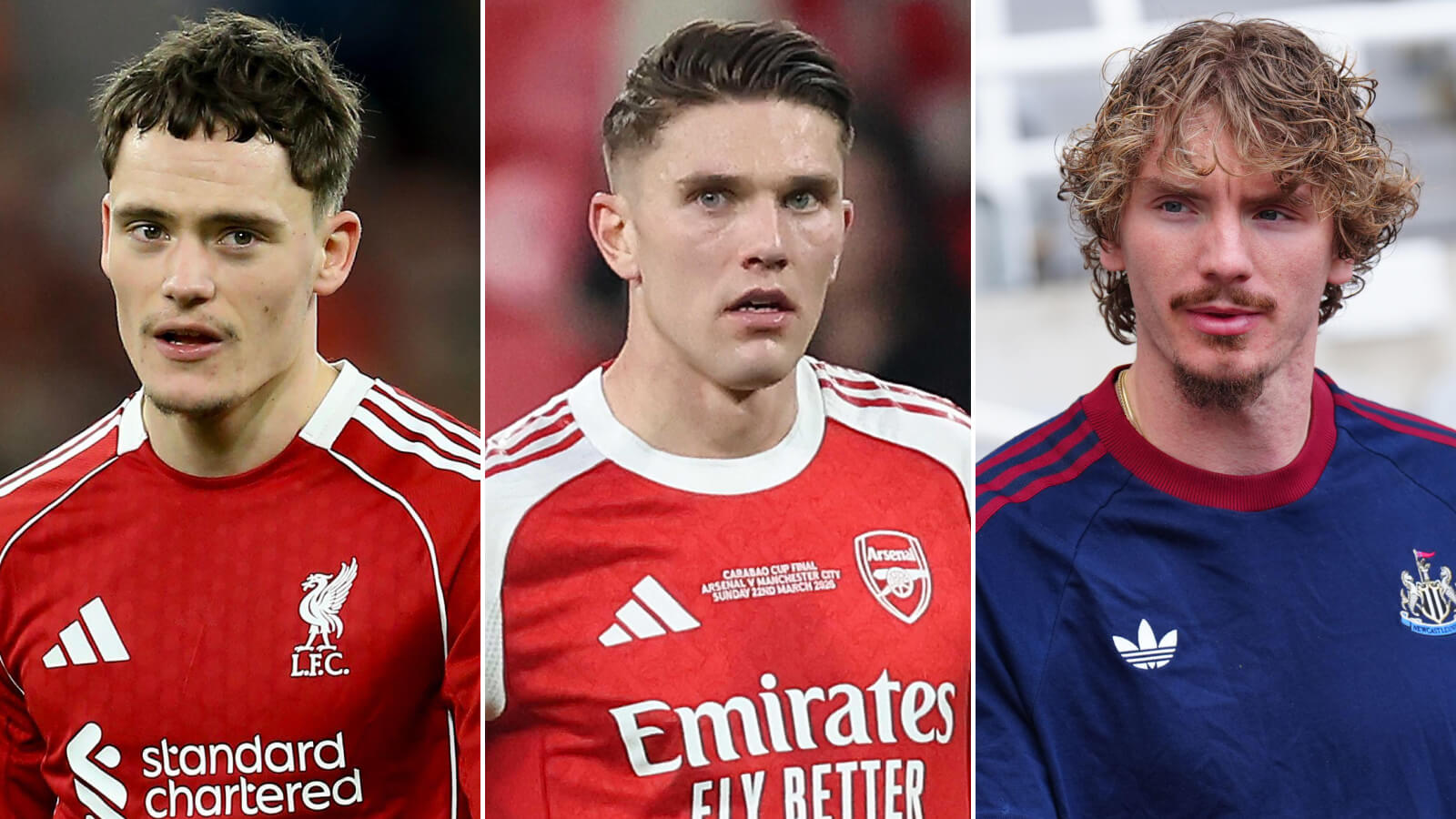
Viktor Gyokeres has climbed the standings dramatically after an explosive nine-goal haul across 12 matches during the title push, whereas Florian Wirtz has drifted in the opposite direction as his involvement at Liverpool continues to draw scrutiny.
The rankings track player performances at three Premier League games, then at nine, 15, 22, 28, and finally 32 matches into the campaign, with previous positions noted alongside.
20. Alexander Isak
Hopes of a breakthrough fizzled after his maiden Premier League strike against West Ham in November proved to be a false dawn. Subsequent showings deteriorated further, prompting questions about whether he might rank among the division's most spectacular flops. A second goal arrived alongside an ankle complaint that sidelined him for most of 2026. Arne Slot spoke of seeing "a player much stronger" upon his comeback last month, yet a third goal against Crystal Palace merely preceded another spell in the treatment room. Timing, it seems, remains against him.
19. Yoane Wissa
Fenerbahce's £30m approach just six months after Newcastle paid £55m for Wissa painted a rather unflattering picture of his progress on Tyneside. Having missed the campaign's opening months—whether through transfer desires, fitness issues, or both—he's managed three goals in just over 800 minutes since December's return. Eddie Howe's public backing of his summer signings rings hollow given his squad selections. Wissa's 95th-minute appearance in the Palace defeat was compounded by social media drama: changing shirts with goalscorer Jean-Philippe Mateta after liking Brian Brobbey's celebration of Sunderland's derby triumph. Situational awareness clearly needs work.
18. Anthony Elanga
The logic was sound: while other clubs might balk at £55m for Elanga, Newcastle's counter-attacking prowess justified the outlay. That theory has aged poorly. He spent the first half watching Jacob Murphy and various left-wingers occupy his flank. Increased minutes after New Year coincided with Newcastle's alarming slide towards the relegation zone. His Nou Camp brace provides quiz-question fodder following that 7-2 Champions League hammering, yet three goals and two assists across 2000 minutes represents a meagre return for a winger in Europe's elite competition. Saturday's bench exclusion—alongside Wissa and Nick Woltemade—in favour of Joelinton, Will Osula, and Murphy told its own story as Newcastle finally won a Premier League match since mid-March.
17. Jamie Gittens
Barely registering since January's hamstring injury, Gittens has been largely forgotten. His pre-injury contributions—a League Cup stunner against Wolves, an assist in a Leeds defeat—offered glimpses but nothing substantial. He appears destined to join Chelsea's graveyard of attacking prospects in the BlueCo era, outranked in the winger pecking order even by Alejandro Garnacho. Cole Palmer's rightward shift to accommodate Enzo Fernandez in the number ten role has further complicated matters.
16. Nick Woltemade
There's something endearing about footballers who defy conventional notions of technical excellence. Woltemade's arrival at Newcastle for a figure exceeding his market value as their fourth or fifth-choice striker generated considerable amusement. Early goalscoring form suggested he might be the ideal complement for Anthony Gordon's wing play. That narrative has collapsed spectacularly. Just one goal in 26 appearances tells the story; his lack of pace to reach crosses rendered him incompatible with Newcastle's attacking style. Manager Eddie Howe shifted him deeper, with Wayne Rooney and others expressing displeasure. Woltemade sat out both Barcelona clashes and watched from the bench as Will Osula started the last four Premier League games, including the Brighton victory where he didn't even appear.
15. Alejandro Garnacho
Garnacho content remains in abundant supply, largely because his performances offer opportunities for either celebrating his talent or mocking his inconsistency—sometimes simultaneously. Reality has proven more mundane: he's been precisely what most expected. Fine. Nothing more. Fine, however, falls short of Chelsea's requirements, and evidence remains scarce that he'll fulfill his actual potential, let alone the inflated expectations built on teenage appearances for a struggling Manchester United.
14. Tijjani Reijnders
A stellar opening-day performance against Wolves—bottom of the table—sparked comparisons to Kevin De Bruyne, David Silva, and Yaya Toure. Subsequent showings have provided context. Lengthy stretches pass with Reijnders barely registering, a remarkable feat for a midfielder under Pep Guardiola. He featured minimally in the Carabao Cup final and FA Cup quarter-final, managing just 65 minutes across nine recent Premier League appearances. Guardiola evidently concluded that winning a domestic treble required his absence. His debut season will be remembered for struggling to escape a Pep tactical straitjacket during the FA Cup Southampton comeback.
13. Xavi Simons
A talented young forward requiring careful development must be devastated at missing Chelsea, where nurturing potential typically goes to die. Apologists suggested Thomas Frank's conservative approach hampered Simons at Brentford, though the question lingers whether any attacking midfielder could have transformed a Tottenham side this dire. Dejan Kulusevski offers proof of concept. Too often, play moved around rather than through Simons, a familiar pattern for high-profile Premier League playmakers. A brace against Atletico Madrid paradoxically reinforced doubts about his top-flight credentials. Just when he appeared crucial—a goal and assist in Brighton's draw, an encouraging Wolves display—his ACL rupture ended the season. Spurs' best performance came with him sidelined.
12. Noni Madueke
Arsenal's signing proved irresistible to those who'd launched the #NOTOMADUEKE petition, though rooting for him created uncomfortable cognitive dissonance. His piledriver against Club Brugge cannoning off the crossbar provided vindication that decency occasionally prevails. Seven goals and four assists across 2000 minutes represents a debut season of simmering discontent, however. One performance short on end product invites social media vitriol from those claiming Gooner credentials.
11. Milos Kerkez
Initially, Kerkez played as though atoning for mistakes he hadn't committed, desperately attempting to influence everything and therefore accomplishing nothing. Arne Slot's functional—or turgidly tedious, depending on perspective—tactical approach has reduced his errors. His attacking impetus has marginally improved, yet two goals and two assists from 3000 minutes disappoints for a left-back signed primarily for raiding prowess. Liverpool's reported interest in competition rather than backup following Andy Robertson's departure speaks volumes. Kerkez receives opportunity to prove his worth following Robertson's "dreadful" Manchester United display.
10. Eberechi Eze
His first Arsenal goal arriving as the winner against his former club, with five of six Premier League strikes coming against north London rivals he'd nearly joined, suggests destiny intervened. Eze's return to his boyhood club seemed written in the stars. That narrative hasn't translated to sustained excellence. His innovative style clashes fundamentally with Arsenal's pragmatic approach, evident when he was withdrawn at half-time in his sole start before the derby. Consecutive starts following that second strong performance yielded nothing but confirmation of tactical incompatibility. His stunning Newcastle winner demonstrated star quality for the title run-in, though his overall contribution remains underwhelming.
9. Florian Wirtz
Wirtz transitioned from major problem in a mistake-prone Liverpool to their sole attacking solution before settling into comfortable mediocrity. Four consecutive defeats saw him scapegoated; his absence against Nottingham Forest and Wolves proved costly as Liverpool's passing disintegrated. Whether Arne Slot or his successor should construct next season's team around him remains genuinely unclear. The Manchester United comparison proved unflattering—Bruno Fernandes' ability to seize games by the throat contrasts sharply with Wirtz's more tentative approach. Doubts persist about his character and capacity for decisive moments.
8. Mohammed Kudus
Skeptics questioning Kudus' price tag faced an obvious retort: he'd been playing for West Ham. His Tottenham displays vindicated the caveat. Operating as Spurs' primary attacking outlet before injury, his presence delivered 1.37 points per game—mid-table over a full season. Without him: 0.67 PPG, equating to 25 points across 27 matches—relegation territory.
7. Hugo Ekitike
Three goals and an assist across his opening five Premier League games prompted questions about Liverpool's £125m alternative striker. A barren eight-game stretch largely from the bench followed while Slot attempted bedding in his primary £125m acquisition. Five goals in three games upon reinstatement sparked fresh questions about the original £125m signing. Twelve subsequent games yielding three goals granted space to wonder whether Liverpool actually required their primary £125m striker. Branded a flop and "disgrace" for failing to chase at Paris, Ekitike's 17 Premier League goals in his debut season for one of Liverpool's poorest teams represents excellent value. They'd have been nowhere without him.
6. Viktor Gyokeres
For extended periods, Arsenal appeared destined for the title despite signing the wrong striker. Gyokeres made futile runs while opposition defences crumbled under Declan Rice set-piece pressure, and Arsenal claimed points from matches they neither played well in nor ever threatened to lose. His nadir against Nottingham Forest coincided with Kai Havertz's fitness return, suggesting Arsenal might win the league practically without Gyokeres. His Tottenham brace—classic Gyokeres finishes—signaled transformation from timid to ruthless operator, mirroring his Portuguese form. Nine goals across 12 matches in the title run-in mean Arsenal's fate now encompasses Gyokeres; blame flows elsewhere if they falter, while his brace against Fulham ensures credit arrives if they prevail.
5. Benjamin Sesko
Sesko's English football narrative began miserably: stepping up tenth in Grimsby's penalty shootout after blazing a stoppage-time chance over from four yards, then sustaining injury when clean through against Tottenham. A Burnley brace doubled his United tally before Michael Carrick's appointment rendered him peripheral—notably absent from the bench against Manchester City in Carrick's "best performance since Sir Alex Ferguson." His stoppage-time Fulham winner changed everything. An even later equaliser from the bench against West Ham, followed by an Everton winner, forced Carrick's hand. Crystal Palace's bench appearance after earning a start suggested he'd secured his position, yet he reverted to super-sub status against Aston Villa before returning to the XI and scoring against Brentford and Liverpool. Nine Premier League goals across 685 recent minutes demonstrates genuine quality.
4. Martin Zubimendi
Initially, the Spanish midfielder's seamless transition enchanted observers accustomed to Premier League adjustment struggles. His Chelsea goal shone brilliantly, and Declan Rice credited Zubimendi for his own "unstoppable" form. Then everything shifted. Arsenal supporters questioned when they'd last witnessed a forward pass. Teammates gestured desperately for him to vary play rather than returning possession whence it came. Zubimendi stakes a claim as Arsenal's biggest bottlejob given his spectacular decline. Myles Lewis-Skelly's superior display against Fulham increased pressure further. Should Arsenal win the title, Zubimendi deserves substantial credit for his earlier excellence; defeat, however, will see considerable blame land at his feet.
3. Bryan Mbeumo
Mbeumo has defied the depressing trend of high-quality footballers deteriorating upon Manchester United arrival. Nine goals and three assists across 22 appearances represents solid output. Long-term concerns persist regarding his utility if United demand possession-based control. At Brentford and now United, Mbeumo thrives in transition and on the counter-attack but struggles when grinding down opposition. That's perhaps unfair criticism given United haven't yet established meaningful control themselves. As currently constituted, Mbeumo represents the perfect Manchester United forward.
2. Matheus Cunha
His falling-over pass to Bryan Mbeumo against Crystal Palace alone merits consideration for top spot—a glorious moment transcending statistical measurement. Goals and assists tell incomplete stories; Cunha's worth extends beyond contribution boxes. He possesses magnetic energy and character, having already proven he won't crumble under Old Trafford pressure as so many expensive signings have previously. A vibe train of a footballer, Cunha has demonstrated he's far more than a numbers machine.
1. Joao Pedro
Initial hope that Chelsea had finally acquired a fully-formed striker evaporated as he seemed better suited behind a central forward, risking exclusion due to Palmer and Fernandez's superior talents in that role. Four goals across 17 subsequent appearances deepened concerns. That assessment has fundamentally shifted. Joao Pedro's brilliance shone through even Chelsea's disastrous Rosenior period and persisted through the Nottingham Forest humiliation, where he crowned proceedings with a sublime overhead kick in stoppage time. Twenty goals across all competitions and 15 in the Premier League during his Blues debut represents phenomenal achievement. Chelsea would have been nowhere without him.
Compare options