Summer's Big Spenders Ranked: Sesko Leapfrogs Gyokeres as Form Shifts
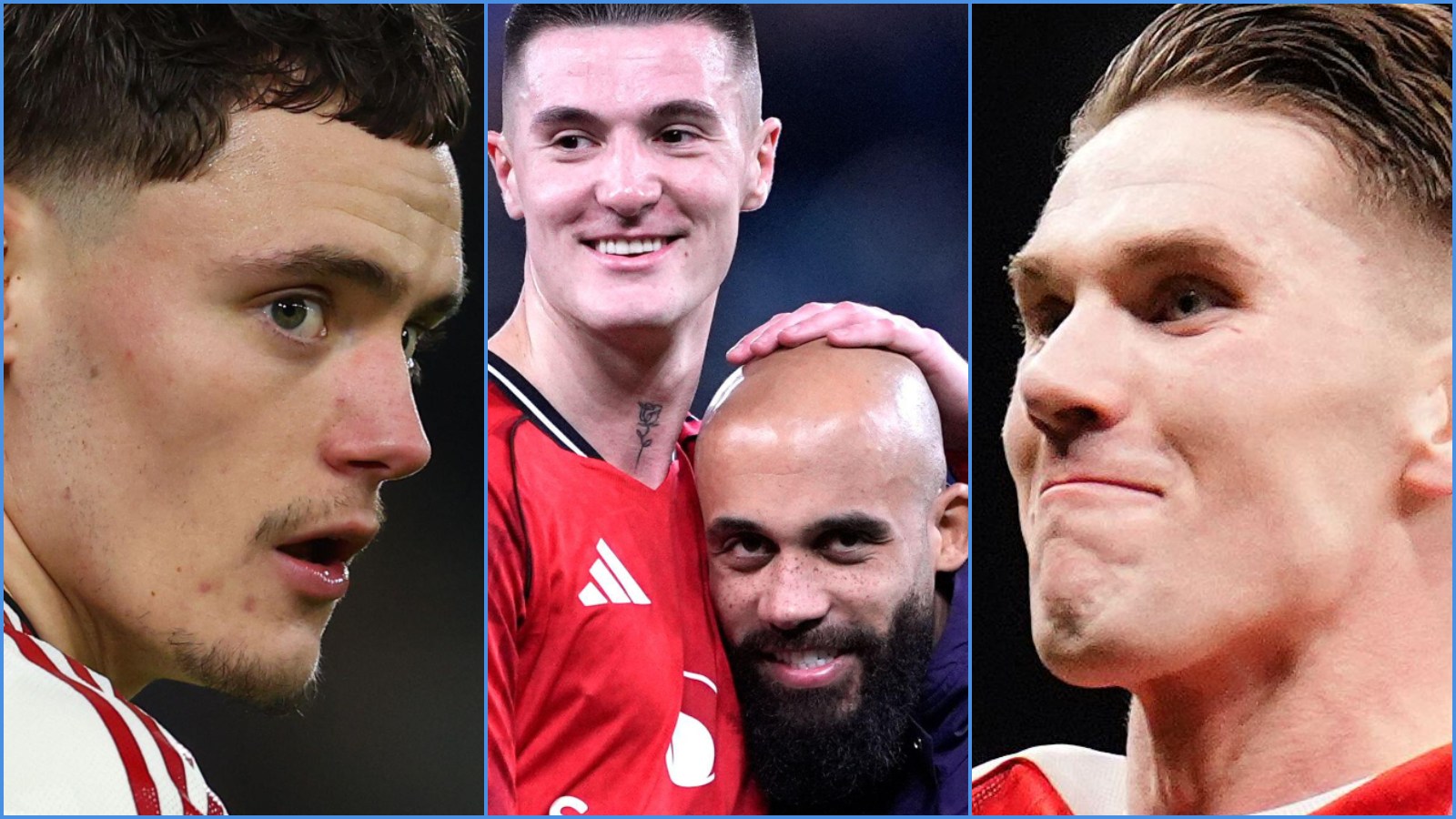
Just over a month since we last shuffled the deck on the Premier League's priciest summer signings, February has delivered the sort of form swings that make ranking these expensive acquisitions a moving target. Viktor Gyokeres, Benjamin Sesko, and Joao Pedro have all made notable climbs, whilst Nick Woltemade's trajectory tells an altogether different tale.
Here's how they stack up three matches in, then at the nine-game mark, 15 games, and 22 games respectively, with previous positions noted.
20. Alexander Isak
Reports suggest a return by late March, and his absence has been keenly felt. We'll admit to having rather enjoyed watching him struggle at Liverpool following his summer switch, yet there's precious little satisfaction in him languishing on the treatment table throughout 2026.
After his maiden Premier League goal—a clinical finish at West Ham—promised better things, subsequent performances have only reinforced whispers that he might become the league's greatest disappointment. An ankle injury sustained alongside a second goal has sidelined him entirely. Here's hoping he mends quickly. Injuries are rotten, but when Isak's fit and firing, he's a genuine pleasure to watch, whether he's rediscovering his best or continuing to flop spectacularly.
19. Anthony Elanga
We rather agreed with the assessment that whilst Elanga might not command £55m elsewhere, Newcastle's counter-attacking prowess justified the fee. That logic now feels distinctly questionable.
Much of the autumn saw him warming the bench as Jacob Murphy or a left-sided winger occupied his right-flank berth. Eddie Howe's recent faith has yielded nothing tangible. One goal and two assists across 1600 minutes represents a damning return for a winger at a Champions League club.
18. Yoane Wissa
A cheeky £30m approach from Fenerbahce—just six months after his £55m arrival from Brentford and merely 477 minutes into his Newcastle tenure—speaks volumes about their assessment of his Tyneside stint.
Having either sulked, nursed injuries, or done both for the opening four months, he's managed three goals in nearly 800 minutes since December's return. He impressed against PSV but remains sparingly deployed by Howe, with Anthony Gordon preferred centrally and Woltemade dropping deeper. Wissa hovers precariously near flop status; full confirmation appears imminent.
17. Jamie Gittens
He's produced moments of genuine quality—a stunning League Cup strike against Wolves, a tidy assist in Leeds defeat—yet feels destined for that familiar Chelsea fate: drowning in their bloated attacking ranks under BlueCo's stewardship. His standing below Alejandro Garnacho in the pecking order offers scant consolation, especially with Cole Palmer's recent shift rightward to accommodate Enzo Fernandez at ten.
Gittens hasn't started a Premier League fixture since December's outset, with niggling injuries contributing to the entirely predictable flat debut campaign at Stamford Bridge.
16. Xavi Simons
Clearly brimming with talent, yet one suspects a different tactical approach—something less conservative, more adventurous than Thomas Frank's—might have yielded different results. The broader question lingers: which attacking player could genuinely transform a Tottenham side this poor?
Dejan Kulusevski springs to mind. Tottenham supporters must worry that football tends to flow around Simons rather than through him; a familiar refrain for high-profile playmakers arriving in the Premier League only to depart shortly after.
15. Alejandro Garnacho
Garnacho content remains voraciously consumed, chiefly because his performances invite either celebration of his brilliance or schadenfreude at his failure to fulfill his promise. Some outlets can't resist commentary regardless of his involvement.
We've witnessed rather more of the latter, though his Chelsea displays have largely warranted neither extreme. He's been adequate—the problem being that adequacy falls catastrophically short of Chelsea's demands and there's precious little suggesting he'll ever realize his genuine potential, let alone the absurdly inflated version constructed from teenage Manchester United appearances.
14. Tijjani Reijnders
A superb Wolves showing has since been contextualized by Wolves' desperate battle against becoming the worst-ever Premier League side.
What followed was a procession of anonymous outings. Reijnders has offered mere glimpses of quality whilst vanishing for large stretches—quite the achievement for a midfielder under Pep Guardiola. His last seven games have yielded just two starts, both in domestic cup competitions.
13. Milos Kerkez
Early campaign saw him playing frantically, desperate to atone for errors he hadn't yet committed. He appeared everywhere and nowhere simultaneously, achieving nothing through attempting everything.
Arne Slot's shift toward what some call functional football—others describe as the most tedious fare witnessed at Anfield in years—has curtailed the mistakes. Kerkez's attacking contributions have shown modest improvement, though a goal and two assists represent meager return from a left-back recruited primarily for his raiding prowess.
12. Noni Madueke
The #NOTOMADUEKE petition ensured we were invested in his success, yet we've wrestled with the notion of those lacking basic decency enjoying his football. His piledriver against Club Brugge cannoning off the crossbar provided some satisfaction.
Madueke remains one poor performance away from social media lambasting from so-called Gooners, and as a mercurial winger, such occurrences seem inevitable.
11. Nick Woltemade
Footballers who shouldn't appear capable of playing football hold a special place in our affections. Combine that with the summer mockery over his inflated fee for Newcastle's fourth or fifth-choice striker and the task of replacing £125m deserter Isak, and Woltemade's early goal rush at St James' Park proved irresistible.
The subsequent decline has been steep. Three goals across his last 18 appearances tells the story. Initial theories that he'd prove ideal dropping deep to free Anthony Gordon and flying wingers evolved into suggestions he was precisely wrong for that role, lacking the pace to reach crosses. Howe has since repositioned him deeper, bringing in a nine capable of more than a trot.
Wayne Rooney has voiced disapproval of Woltemade's deeper role, and with speculation Newcastle might cut losses at season's end, Bruno Guimaraes' return from injury could see Woltemade relegated to the bench.
10. Eberechi Eze
His first Arsenal goal arriving against his former club, with five of his six Premier League tallies coming against north London rivals he nearly joined, suggests destiny intervened. Yet he's failed to deliver what Arsenal anticipated.
He was substituted at half-time in the only Premier League start before the derby he didn't make, and his inability to displace an misfiring Martin Odegaard or prevent Bukayo Saka's shoehorning into the ten role speaks volumes about his debut season impact.
9. Viktor Gyokeres
For lengthy stretches, Arsenal appeared capable of winning the title despite signing the wrong striker. They accumulated points whilst Gyokeres made ineffectual runs, opposition defences crumbled under Declan Rice set-piece pressure, and Arsenal departed with victories they'd neither played well in nor appeared remotely threatened in.
A Gyokeres nadir at Nottingham Forest coinciding with Kai Havertz's fitness return suggested Arsenal might win the title entirely without him, or at best as a flat-track super-sub. Another Havertz absence and draws with Brentford and Wolves hinted at potential bottling, with the striker bearing considerable blame.
Against Tottenham, though, two quintessential Gyokeres finishes and his transformation from timid to the ruthless version who scored prolifically in Portugal offer genuine encouragement for the run-in.
8. Benjamin Sesko
Sesko's English football narrative began grimly: stepping up tenth in Grimsby's penalty shootout victory, having blazed a stoppage-time chance over from four yards. An injury whilst clean through against Tottenham followed.
A Burnley brace doubled his United tally before Michael Carrick's arrival saw him benched against Manchester City in what became United's finest recent performance. Limited involvement in the subsequent 3-2 Arsenal win suggested integration difficulties.
Yet Sesko has forced his way into contention. A stoppage-time Fulham winner, an injury-time West Ham equaliser off the bench, and another decisive Everton goal have created irresistible pressure. Five points from 70-odd minutes of football, all from crucial moments, suggests Carrick must find space for him, though the 'if it ain't broke' argument remains valid. Either way, Sesko looks the genuine article.
7. Hugo Ekitike
Five goals and an assist across his opening seven appearances prompted questions about Liverpool's £125m striker signing. A barren 12-game spell—mostly from the bench—whilst Slot struggled integrating his £125m purchase sparked fresh questions about the alternative £125m striker. Five goals in three subsequent matches upon returning to the starting XI revived the debate about whether Liverpool actually needed their £125m striker.
Regardless of interpretation, 15 goals in a debut campaign for a generally dreadful Liverpool side represents excellent business. They'd have been nowhere without him.
6. Mohammed Kudus
Skeptics questioning Kudus' price tag after five goals and three assists last season were missing the obvious caveat: he was playing for West Ham. His Spurs form has vindicated that perspective entirely.
He carried Tottenham's attacking burden before injury struck. With him available, Spurs average 1.37 points per game—comfortably mid-table over 27 matches. Without him, that drops to 0.37 PPG—level with bottom-dwelling Wolves. The differential is staggering.
5. Florian Wirtz
Wirtz has transitioned from major problem in a chaotic, fragile Liverpool outfit to essential solution in a toothless one with remarkable speed.
Less than four months after being scapegoated following four consecutive defeats, his absence against Nottingham Forest saw Liverpool produce laughably insipid football, unable to retain possession for seconds, let alone manufacture chances. They essentially operated without a midfield.
Whether this reflects his genuine improvement or dramatic deterioration elsewhere remains debatable, yet it's becoming undeniable—as predicted pre-season—that Wirtz represents the foundation upon which Slot or his successor must build next term.
4. Matheus Cunha
We're tempted awarding him top spot purely for that falling-over pass to Bryan Mbeumo. That moment perfectly encapsulates why reducing a forward to mere goal contributions proves inadequate. It won't appear in any statistics box yet remains unforgettable—a season highlight. United fans will treasure it.
Cunha's Wolves contributions mattered, certainly, but he's always transcended mere numbers. He possesses magnetic energy, infectious charisma, and has already demonstrated the character to avoid the pressure-induced collapse that's claimed so many Old Trafford arrivals.
3. Bryan Mbeumo
Mbeumo appears to have broken the curse of arriving at Old Trafford as quality and remaining quality. Nine goals and three assists across 22 appearances represents respectable return.
Concerns linger regarding his long-term utility if United pursue control-based football—which they presumably must for title challenges. Like his Brentford days, Mbeumo menaces in transition and on the counter but struggles when opponents require grinding down. We're perhaps being overly critical, identifying potential issues that may prove immaterial since United haven't yet discovered control. Currently, Mbeumo fits Manchester United perfectly.
2. Joao Pedro
Early optimism that Chelsea had finally found a complete striker—two goals and three assists in four games—evaporated when suggestions emerged he'd suit a deeper role better, risking bench time behind Palmer and Fernandez's superior talents. Just four more goals across 17 subsequent appearances seemed to confirm those fears.
Recent form has restored belief. Seven goals in his last 11 Premier League matches, with five goals and four assists arriving during Liam Rosenior's six-game tenure, suggests this represents the new standard rather than another purple patch. His outstanding Champions League brace against Napoli in a must-win qualifying fixture further encourages optimism.
1. Martin Zubimendi
As devotees of technically gifted, low-stress defensive midfielders, we suspect Zubimendi will enchant us for years. Whilst others struggle adapting to the Premier League's tempo and physicality, his transition has proved effortless.
His Chelsea goal demonstrated sublime technique, and even the surprisingly self-assured Declan Rice has credited Zubimendi's influence for his own 'unstoppable' season. A thoroughly impressive footballer.
Compare options