Twenty Reasons Why Manchester United's Ruben Amorim Had to Go
We don't often venture beyond five or six reasons when a Premier League manager gets the chop. But this is Manchester United we're discussing – so here are twenty reasons why the club and Ruben Amorim have gone their separate ways.
The Rigid Formation
Amorim's unwavering commitment to his 3-4-3 system became the stuff of press conference legend. Every interview brought the same question: would he consider changing it? Every time, he'd retreat to the same defence – it worked at Sporting. Yet Manchester United is emphatically not Sporting, and the evidence kept mounting that the system simply wasn't fit for purpose in the Premier League.
While tweaks for injuries produced occasional improvement, the manager reverted to type when fit players returned, and the results nosedived accordingly. Perhaps Amorim now recognises that clinging to principle was far more damaging than admitting defeat would have been.
The Fuzzy Philosophy
Yes, formation and philosophy overlap – we get it. But there's a difference between a system failing and an entire ethos falling apart. Here, both collapsed. Setting aside the usual tactical buzzwords everyone throws about, what exactly were Amorim's core principles for Manchester United? Nobody could quite articulate them. The vague talk of "overloads" rang hollow when the team couldn't even string passes together.
The Grim Points Tally
Fifty-eight points from forty-seven games. Among the ever-present Premier League sides since his appointment, only Spurs, West Ham and Wolves have mustered fewer. That's not the trajectory of a manager finding his feet – that's a catastrophic decline.
The Resignation Threats
After that 3-1 battering at Brighton in January, Amorim told the United hierarchy he was "prepared to resign". He got talked down from the ledge, but the reports kept circulating that he might walk before being pushed. In the end, he stuck around – presumably for the £12m compensation package. It painted a picture of a man no longer convinced in himself.
The Europa League Disaster
Erik ten Hag kept his job because he won the FA Cup, however improbably. Amorim won nothing and lost to Nottingham Forest – the seventeenth-best team in England – managed by a fellow whose only three victories in his previous fifteen games in all competitions came in that final and the two semi-final wins against Bodo/Glimt. It was the worst possible outcome for a manager trying to justify his existence.
The Kobbie Mainoo Puzzle
His teammates were "perplexed". Gary Lineker was "really worried" about him being sidelined. Owen Hargreaves called him United's "best player by a country mile". Yet Amorim insisted he was "helping" the academy graduate by keeping him out of the team.
The manager suggested it was either Mainoo or Bruno Fernandes. But surely the academy prospect couldn't perform worse than Manuel Ugarte alongside the skipper, particularly when Fernandes himself has been far from undroppable. Having your supposed future sidelined while the team collapses isn't a good look.
Public Condemnation
Amorim's charm and charisma likely kept him in a job longer than results deserved. But honesty to a fault has its drawbacks. Calling your own team "the worst in Manchester United history" isn't exactly music to Sir Jim Ratcliffe's ears – or good for the share price.
The Centre-Back Roulette
Micah Richards was visibly exasperated on Match of the Day as graphics showed Amorim's constant defensive reshuffles in the Brentford game – the one that ended with Mason Mount at left wing-back, a decision that perfectly encapsulated his stubborn attachment to the 3-4-3. While tactical tweaks to change a match are forgivable, changing at least one centre-back in every single game defies logic.
The Prize Money Problem
Reports suggest the sacking costs £12m. With roughly £2.7m per Premier League position, any successor would need a five-place improvement just for the decision to break even financially. Your dad could manage that.
Rasmus Hojlund's Resurrection
It's remarkable what happens when you're not at Manchester United. Hojlund scored on his Napoli debut and now has twelve goal involvements in twenty-one games. He's become a proper striker – the kind of finisher United fans expected when Amorim arrived. He shares a profile with Viktor Gyokeres, who flourished under the manager in Portugal. Yet at Old Trafford, he withered. Benjamin Sesko's struggles elsewhere suggest Amorim simply doesn't know how to get strikers the ball.
Out-Schooled by a Novice
Keith Andrews was in his eighth game as a manager when he tactically outmanoeuvred Amorim. It wasn't complicated. Brentford recycled possession, drew United's midfielders forward, then played long balls to Igor Thiago, who bullied the centre-backs while United's pressing unit had evaporated. Alan Shearer noted Amorim made life "easy" for every opponent because they knew exactly what was coming.
The Alternatives
Oliver Glasner is the bookmakers' favourite and would take the job "in a heartbeat" – which tells you something. The Austrian has made 3-4-3 work at Palace and his contract ends this summer. Gareth Southgate is also in the frame. As Jamie Carragher observed, every other Premier League manager would look at United's situation and think they could do better.
Manchester United DNA
Remember when people used to bang on about this? We haven't heard it mentioned in ages – probably because Amorim's football was so divorced from any recognisable United tradition that the concept became irrelevant to the conversation.
The Grimsby Humiliation
"Something has to change and you cannot change 22 players," Amorim said after losing to League Two Grimsby – another hint at possible resignation. But watching him rock back and forth on the bench during the penalty shootout defeat was a pretty clear statement about who was responsible. The players spoke through their performance, certainly, but so did their manager.
The Cumulative Nadirs
Grimsby, Brentford, a 2-0 home defeat to Graham Potter's West Ham, Brentford again, Wolves on Boxing Day – there's always another low point waiting beneath the last one. Whether it's recency bias or simply the relentless nature of the decline, the latest disaster always feels like the worst because it's the latest in an endless succession of them.
The Body Language
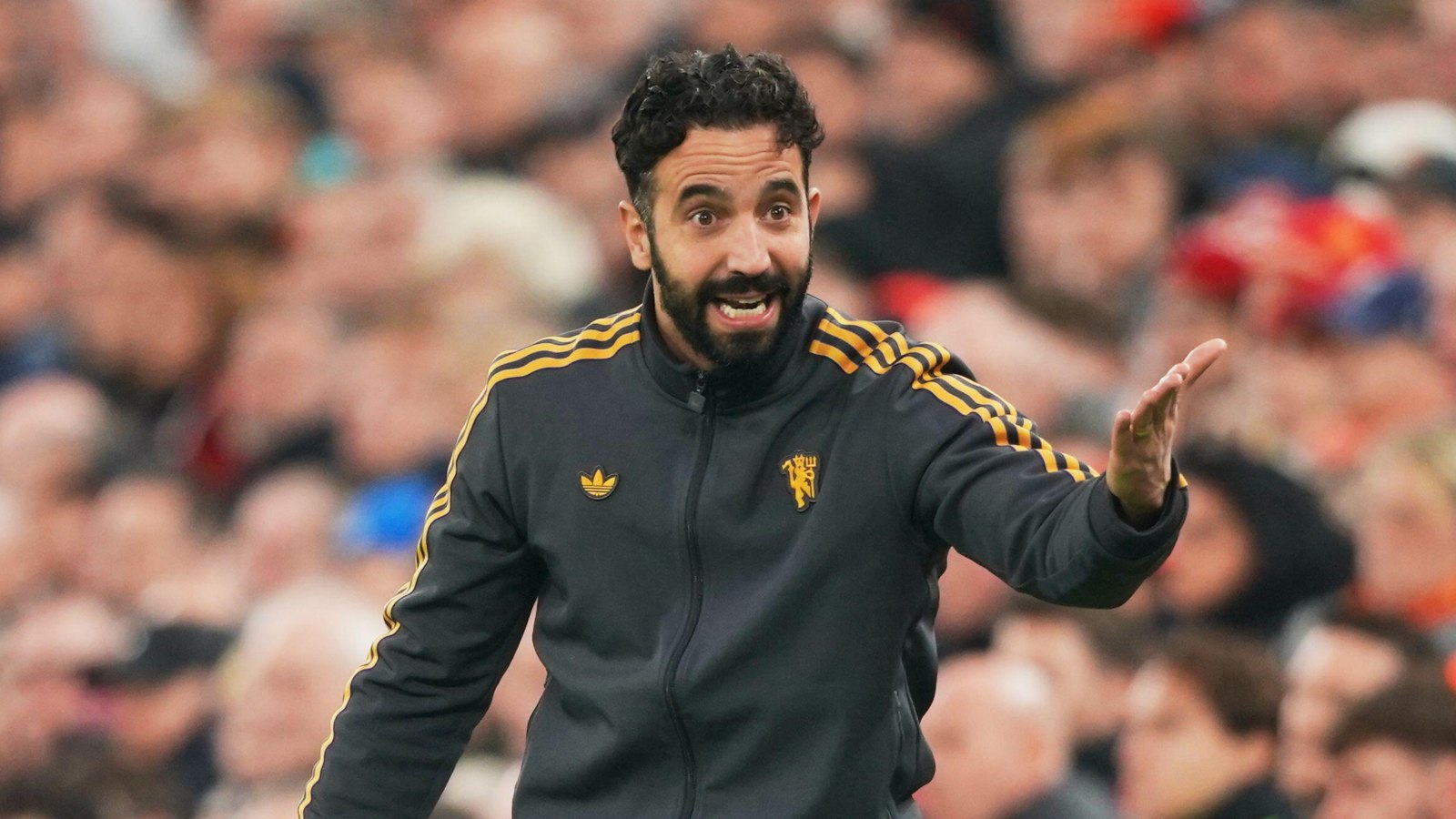
Amorim was a gift for journalists seeking images of slow-motion collapse. Beyond the occasional smiling press conference photo, there were three stock images: shouty and gesticulating, crouched with head in hands, or staring downward in contemplation. After the Brentford defeat, he dismissed the crouched pose as "nothing" and "something I've always done" – but the body language experts drafted in by the tabloids weren't buying it.
Marcus Rashford's Vindication
Ratcliffe and INEOS must have winced watching Rashford score a brilliant brace for Barcelona against Newcastle in the Champions League. He'd likely still be at United if not for Amorim's arrival, and he's now performing at a higher level than any forward currently at Old Trafford – eleven goals and seven assists from a top European club. That's a rather pointed reminder of a decision gone wrong.
The Mounting Mistakes
Jamie Carragher suggested the hierarchy kept Amorim partly because they'd already made so many errors they didn't want to admit to another. Fair point – but by not sacking him sooner, they made yet another. There have been plenty of mistakes, but Amorim was the worst of them.
Lost the Dressing Room
September reports indicated Amorim was "losing the confidence of the dressing room" as players "questioned his refusal to pivot mid-match". Even a Chelsea victory didn't reverse that damage. Once the dressing room goes, you're finished.
The Sheer Embarrassment
For Amorim, Ratcliffe, the players, the fans – it's been utterly embarrassing. Yes, spending £200m on new players only to sack the manager months later is humiliating. But what's the alternative? Soldier on through this disaster and spend another fortune on the next doomed appointment?
Amorim wasn't solely responsible – there are at least five other culprits – but nobody bears more blame. He's been a "disaster".
Compare options