Duncan Edwards Headlines England's E-Team: The Greatest Player Never to Grace a Major Tournament
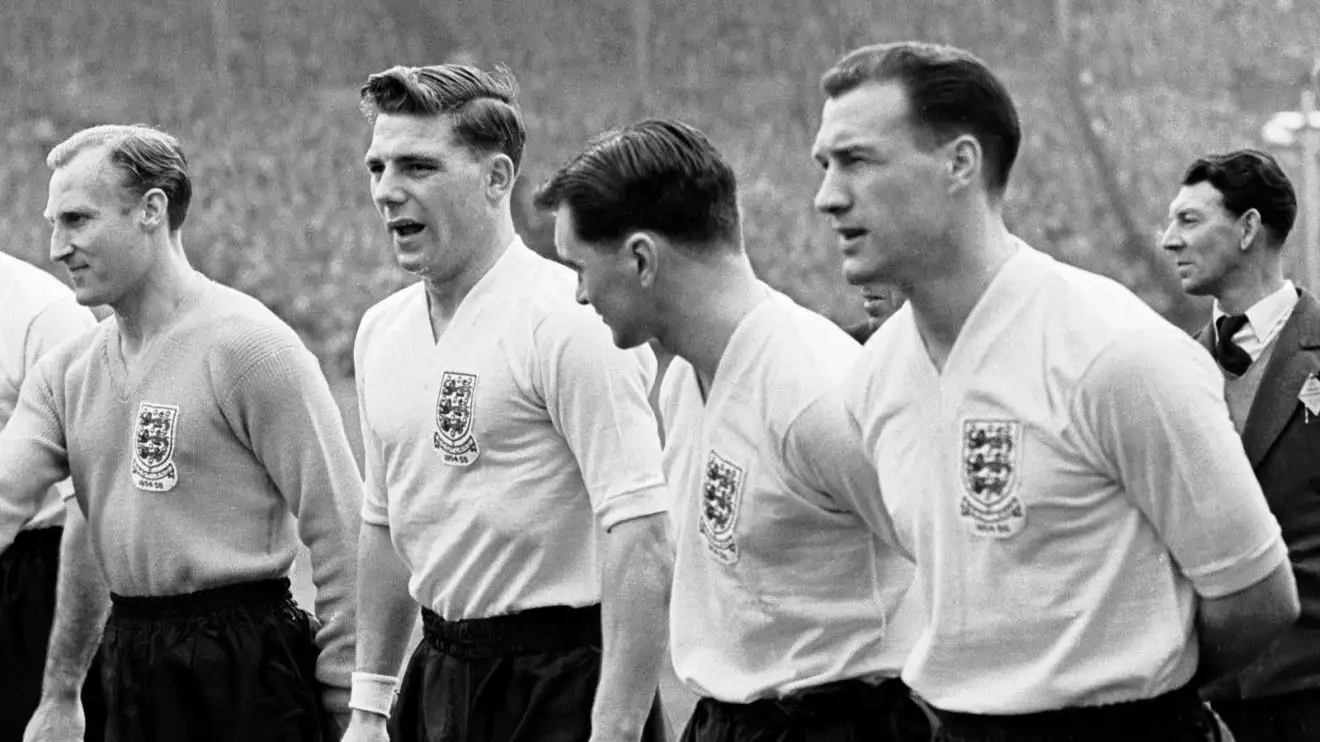
Finding enough players whose surnames begin with E to field an entire England XI is no straightforward task—there are only 14 eligible candidates—but when you've got Duncan Edwards in your ranks, you're already halfway to something special.
The Goalkeeper Problem
Starting with the obvious headache: goalkeepers. With no E-named shot-stopper who represented the senior side, Fred Else gets the nod. The Preston North End and Blackburn Rovers custodian deserved far more than his single England B appearance—a 4-1 victory over Scotland in 1957—but remained uncapped at the highest level after over a decade guarding the Lancashire goal.
The Defence
Bill Ellerington held Southampton's right-back berth with such authority that he actually kept a young Alf Ramsey out of the Saints side. Yet when Ramsey later became England manager, Ellerington found himself on the wrong side of that particular battle, with the future World Cup winner preferred for the 1950 tournament.
On the opposite flank sits Bill Eckersley, a Blackburn stalwart whose commanding displays in the early 1950s made the left-back position his own. His international tenure ended abruptly following that ghastly 6-3 humbling to Hungary in 1953—the day English football's unbeaten home record against foreign opposition fell.
At centre-back, Willis Edwards exceeded expectations at Leeds United despite lacking the physical presence many thought essential for defenders of his era. His technical prowess and tactical intelligence earned him the captaincy, which he wore with pride during a 6-0 demolition of Wales in his final appearance.
Alongside him stands Ugo Ehiogu, whose second cap came under Sven-Goran Eriksson when he netted in a 3-0 thrashing of Spain at Villa Park. Despite witnessing Beckham's famous free-kick against Greece and playing through an era of fierce centre-half competition, Ehiogu couldn't force his way into the 2002 World Cup squad—the 1996 League Cup winner's international prospects ultimately curtailed.
The Midfield
Here's where the E-Team transcends mere curiosity. Duncan Edwards occupies the defensive midfield berth, and what a player he was. Ferociously strong from an impossibly young age, Edwards became the crown jewel of the Busby Babes and England's youngest 20th-century international at 18, debuting alongside a 40-year-old Stanley Matthews in a 7-2 demolition of Scotland.
Had the Munich Air Crash never occurred, a 29-year-old Edwards in his prime would almost certainly have captained England to their 1966 World Cup triumph. That iconic image of Jules Rimet's finest hour would look decidedly different.
Eberechi Eze operates in the attacking midfield role, given the freedom to roam with Edwards covering the ground behind him. The Arsenal midfielder, formerly of Crystal Palace, has earned some credit with Thomas Tuchel after scoring during October and November international breaks, helping England complete a perfect World Cup qualifying campaign.
The Wings and Forwards
Bob Evans occupies one flank after an extraordinary career twist: he made his debut for Wales against England in Cardiff in 1906, then switched allegiances and faced his former countrymen five years later wearing the Three Lions shirt instead. He tormented them twice before the First World War ended his career.
Billy Elliott dances down the other wing, having scored twice in a 5-0 demolition of Belgium whilst at Burnley. His performances caught the eye of big-spending Sunderland, the so-called 'Bank of England club' for their lavish spending on British talent during the late 1940s and early 1950s.
Leading the line is Stan Earle, a West Ham hero from the 1920s who formed a formidable partnership with Vic Watson. Together they inflicted a record 7-0 hammering on Liverpool in 1930, though they never played together for England—Earle managed just two caps.
Alongside him is George Eastham, another son of a footballer. His father won a single England cap in 1935, but George junior's international career proved brief. He was swept aside by Alf Ramsey's 'wingless wonders' revolution in 1966, spending that famous summer on the bench as Ramsey repositioned Bobby Charlton inside and left Eastham without a role.
Compare options