Is Bruno Fernandes the Greatest No. 10 the Premier League Has Ever Produced?
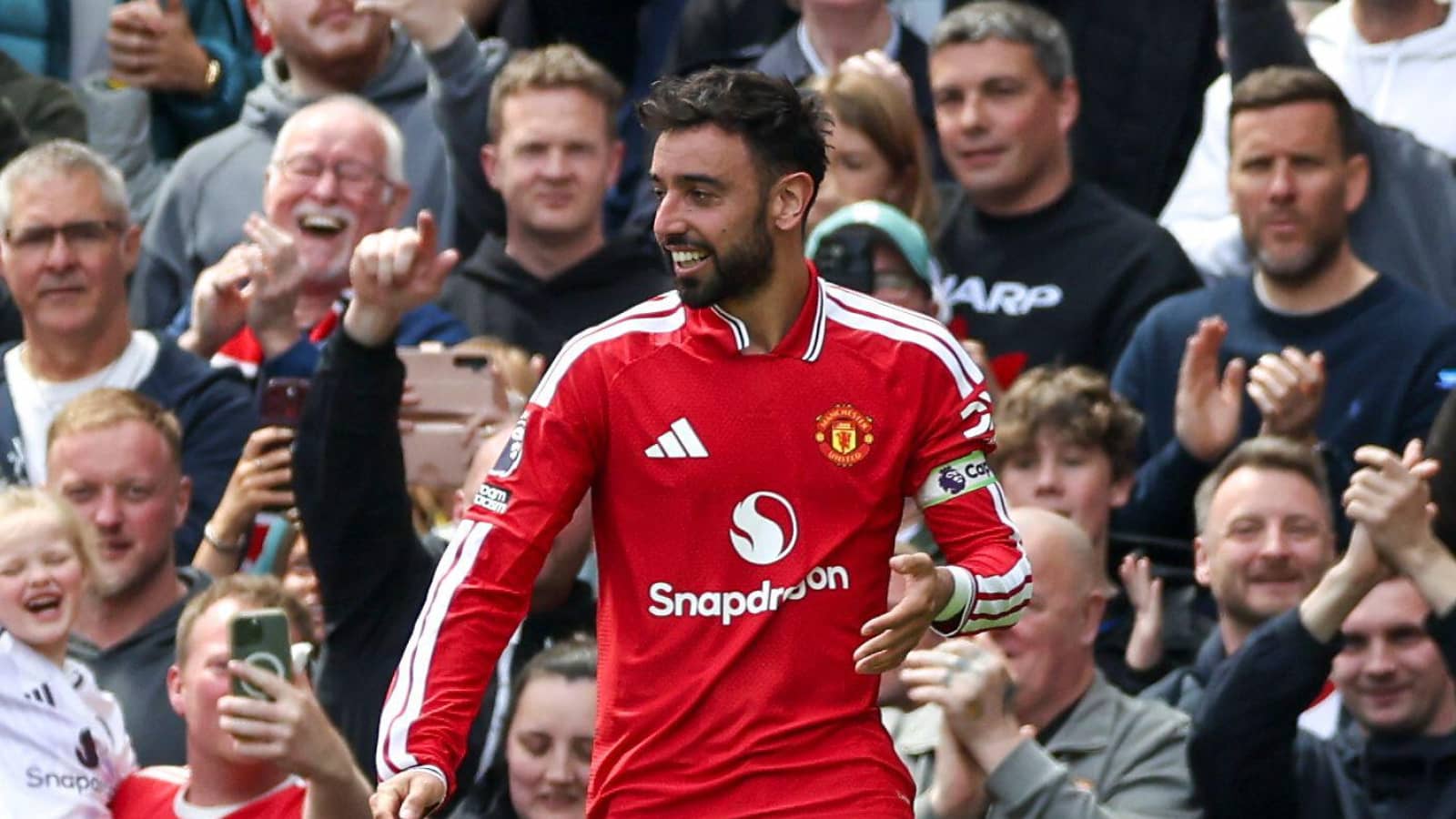
The Case for Bruno's Supremacy
Now that Bruno Fernandes has claimed the Premier League's single-season assist record, perhaps it's time to move beyond the tribal squabbling and ask the real question: is he the finest No. 10 this division has ever witnessed?
The resistance to this proposition borders on the irrational. Strip away the allegiances and consider it objectively. Every club in the Premier League would snap him up without hesitation, and most managers would restructure their entire system around him in an instant. That's not hyperbole—that's observable fact.
Consider the alternatives currently plying their trade in England. Wirtz? Maddison? Eze? Guimarães? Cherki? Palmer? Bruno displaces each one of them from that position. Across every measurable dimension—creativity, output, consistency, risk-taking—he operates at an elite tier, season after season, frequently within dysfunctional Manchester United squads.
The numbers tell a story that transcends personal preference. His consistency and sheer influence have become impossible to dismiss, regardless of whether one finds his occasional petulance tiresome. Greatness doesn't require likability; it demands only excellence. And that's what Bruno delivers.
The Carrick Narrative
There's been considerable discussion about Ruben Carrick's managerial success, with some reducing his achievements to little more than "vibes" and a reassuring hand on the shoulder. This narrative conveniently ignores tactical nuance and strategic positioning.
If three of the division's supposedly least tactically sophisticated managers—including Carrick, Ole Gunnar Solskjaer, and Sir Alex Ferguson—have managed to overcome the league's supposed tactical masterminds, perhaps other clubs might benefit from reconsidering their approach.
Palace's European Glory
Crystal Palace's Conference League triumph represents a genuinely impressive night for the south London club. Pound for pound, few English sides have delivered such consistent overperformance relative to their resources across consecutive campaigns. The Eagles have given their supporters genuine silverware and earned Europa League football as a reward.
There's an amusing irony here: Palace might as well rename themselves Silverware Palace if this run continues. And while some may grumble about their success, it merely underscores Premier League strength—English teams have now claimed both the Europa League and Conference League in consecutive seasons.
A Geographic Quirk
One peculiar observation: only clubs located in capital cities have ever won the UEFA Conference League. This was the first occasion when the losing finalist (Rayo Vallecano) even had the opportunity, given both finalists hailed from capital cities. Poor Fiorentina's two appearances might have felt rather futile by comparison.
(The definition of "capital" has been stretched somewhat in Olympiacos's case.)
The Henderson Debate
The treatment of Jordan Henderson's Saudi Arabia move has exposed uncomfortable contradictions within football media discourse. Criticism of his decision is entirely legitimate—the apparent contradiction between his previous public advocacy and this career choice warrants scrutiny.
However, there's a troubling distinction between fair criticism and outright moral prosecution. Describing someone as having a "moral vacuum" reads less like football journalism and more like character assassination. The line between "this move appears contradictory" and "this man is morally bankrupt" matters profoundly.
What's particularly jarring is the selective nature of this outrage. Saudi involvement now permeates elite football at every level—Newcastle's ownership structure, sponsorships, broadcasting rights, competitions, and the wider financial ecosystem. Yet Henderson received far more sustained personal vitriol than institutions that have structurally embedded these exact relationships.
The perverse message sent is unavoidable: had Henderson never publicly championed LGBTQ+ causes, he'd likely have faced considerably less abuse. The very advocacy that once appeared principled became the justification for prolonged public shaming. That should give serious journalists genuine pause.
Modern football discourse increasingly mistakes moral superiority for insight. Footballers are imperfect and inconsistent human beings. They deserve criticism and disagreement, certainly. But sustained contempt and character assassination represent something altogether different—and far more troubling.
Luis Enrique and the Fantasy Managerial Merry-Go-Round
Recent weeks have seen Premier League supporters indulge in curious speculation about Luis Enrique's future. Why would he abandon PSG—one of world football's wealthiest institutions—to manage Liverpool or Manchester United?
The logic escapes scrutiny. PSG offers exceptional remuneration, compelling football, trophy success, and an age profile suggesting European dominance for years ahead. One scouting trip to Anfield hardly constitutes a career-defining ambition.
The notion that Manchester United fans should hope PSG loses on Saturday to validate their choice of Carrick over Enrique represents delusion of a particularly creative variety. Enrique has every reason to remain exactly where he is.
World Cup Ticket Pricing Across Borders
FIFA's ticket pricing strategy for the 2026 World Cup raises uncomfortable questions, particularly regarding Mexican venues. The argument that US ticket prices align with comparable entertainment events—concerts, for instance—might hold surface logic for American games.
But Mexico's GDP per capita sits at approximately $14,000, compared to the United States at $85,000 and Canada at $54,000. By FIFA's own stated justification, Mexican venues should feature substantially lower ticket prices reflecting local economic capacity. Yet the governing body insists on competition-wide pricing, apparently abandoning its own reasoning whenever inconvenient.
The contradiction is glaring and indefensible. Fans can overlook greed, contempt, and corporate indifference once the football commences—but the actions of those running the game make that increasingly difficult.
Compare options