Cape Verde's Heroic Hold: How a Minnow Silenced Spain and Made World Cup History
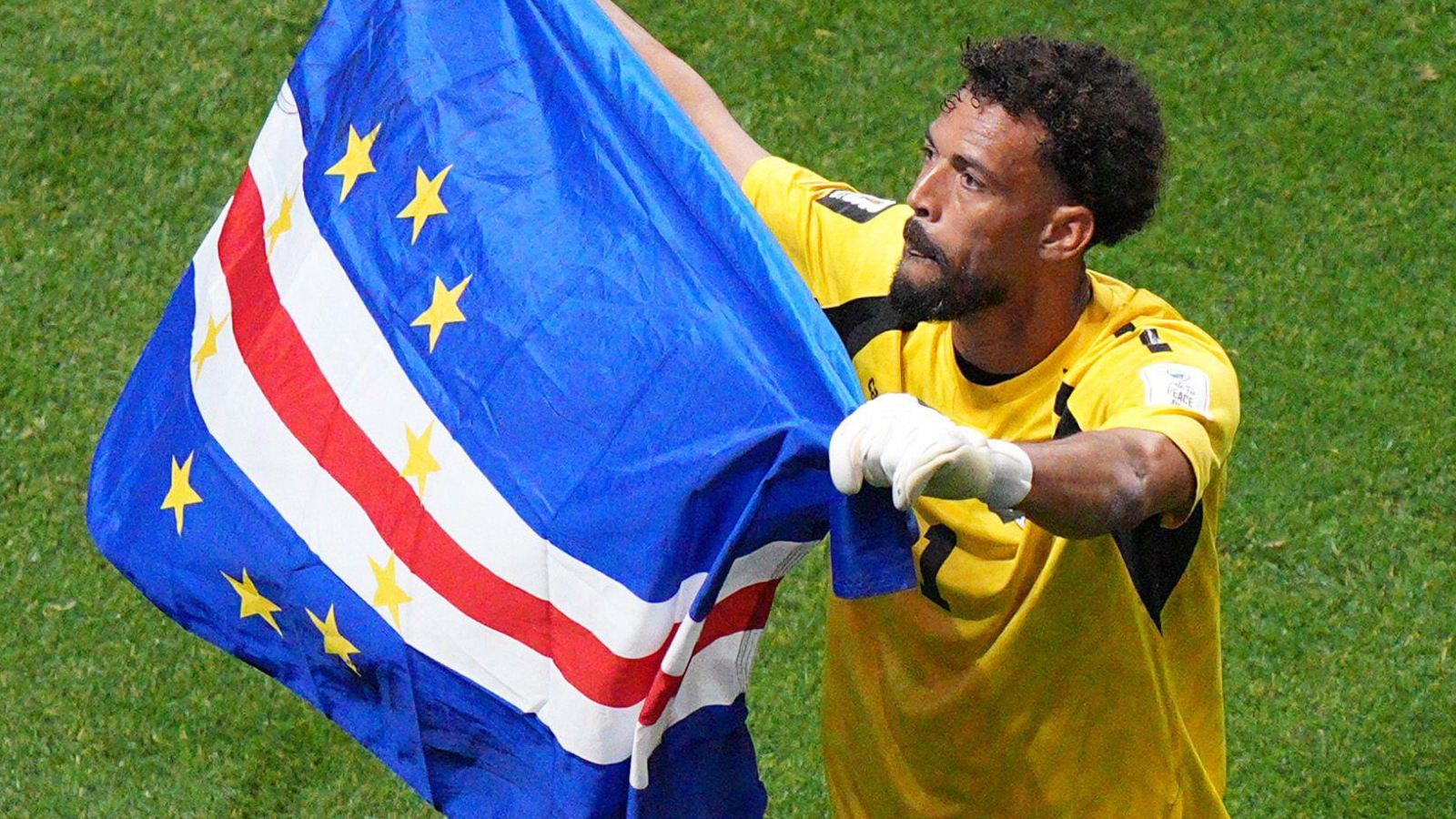
Not all champions wear crowns, but plenty of them wore the Cape Verde shirt on this extraordinary evening.
The narrative of this result belongs to the players who made the impossible look merely improbable. Vozinha, the 40-year-old custodian, spent 90 minutes in a state of perpetual readiness—commanding his box with absolute authority and even finding time for a spot of showboating, at one stage cheekily rolling the ball towards his own goal to kill time after a Williams miscontrol.
Steven Moreira, who spends his days as a utility defender for Columbus Crew, transformed into the man who shackled Marc Cucurella and repeatedly frustrated Lamine Yamal. Pico Lopes, who arrived at this tournament via a recruitment route so unconventional it could only be described as Liam Rosenior meets Jake Humphrey, produced a crucial block on Oyarzabal when the pressure mounted late on.
Every Cape Verde player deserves individual recognition for what was collectively a staggering achievement. But the real story transcends individual performances—it's about a team that executed a masterclass in defensive discipline and organisation.
Cape Verde, the third-smallest nation ever to grace a World Cup, held firm against one of the tournament's strongest sides and the continental champions. On their debut appearance, they didn't just earn a point; they reshaped expectations about what's possible in this competition.
The absence of a Cape Verde goal mattered little. This was a 0-0 that felt like a victory, a demolition of preconceptions, a statement of intent. Since Spain last suffered a World Cup qualifying defeat in April 2000—the same month Cape Verde played their first such match—the Spanish have been virtually untouchable. Yet here, on the pitch itself, there was nothing to separate them.
The emotional weight of the occasion reached Lee Dixon, who found himself struggling to maintain his usual composure. "I have to say, you might hear it in my voice, I'm a bit emotional," he offered, though his delivery remained characteristically flat throughout the preceding 90 minutes.
This wasn't fortune smiling on the underdog. Spain, beyond Ferran Torres steering a chance onto the bar from close range, created precious little of genuine quality. Cape Verde hunted them relentlessly, sealed off passages to goal, and repelled their advances with systematic precision. Pico Lopes contributed 11 clearances while centre-back Diney Borges made five tackles; both men blocked three shots each.
The statistical snapshot that defines this performance: Cape Verde conceded just a single foul to Spain's ten. Sidny Cabral walked a tightrope after his booking for upending Marcos Llorente in the 15th minute, yet the entire team navigated that razor's edge through sheer organisation, discipline and mental fortitude rather than cynical fouling.
Oyarzabal etched his name into the record books for an entirely unwanted reason—he became the first player in recorded World Cup history to go the opening 30 minutes without touching the ball. Yamal briefly threatened to ignite proceedings and the stadium with him, but soon discovered the exits were sealed shut. Aymeric Laporte's speculative long-range attempt midway through the second half captured Spain's growing desperation perfectly.
For the Spanish, the post-match analysis will be brutal. They manufactured next to nothing after the interval, and while fresh introductions should sharpen their attacking play going forward, this represented a thoroughly flat, uninspired performance.
Yet those concerns pale beside the real narrative. Cape Verde have announced themselves as the early heroes of this World Cup, and one result has almost single-handedly justified the expansion to 48 teams. This is their Pape Bouba Diop moment, their 1990 Cameroon upset of Argentina, their 1966 North Korea demolition of Italy. One night, one draw, one unforgettable statement.
Compare options