Arsenal's Trophy Drought Looms: The Ghosts of Great But Barren Premier League Sides
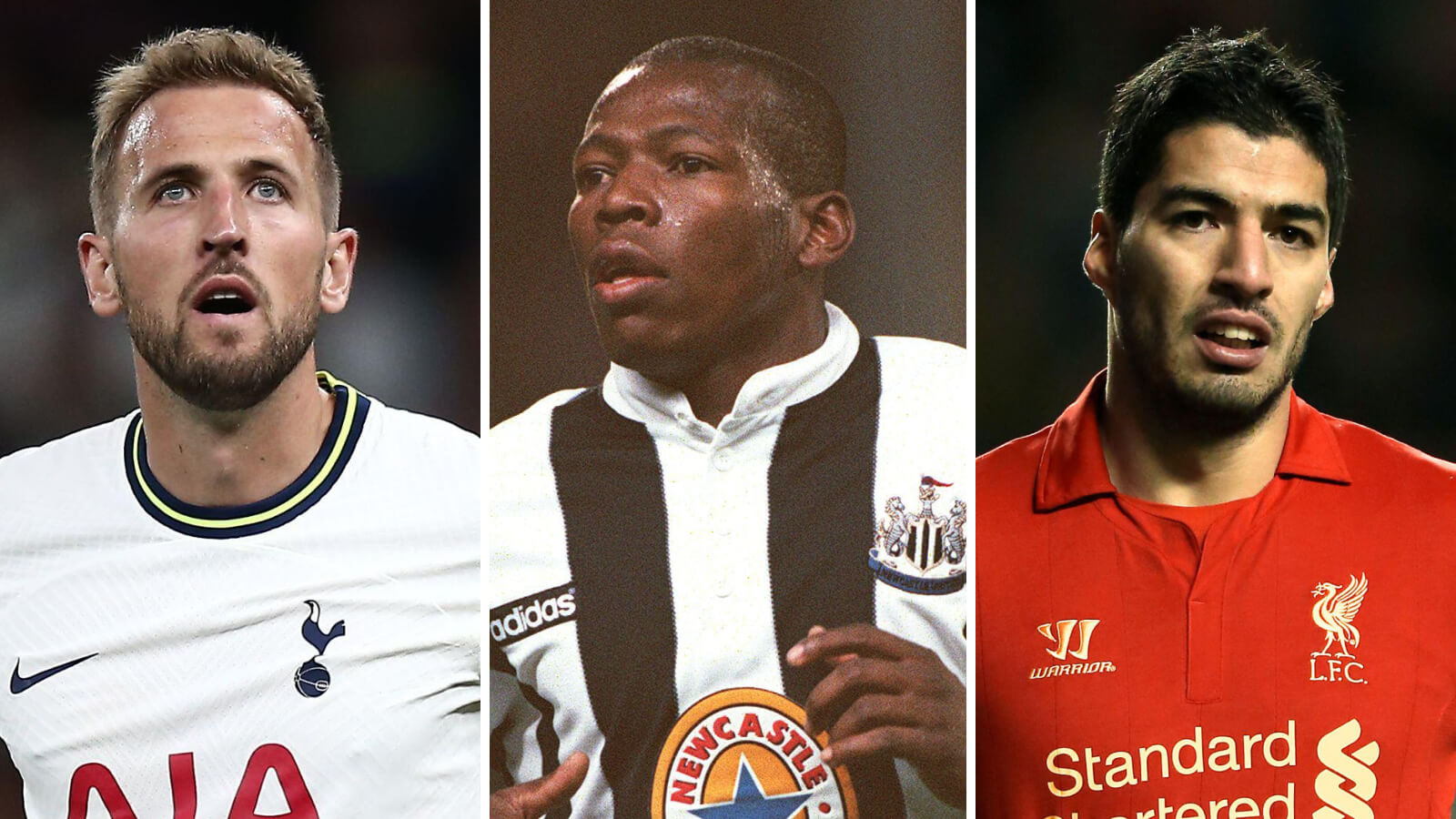
Suppose Arsenal's current campaign ends in disappointment. Suppose Mikel Arteta's side, nine points clear at the summit and still competing in the Champions League and FA Cup, somehow contrives to finish empty-handed after losing the Carabao Cup final to Manchester City.
Then they would become the latest addition to a rather dismal hall of fame—a collection of genuinely excellent Premier League teams that never quite managed to get their hands on a trophy. Let's take a walk down this melancholic memory lane.
David O'Leary's Leeds United: 1999-2001
The meteoric collapse that followed has rather overshadowed just how good Leeds United were in the years around the millennium. Before Peter Ridsdale's financial recklessness came close to destroying the club, David O'Leary had constructed something genuinely special with his young charges.
After inheriting the job when Martin O'Neill surprisingly turned it down, O'Leary blooded a succession of academy prospects. Jonathan Woodgate, Alan Smith and Harry Kewell vindicated his faith by steering Leeds to the UEFA Cup semi-finals in 1999/2000. The following campaign brought Champions League qualification, reinforced by arrivals including Rio Ferdinand, Robbie Keane and Mark Viduka. Leeds then went toe-to-toe with Barcelona, Real Madrid and AC Milan, reaching the semi-finals before Valencia—who would finish as runners-up—knocked them out.
A single point proved catastrophic. Despite losing just one game in the Premier League's second half, Leeds finished fourth and missed out on another year in Europe. The financial damage was brutal: the club had taken enormous loans anticipating prolonged Champions League revenue.
Then came O'Leary's autobiography, "Leeds United On Trial", published amid Woodgate and Lee Bowyer's court cases. The dressing room fractured. A fifth-place finish in 2001/02 meant another Champions League miss, and O'Leary departed. Within five years, Leeds were in League One.
Kevin Keegan's Newcastle: 1992-97
Even Sir Bobby Robson never quite captured hearts like Kevin Keegan's entertainers did in the mid-Nineties.
Keegan took Newcastle from the First Division and steered them rapidly upward, securing third and sixth-place finishes before going all-in during 1995/96. The arrival of Les Ferdinand and David Ginola proved the catalyst. By January 1996, Newcastle sat 12 points clear at the top. Then came further reinforcements: Faustino Asprilla and David Batty joined the party.
But something shifted after that March meeting between Newcastle and Manchester United. A 17-point lead evaporated to a single point. Ferguson's young side had tasted blood and Newcastle wilted, losing five games in eight as spring arrived. The first top-flight title since 1927 slipped away, and United completed an unlikely Double.
Alan Shearer's summer arrival suggested renewal, yet Keegan never recovered from the trauma. Halfway through 1996/97, he resigned, claiming he'd taken the club as far as he could. Kenny Dalglish inherited a wounded squad, twice finishing runners-up and reaching an FA Cup final, but the momentum was gone.
Claudio Ranieri's Chelsea: 2000-04
Chelsea were hardly a force to be reckoned with before Roman Abramovich arrived with his bottomless chequebook in 2003. Claudio Ranieri had spent three years constructing an entertaining but frustratingly inconsistent side.
After a couple of sixth-place finishes, Chelsea—featuring Gianfranco Zola, Jimmy-Floyd Hasselbaink, Marcel Desailly, Emmanuel Petit and Eidur Gudjohnsen, plus emerging talents John Terry and Frank Lampard—secured Champions League qualification by beating Liverpool in a final-day shootout in 2003. That proved to be Zola's swansong at Stamford Bridge.
Then Abramovich struck. Juan Veron, Hernan Crespo, Claude Makelele, Joe Cole, Damien Duff, Glen Johnson, Wayne Bridge and Scott Parker all arrived. Ranieri spent £121million transforming his exciting Chelsea into genuine title contenders. They finished second in the Premier League and reached the Champions League semi-finals, where Monaco disappointingly eliminated them.
Abramovich, unwilling to accept second place, sacked Ranieri and installed Jose Mourinho. The new manager inherited a thrilling but trophyless team and turned them into a winning machine.
Harry Redknapp's Tottenham: 2009-12
Harry Redknapp prefers not to dwell on it, but when he took over from Juande Ramos in late October 2008, Spurs had amassed precisely two points. Ramos, at least, had silverware to show for his efforts—the League Cup sat in the Spurs cabinet, something Redknapp never achieved despite assembling one of the country's most thrilling squads.
His first full season brought a League Cup final appearance, where Manchester United beat them on penalties. Yet Redknapp steered Spurs into the top four and Champions League qualification, becoming only the second manager after George Burley to win Premier League Manager of the Year despite not winning the title.
The 2010/11 campaign was genuinely special. Gareth Bale, Luka Modric and Rafael van der Vaart orchestrated a thrilling run to the Champions League quarter-finals. Bale's annihilation of Maicon stood out as the season's highlight as Spurs overcame both Milan clubs. Peter Crouch's San Siro winner against AC Milan in the last-16 first leg felt like the turning point. Then came the quarter-finals against Real Madrid, and suddenly Spurs looked second-best. They won just once in ten Premier League games, and Champions League qualification evaporated.
A fourth-place finish in 2011/12 suggested immediate return, yet Chelsea—who had finished sixth—took their place instead, having won the Champions League. Redknapp departed after failing to agree a new contract, with Van der Vaart and Modric following him out the door.
Brendan Rodgers' Liverpool: 2012-14
Brendan Rodgers' magnificent Liverpool side came agonisingly close to Premier League glory in 2013/14 before it all came crashing down.
After a seventh-place finish in his first season, Rodgers' stated ambition was returning the Reds to the Champions League. They occupied the top four for the season's first half before embarking on an exhilarating surge after New Year, winning 14 of 16 matches and stringing together a ten-game winning run.
Luis Suarez, Steven Gerrard, Daniel Sturridge and Raheem Sterling served up some of Anfield's finest football in years. Suarez claimed the Golden Boot, Sturridge broke the 20-goal barrier and Gerrard led the league in assists. Liverpool scored 101 goals—enough for any normal season to bring silverware, yet only sufficient for runners-up status.
Then came the slip. Days after Gerrard assured his teammates "this does not slip" following victory over Manchester City, he did exactly that. Mourinho's Chelsea parked the bus and left Anfield with a 2-0 victory that shifted the title momentum. Liverpool appeared to have recovered eight days later, leading Crystal Palace 3-0 in the penultimate game, only to collapse spectacularly as the hosts scored three times in the final 11 minutes. Suarez departed in tears and later left for Barcelona. Liverpool's recruitment imploded that summer, and whatever silverware hopes Rodgers harboured evaporated.
Mauricio Pochettino's Tottenham: 2014-19
Seven years on, it seems almost unbelievable that Tottenham reached a Champions League final fielding Harry Kane, Son, Christian Eriksen, Dele Alli, Kieran Trippier, Hugo Lloris, Danny Rose, Jan Vertonghen and Toby Alderweireld. What a magnificent XI that represented.
It marked the end of an almost-glorious era in which Spurs had played genuinely thrilling, dynamic football yet collected nothing but a Big Six place and the accompanying ridicule. There was the Carabao Cup final defeat, the "third in a two-horse race" season and the "second in a one-horse race" season. Eventually an exhausted Pochettino departed after the club failed to match his ambition with its own.
That great team was dismantled, with only Ben Davies surviving from the 23-man squad. When Spurs finally ended their trophy drought, they did so with a fundamentally flawed team under a deeply flawed manager. It must sting just a little. They should have simply dropped into the Europa League and forgotten about the Premier League entirely.
Compare options