Barcelona's Balancing Act: Can Financial Recovery and Environmental Ambition Coexist?
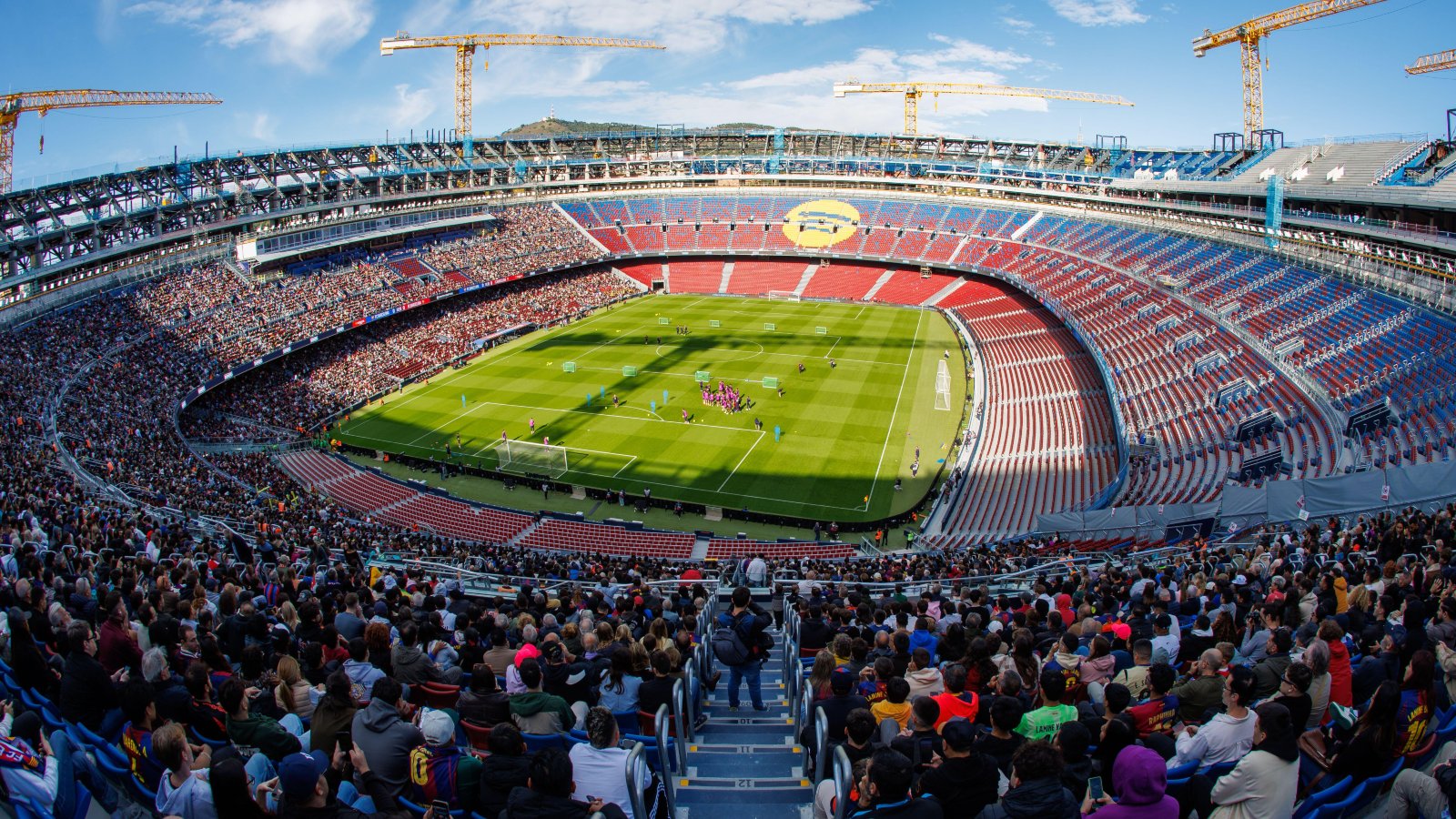
When the 2025/26 season concludes, Barcelona's narrative will be shaped as much by their off-field endeavours as by what happens on the pitch. The Catalan club, which endured a €17 million net loss in 2024/25 amid the chaos of Camp Nou's redevelopment, appears finally to be wrestling its way back toward financial equilibrium.
It's a story worth scrutinising – one where Barcelona attempts to fuse economic pragmatism with broader environmental objectives in ways that have eluded most clubs of comparable stature.
The roots of Barcelona's current struggle run deep: accumulated debt, the sprawling Espai Barça stadium project, and the pandemic's lingering shadow all played their part. The reimagined Camp Nou, scheduled for completion by the end of 2027 with capacity reaching 105,000, is meant to become the club's financial lifeline – projected to generate roughly €360 million annually once fully operational. Yet such ambition demanded sacrifice; Barcelona's debt mushroomed into billions, forcing the club to fixate on cash preservation and balance-sheet stability above almost everything else.
Sponsorship revenues have climbed to a record €259 million, with merchandising contributing €170 million more. Still, the financial strain of executing a major stadium overhaul during economically fraught times has tested the club's bandwidth considerably.
What often gets overlooked amid the spreadsheets and restructuring is Barcelona's environmental commitment. Their 2026 Strategic Plan places sustainability alongside sporting, economic, governance and social priorities – a framework that crystallises most visibly in Espai Barça itself.
This isn't merely another stadium renovation. Barcelona envision it as a blueprint for green construction. They've committed to deploying 18,000m² of photovoltaic solar panels across the roof, supplemented by geothermal systems and other renewable solutions designed to furnish substantial portions of the stadium's energy requirements. The club projects this could slash energy consumption by 40% per attendee relative to conventional models. Rainwater harvesting and approximately 25 hectares of landscaped terrain will reduce water usage whilst enhancing local biodiversity.
Circularity runs through the project's DNA too. Barcelona intend to repurpose 90% of materials salvaged from the old stadium – chiefly concrete and steel – reintroducing them into new construction. This approach could halve the scheme's carbon footprint, with recycled content potentially accounting for half the project's total emissions.
The blueprint reads impressively. Implementation, however, has proven trickier. Sceptics have questioned whether such environmental ambitions can genuinely coexist with the urgent necessity to trim expenditure, restructure liabilities and return to profitability. Espai Barça's financing involved intricate arrangements – substantial bond offerings and debt restructuring extending repayment deadlines to 2050 – designed to ease immediate pressure.
Yet Barcelona remain resolute. In 2025, they renewed their Biosphere certification, an accreditation aligned with the United Nations' 2030 Sustainable Development Goals and awarded by the Responsible Tourism Institute. This endorsement validates that Barcelona's operations – from museum to stadium work through to broader environmental governance – meet responsible standards with demonstrable progress across climate, energy, biodiversity and water metrics.
These commitments permeate beyond the stadium. Training facilities and offices incorporate responsible water management, waste minimisation and energy-efficient protocols, embodying a philosophy that sustainability should be operational necessity rather than peripheral concern, irrespective of budgetary constraints.
The central question persists: can Barcelona genuinely thread this needle between environmental progress and financial security?
The numbers hint at cautious optimism. Ordinary revenues for 2025-26 are anticipated to surpass €1.075 billion, bolstered by enhanced matchday income as supporters gradually return to the refurbished Camp Nou, alongside record sponsorship and merchandising receipts. Wage expenditure now comprises roughly 54% of ordinary income – comfortably compliant with UEFA's financial fair play regulations – whilst overall debt has contracted markedly.
This stabilisation, backed by positive credit outlooks from agencies including Morningstar DBRS, furnishes Barcelona with the platform to pursue environmental aspirations. The club's evolution transcends mere cost-cutting; it involves reconstructing revenue mechanisms that underpin both sporting achievement and institutional objectives beyond the pitch.
Barcelona's approach reflects a wider transformation engulfing football. Institutions face evaluation not merely through silverware and transfer activity but increasingly through sustainability credentials and social responsibility. In this context, Barcelona's efforts – demanding and intricate though they are – position them as a potential exemplar for how elite sport might confront climate imperatives without abandoning financial discipline.
Whether this balancing act succeeds remains an open question. Yet in committing to renewable infrastructure, circular construction methods and holistic sustainability whilst navigating one of their most consequential financial reconstructions, Barcelona are wagering that ecological ambition and economic recovery needn't be opposing forces. For modern football, such a gamble could ultimately define this distinctive chapter in their history.
Compare options