Arsenal's Entitlement Problem Laid Bare as Fans Turn on Arteta
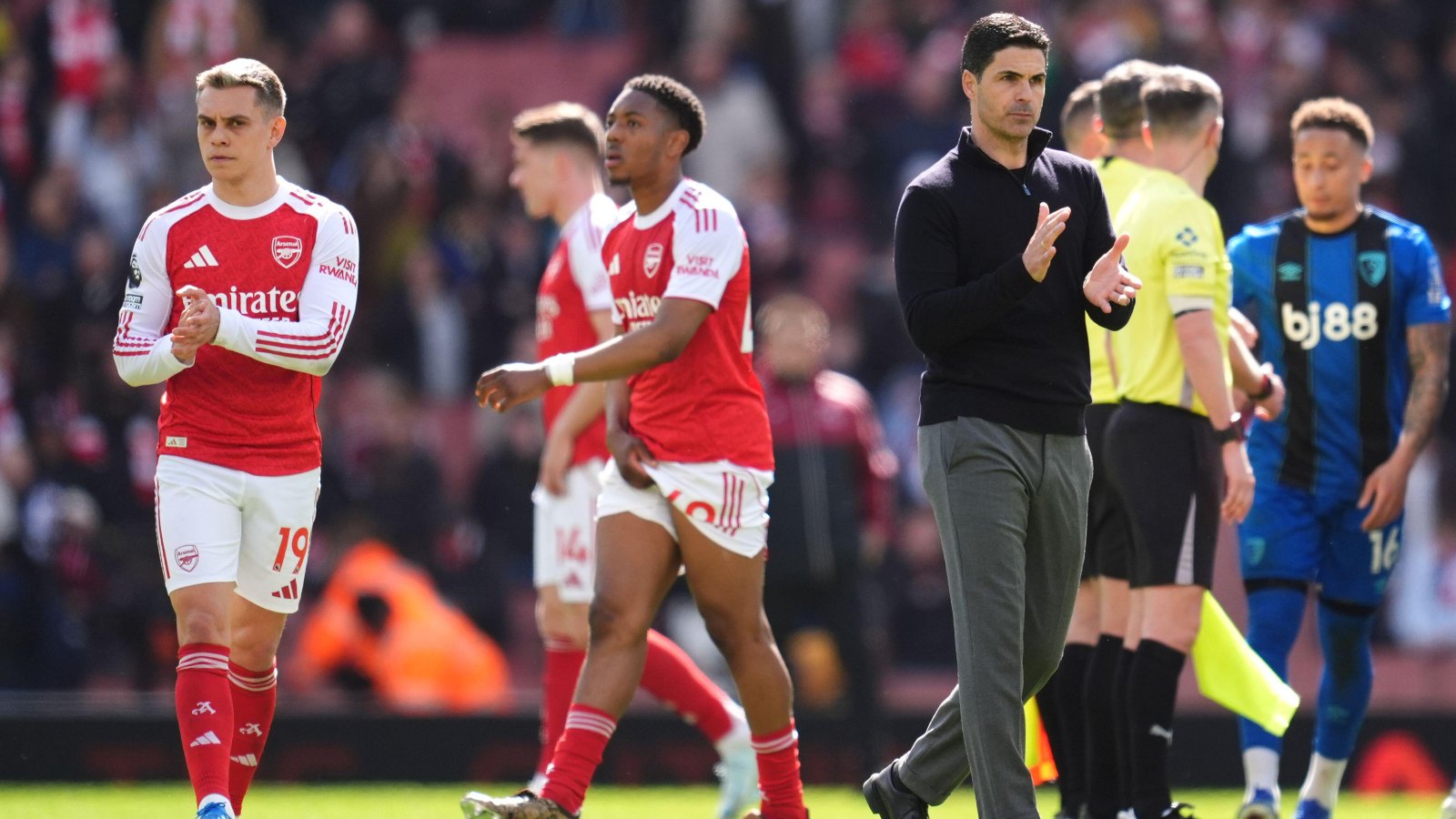
The sight of Arsenal supporters venting their frustration whilst their team maintained a nine-point advantage at the summit prompted sharp criticism this week—and not all of it aimed at the pitch itself.
One correspondent branded the booing display as "peak entitlement," arguing that a fragile outfit desperately needing encouragement hardly deserved such treatment from their own. The observation cut deeper still, suggesting portions of the fanbase treat their club more as a status symbol than a genuine object of affection—something to brandish when fortune smiles, but abandon at the first sign of difficulty.
The narrative shift has been difficult to stomach for some. The same voices once proclaiming Mikel Arteta a generational talent superior to Jürgen Klopp, and Bukayo Saka the continent's finest young winger, have now pivoted to demands for the manager's head and declarations that the side was never adequate anyway. One observer described this as "seamless and shameless," worthy of study in its contradictions.
Yet the anxiety runs deeper than mere fair-weather sentiment. A vicious cycle appears to have gripped the Emirates—players perform poorly, fans grow anxious and express it vocally, that pressure feeds back into the team's collective psyche, and the downward spiral continues. One long-suffering supporter acknowledged this trap whilst clinging to hope that next week's trip to Manchester City, played away from the cauldron of their own ground, might provide relief.
The tactical questions, however, refuse to disappear. One correspondent drew a distinction between recruitment failings and coaching deficiencies, suggesting Arteta's reluctance to unlock attacking potential from genuinely talented players represents the true shortcoming. Another highlighted the peculiar sight of Gabriel Magalhães operating as a centre forward—a decision that spoke volumes about the depth of Arsenal's difficulties.
There remains sufficient football to be played for momentum to shift again. But the willingness of sections of this support to look ridiculous at every turn, lurching between extremes, has become impossible to ignore.
Elsewhere, Manchester City's extended legal saga continues to cast a shadow over English football's credibility. The contrast between Chelsea's cooperative resolution of historical financial issues and City's aggressive legal strategy—spanning years without transparency or clear resolution—has created a vacuum filled by suspicion.
The charges of 115 alleged breaches remain unresolved, whilst parallel disputes over Associated Party Transaction rules have intersected with the main case, potentially delaying proceedings. Whether this constitutes robust legal defence or strategic obstruction, the effect remains identical: time passes, seasons conclude, trophies are won, and narratives calcify before any verdict materialises.
This matters profoundly. Delay functions as leverage. Every title claimed during this window now sits beneath an asterisk in the collective consciousness—not officially recorded, not legally proven, but quietly understood. Until resolution arrives, Manchester City's achievements cannot be cleanly accepted. That is the corrosive damage being done to the Premier League's fundamental credibility.
The wider context adds another layer. Manchester City's ownership connects to Abu Dhabi interests and Sheikh Mansour, with UK diplomatic and government figures now known to have sought updates on the case. No definitive evidence of political interference exists, yet it would be naive to pretend the proceedings occur in a vacuum. When state interests collide with elite sport, sensitivity invariably slows proceedings.
Football ultimately rests upon belief—in fairness, in genuine competition, in the principle that outcomes on the pitch are earned within identical frameworks for all competitors. That belief faces a serious test. Until the 115 charges receive final, transparent resolution, Manchester City's titles will carry an unspoken caveat in many minds.
Turning to other concerns, Newcastle's collapse from winning positions has become genuinely alarming. One supporter calculated that 25 points surrendered from leads this season—more than either Wolves or Burnley have accumulated entirely—would place the club in second position. That such a mathematically sound team can simultaneously prove incapable of closing out matches represents a catastrophic indictment of management. The correspondent even suggested Eddie Howe should resign, having failed to meet his own standards.
Spurs, meanwhile, endured a chaotic encounter with Sunderland that featured questionable refereeing decisions. A controversial penalty call preceded an equally baffling failure to award a corner when the defender's touch sent the ball over the line—a proper goalscoring opportunity squandered by poor application of the rules. Multiple infractions went unpunished, and injuries compounded the misery. Sunderland deserved at least a point from a match where everything conspired against the home side.
Finally, one correspondent offered a detailed assessment of Marcus Rashford's limitations, arguing that his statistics mask significant weaknesses. Poor shot accuracy, a tendency to shoot in straight lines, and abysmal off-the-ball movement suggest a luxury player rather than a reliable squad member for genuine title contenders. The analysis suggests his oscillation between performances of genuine quality and genuine mediocrity—sometimes within the same match—reveals habits that attractive finishes can obscure.
Compare options