Slot's Liverpool in Free Fall: How Has He Survived This Long?
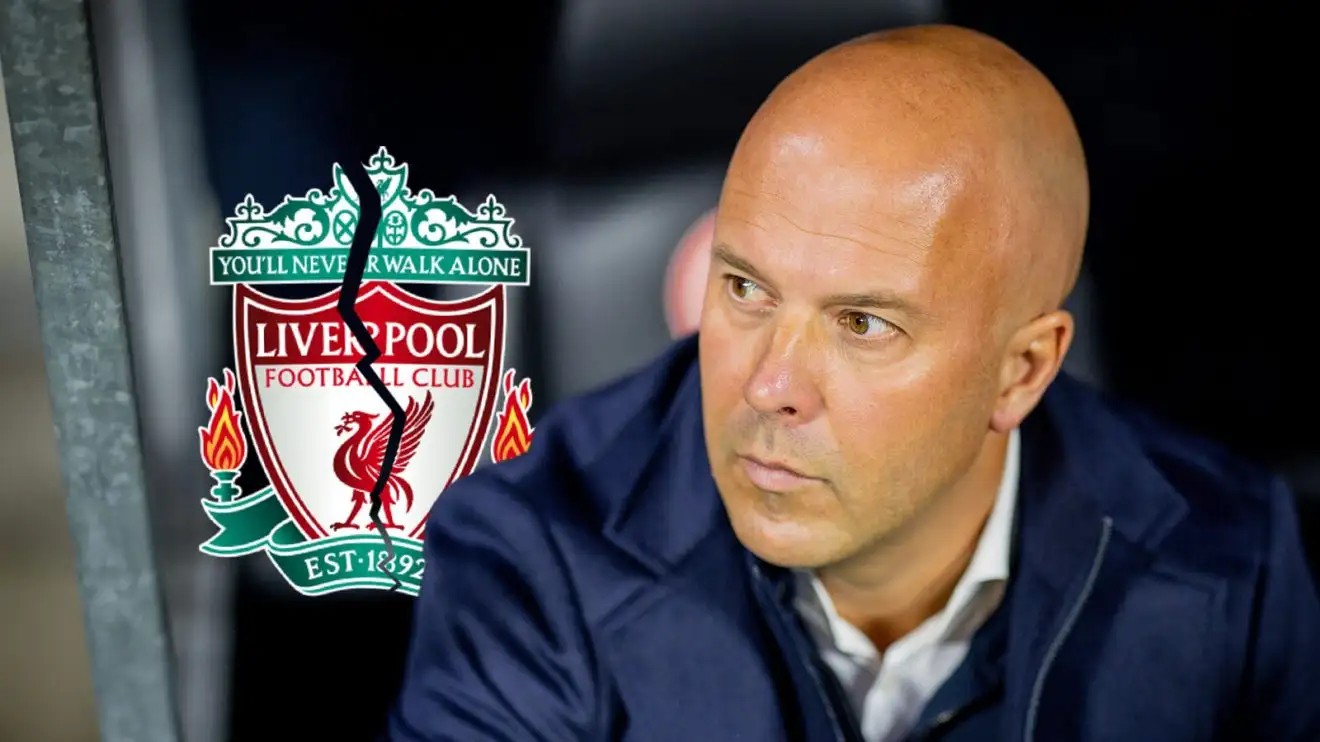
Slot's Liverpool in Free Fall: How Has He Survived This Long?
The patience with Arne Slot appears to have finally run out at Anfield. What once seemed like a managerial appointment built to last now feels like a countdown to the inevitable.
The Numbers Tell a Damning Story
Strip away the excuses and the statistics paint a picture of alarming decline. Since mid-September, Liverpool have managed just six victories across their last 20 Premier League outings—a record that places them at 15th-place form over that spell. For a club with the quality in their starting eleven, that simply doesn't cut it.
The unwanted records have piled up with remarkable speed. Slot's tenure has brought Liverpool's worst overall run since the 1950s. Manchester City completed their first double over Liverpool since the 1930s. Manchester United—the chaotic Amorim edition—won at Anfield for the first time since 2016. Against City, Liverpool conceded more shots in a single half than any team has since Opta began recording such data.
A Full Year of Mediocrity
The decline arguably began in earnest following the FA Cup exit at Plymouth on 9 February last year. What followed was a succession of disappointments: a Champions League exit to PSG marked by a first-leg hammering that somehow ended 1-0, a Carabao Cup final performance of stunning ineptitude, and a grinding conclusion to the Premier League season that saw Liverpool fail to win after mathematically securing the title.
Twelve months on, the pattern of sub-standard performances and a general sense of drift shows no sign of reversing.
The Squad Management Question
Slot's handling of his playing staff has raised eyebrows throughout the campaign. His relationship with Mohamed Salah has deteriorated noticeably. Curtis Jones, by all accounts, reached breaking point, desperately attempting to engineer a January exit following a heated disagreement with the manager during a match.
His public criticism of Ibrahima Konate following the Leeds away game—describing him as being at the "scene of the crime"—represented a curious choice of language and threw a player under the bus in unhelpful fashion. Meanwhile, capable operators like Endo and Chiesa have been starved of meaningful minutes, whilst Gakpo has been flogged relentlessly. Teenage prospect Ngumoha, who started the season impressively, has found opportunities drying up.
The Media Missteps
Slot's public pronouncements have veered into the bizarre. The Konate comments were merely the beginning. His sudden recalibration of expectations—from "two titles in five years" to "two in 36"—depending on what the narrative requires, has not gone unnoticed. His admission that Liverpool cannot defend long balls or break down low blocks reads as a damning indictment of tactical flexibility. His repeated references to the PSG game have become something of an obsession.
The Mitigations Wear Thin
Yes, FSG's summer spending of £400 million looks thin on the ground given Liverpool's needs. Yes, winning the Premier League last season ought to buy a manager some goodwill. But at some point, these factors cease to be meaningful excuses and simply become irrelevant.
The talent is there in the first eleven. The question of whether Slot is extracting the maximum from his squad—or indeed, managing it competently at all—now demands an answer that increasingly looks unfavourable to the manager.
How he remains in post remains utterly baffling to many who follow the club.
Man City Penalty Was the Right Call
The debate over Manchester City's penalty at Liverpool deserves clarification. Alisson's rush from goal, executed at pace and at a sharp angle, fundamentally altered the situation. Matheus Nunes had stolen in behind Liverpool's defence and possessed a genuine opportunity to create a winning goal.
The suggestion that Alisson's intervention did not influence the ball's path misses the point. In an alternative scenario where the goalkeeper remained on his line, would Nunes have taken the same touch and allowed the ball to drift harmlessly out of play? Highly unlikely.
Nunes read the situation in real time and adjusted his touch accordingly—a perfectly natural response to an incoming goalkeeper. The collision itself was the critical factor; the subsequent direction of the ball was almost incidental to the foul that preceded it. The penalty was correct.
The Carrick Question Shouldn't Be This Complicated
The endless interrogation of Michael Carrick's managerial future at Manchester United has become tedious. Journalists continue to pose the same question repeatedly, seemingly unable to grasp that the man is trying not to laugh at them.
Pundits spend considerable airtime debating whether Carrick should retain the position permanently, often citing the need for a "big-name manager" despite the evidence suggesting otherwise. Gary Neville, once refreshingly respectful toward viewers, now appears out of his depth, pontificating like a history professor about how United should play. Yet when Carrick delivered precisely that—turning the team around to beat City, Arsenal, and Spurs whilst playing recognisably United football—the same voices baulked at the prospect of keeping him on.
The obsession with Ole Gunnar Solskjaer's legacy clouds judgment. Carrick should be judged on performance: overall impact on the club, the players, the supporters, and the football itself. By those measures, he has delivered. That should be sufficient.
Spurs' Real Problem Sits in the Boardroom
Tottenham's struggles run far deeper than managerial selection. Yes, Ange Postecoglou's system failed spectacularly in the Premier League last season—they genuinely were among the division's four worst performers. Mauricio Pochettino's period of success did not materialise through grand design from above; rather, several pieces fell fortunately into place simultaneously.
The genuine problem resides with ENIC's leadership. The board operates in a vacuum, disconnected from the fanbase, the team, and the coaching staff. Whilst managers and players absorb the criticism following each disappointment, the hierarchy hides away, apparently content so long as revenue streams from stadium concerts continue flowing.
Communication from Spurs' upper echelon ranges from poor to non-existent. The players clearly sense a lack of support from above. Cristian Romero's previous remarks about certain individuals only appearing when times are good, "to tell a few lies," pointed unmistakably in that direction.
The supporters desperately attempt to back the team at every match, yet patience wears thin because everyone recognises the leadership is simply going through the motions. Reconnecting with the fanbase, offering genuine support, and addressing the ridiculous ticket pricing that leaves Champions League fixtures short of capacity would represent meaningful steps. None appear imminent.
Miscellaneous Weekend Observations
The Liverpool-City encounter was entertaining, at least. Those questioning the red card—suggesting the goal should simply have stood—presumably also welcome anarchy and disorder.
City's equaliser, arriving from a hopeful deflected cross and a midfielder's close-range finish, represented precisely the sort of direct, chaotic football one might expect. Embrace it.
Regarding Sporting's Viktor Gyökeres: his goals carried consequence. Making it 2-0 or 3-0 terminates any comeback narrative; such moments prove just as match-defining as equalisers or winners.
Marco Silva's Fulham continue a frustrating pattern: take the lead, miss chances to kill the game, concede late. The consistency is almost admirable.
Everton's improvement after their manager departed for a bigger club continues apace. Might the Gtech Community Stadium soon host European football?
Mykolenko's five-second transformation into vintage Leighton Baines represented a legendary deployment of his particular talents.
The Broader Punditry Landscape
The debate surrounding women's football punditry deserves nuance. Eni Aluko's desire for more work is entirely reasonable—many ex-players require employment for the decades that follow retirement. However, her recent complaints target colleagues like Nedum Onuoha and Ian Wright, both widely regarded as excellent at their jobs.
The notion that only women should commentate on women's football belongs in history's bin alongside other outdated thinking. Onuoha's gender hardly diminishes his analytical quality. As for Wright, the footballing community previously addressed those concerns comprehensively.
If Aluko's argument centred on pointing out the mediocrity that permeates mainstream punditry—the presence of Lee Dixon, Michael Owen, Daniel Sturridge, and countless others of questionable ability—then fair enough. But that is not where her finger points. Gary Neville and Ashley Cole represent the actual exceptions to the rule of punditry mediocrity, not the standard.
Middlesbrough's Moment
A thought for 'Nob' Edwards this morning regarding Middlesbrough's resurgence.
Compare options